GOP Senator James Lankford Pushes for Congressional Approval of Any Iran Deal as Strait of Hormuz Tensions Raise Global Stakes
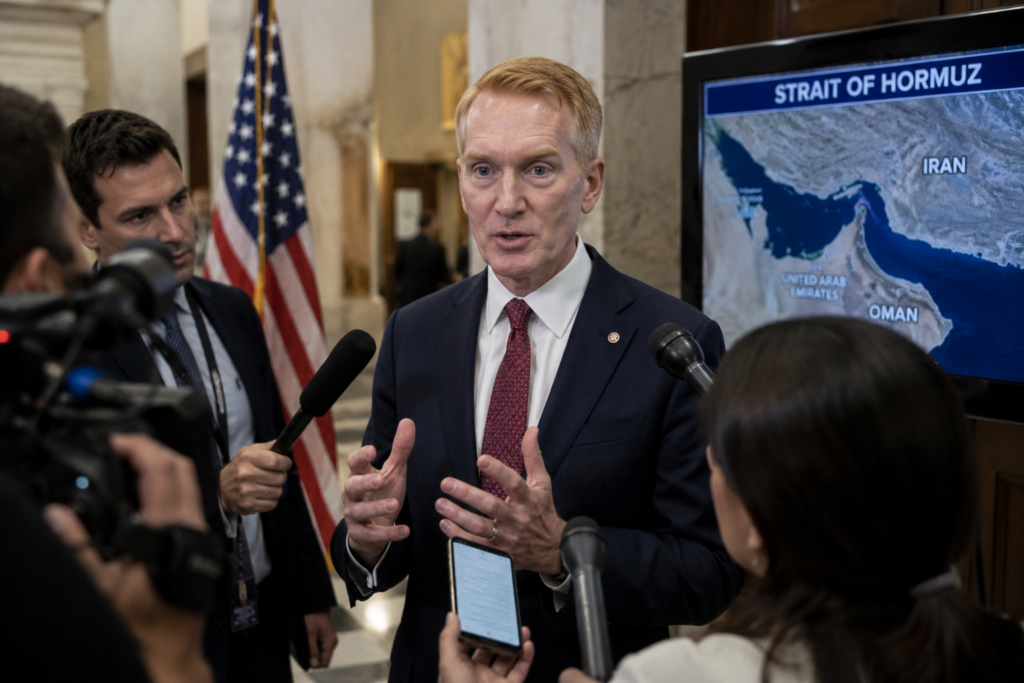
WASHINGTON, D.C. — As tensions in the Middle East continue to shape U.S. foreign policy, Republican Senator James Lankford is calling for Congress to play a direct role in any future agreement involving Iran, arguing that major national security decisions should receive bipartisan legislative approval rather than relying solely on executive authority.
The Oklahoma senator’s remarks come at a particularly sensitive moment. Negotiations involving Iran’s nuclear program and regional security concerns have intensified in recent months, while the strategic importance of the Strait of Hormuz has once again become a focal point of global attention.
Lankford’s proposal has sparked renewed debate over the balance of power between Congress and the White House in matters of war, diplomacy, and international agreements.
Congress Seeks a Greater Voice on Iran Policy
Speaking about potential future arrangements with Tehran, Lankford argued that any agreement involving military commitments, sanctions relief, or major policy changes should receive congressional review and approval.
The senator warned that agreements lacking bipartisan backing can become politically unstable, making them vulnerable to reversal by future administrations and reducing America’s long-term credibility on the world stage.
The issue has generated significant attention around Congress approval for Iran nuclear deal, a topic increasingly dominating discussions among lawmakers and foreign policy experts.
Supporters of congressional involvement argue that major agreements affecting national security deserve broader political consensus.
Critics, however, contend that requiring congressional ratification could complicate diplomacy and limit the executive branch’s ability to negotiate effectively during rapidly evolving international crises.
Strait of Hormuz Returns to Center Stage
The debate comes as renewed tensions involving the Strait of Hormuz have heightened concerns across global energy markets.
The narrow waterway, located between Iran and Oman, serves as one of the world’s most important shipping routes, with a significant share of global oil supplies passing through the strait each day.
Any disruption to maritime traffic in the region could have immediate consequences for energy prices, international trade, and global economic stability.
Recent diplomatic discussions have included efforts aimed at preventing further escalation and ensuring continued freedom of navigation through the strategic corridor.
The situation has fueled widespread interest in Strait of Hormuz security concerns, particularly among governments and financial markets monitoring developments in the Middle East.
A Long-Running Debate Over Presidential Power
The senator’s comments have also revived an enduring constitutional question: Who ultimately decides America’s role in international conflicts and major diplomatic agreements?
Under the Constitution, Congress possesses the authority to declare war and oversee funding for military operations. At the same time, presidents hold significant power over foreign affairs and serve as commander in chief.
This overlapping authority has produced repeated political battles over the decades, especially during periods of military conflict and diplomatic negotiations.
Recent congressional efforts to limit or review military action involving Iran have highlighted growing bipartisan concerns regarding executive authority in foreign policy decisions.
The issue has intensified discussion surrounding war powers and congressional oversight, an area likely to remain a major focus in Washington throughout the coming year.
Why Lawmakers Want More Stability
Several lawmakers argue that agreements negotiated solely by one administration often face uncertainty when political leadership changes.
The history of U.S.-Iran relations offers several examples of policies being dramatically altered from one presidency to another, creating challenges for diplomats and international partners.
Supporters of Lankford’s position say congressional ratification would provide greater durability and demonstrate a unified American position to allies and adversaries alike.
Foreign policy specialists note that bipartisan support can strengthen international agreements by reducing concerns that future administrations will abandon negotiated commitments.
This broader discussion has increased attention toward future U.S.-Iran diplomatic agreement, a topic now attracting significant interest from both policymakers and international observers.
Economic Implications Extend Beyond Washington
The stakes surrounding Iran negotiations extend far beyond diplomatic circles.
Energy analysts warn that instability involving the Strait of Hormuz could have immediate effects on global oil prices and supply chains.
American consumers remain highly sensitive to fuel prices, making developments in the Middle East an important domestic political issue.
Businesses, investors, and financial institutions are closely watching negotiations and regional security conditions for signs of either stabilization or renewed confrontation.
The possibility of disruptions has elevated concerns surrounding Middle East energy supply risks, particularly as global markets continue responding to geopolitical uncertainty.
A Bipartisan Conversation Emerging
Although political divisions remain sharp on many foreign policy questions, concerns about congressional involvement in Iran policy have attracted support from lawmakers in both parties.
Some Democrats and Republicans agree that Congress should have a larger role in determining the nation’s approach toward military engagements and major international agreements.
Others maintain that presidents need flexibility to conduct diplomacy effectively and respond quickly to changing conditions.
The debate reflects broader questions about how the United States should approach international crises in an increasingly complex geopolitical environment.
The growing conversation has strengthened interest in Congress role in foreign policy decisions, a topic that may influence future legislative proposals and diplomatic negotiations.
What Happens Next?
No final agreement with Iran currently appears imminent, and negotiations remain complicated by longstanding disagreements over nuclear activities, sanctions, and regional security issues.
Still, Senator Lankford’s comments have placed renewed attention on how any future deal could be structured and who should ultimately approve it.
Political analysts say the debate may become increasingly important as Congress considers its role in shaping America’s foreign policy priorities and national security strategy.
For now, the discussion serves as a reminder that diplomacy, military authority, and constitutional responsibilities remain deeply interconnected.
As tensions in the Middle East continue evolving and the world watches developments in the Strait of Hormuz, Washington faces a familiar challenge: balancing presidential flexibility with congressional accountability in one of the most consequential areas of government.
The answers reached in the coming months could influence not only U.S.-Iran relations but also the future framework for how America approaches major international agreements and military conflicts.