Trump and Netanyahu Set for High-Stakes White House Meeting as Iran War Strains Alliance and Japan Reels From Powerful Earthquake
The Israeli leader’s first face-to-face with the president since the start of the Iran war comes amid plummeting support at home and reports of a profane phone call, while a 7.1-magnitude quake in southern Japan injures dozens.
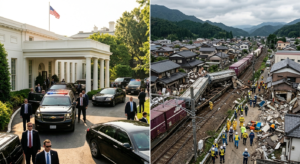
WASHINGTON — Israeli Prime Minister Benjamin Netanyahu is set to meet with President Donald Trump at the White House on Tuesday for their first face-to-face talks since the outbreak of the Iran war — a high-stakes sit-down that comes as the Israeli leader’s support has cratered both at home and in the United States.
The meeting, their eighth since Trump returned to office last year, will be closely watched for signs of whether the two leaders can patch up a relationship that has shown visible strains in recent months.Netanyahu is under immense pressure, with an October 27 election looming and opinion polls showing him struggling to maintain his grip on power.A meeting with Trump that showcases their historically close relationship could provide a much-needed boost.
A Relationship Under Strain
The sit-down marks the first time the two leaders have met in person since the start of the U.S.-Israeli military campaign against Iran.And the relationship has frayed since those initial strikes. Trump reportedly called Netanyahu “f—ing crazy” during a heated phone call, according to sources familiar with the matter.The Israeli leader has also faced mounting criticism from the Trump administration over the direction of the war and Israel’s military posture in the region.
According to Israeli sources, Netanyahu told his security cabinet on Sunday that the Trump administration wants Israel to withdraw troops from positions in Lebanon and reduce its military presence in Gaza and Syria.Those demands have created tension between the two allies, with Netanyahu eager to ensure that Israel’s security interests are not sacrificed as Washington tries to shape a new postwar regional order.
A Packed Agenda
The agenda for Tuesday’s meeting is sprawling and consequential. Iran tops the list, with Netanyahu expected to share new intelligence with Trump regarding Tehran’s resumption of its nuclear program and military capabilities.The two leaders will also discuss the Gaza Strip, where Israel has given the green light for a multinational international security force to enter as part of a U.S.-backed postwar plan.
Netanyahu is also expected to press Trump on Saudi Arabia’s potential entry into the Abraham Accords — a move the Israeli leader has called a “historic leap forward for peace in the Middle East.”Trump has conditioned a U.S.-Saudi civil nuclear deal on Riyadh normalizing ties with Israel, a deal that is now before Congress.
The meeting comes as the Defense Department has requested Congress to approve an additional $67 billion in supplemental funding to expand weapons production and speed up delivery.Lawmakers have also been scrutinizing the administration’s handling of the war, adding another layer of political complexity to the day’s talks.
A Day of Mourning in Washington
Tuesday’s White House meeting coincides with the first of two days of funeral services for the late Sen. Lindsey Graham, a prominent Republican lawmaker and close ally of both Trump and Netanyahu.Graham’s casket will be carried by an armed forces body bearer team this morning before a private ceremony in the Capitol rotunda and an invitation-only funeral at Washington National Cathedral.
Netanyahu is expected to attend the services, along with Ukrainian President Volodymyr Zelenskyy — who is also scheduled to meet with Trump at the White House to discuss Ukraine’s war with Russia.The convergence of world leaders in Washington underscores the gravity of the moment, as multiple conflicts reach critical stages simultaneously.
Powerful Earthquake Rocks Southern Japan
While Washington prepares for a day of high-stakes diplomacy and mourning, southern Japan is grappling with the aftermath of a powerful earthquake that struck Tuesday afternoon.
The Japan Meteorological Agency said the earthquake, with a preliminary magnitude of 7.1 and a depth of 10 kilometers (just over 6 miles), hit inland on Kyushu island at 4:27 p.m. local time.The quake was at the highest end of Japan’s seismic intensity scale, according to officials.
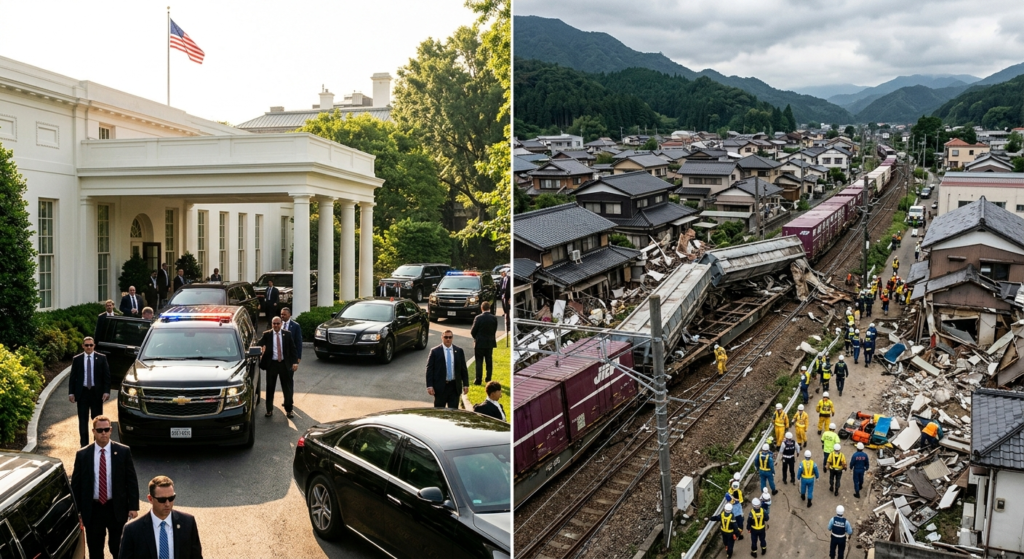
At least 50 people have been hospitalized with injuries, according to state broadcaster NHK.Twelve houses collapsed, and a cargo train was derailed, according to aerial footage broadcast by NHK.The quake also knocked out power to thousands of homes, stopped rail services, and triggered a brief tsunami advisory that was lifted within the hour.
A Region Haunted by Earthquake History
More than 150,000 people have been asked to move to evacuation shelters following the quake, which struck in Kumamoto prefecture — a region still haunted by the memory of a massive earthquake in 2016 that killed 275 people, injured more than 2,700, and caused extensive damage across the area.
The latest quake comes just months after a powerful 7.7-magnitude earthquake struck northern Japan in April, shaking buildings in Tokyo and injuring at least 10 people.Japan, one of the most seismically active countries in the world, is still haunted by the memory of the 9.0-magnitude undersea quake in 2011, which triggered a massive tsunami that killed or left missing around 18,500 people and wrecked the Fukushima nuclear plant.
What to Watch
For American readers, the convergence of events on Tuesday underscores the breadth of challenges facing the Trump administration — from managing a costly and controversial war in Iran to navigating complex relationships with key allies like Israel, all while the U.S. continues to support Ukraine in its fight against Russia.
The Netanyahu-Trump meeting will be closely watched for any signs of a breakthrough — or further strain — in the U.S.-Israel relationship. And as Japan begins the difficult work of recovery, the quake serves as a stark reminder of the natural disasters that can strike with little warning, even in one of the world’s most prepared nations.