U.S.-Iran Military Tensions Surge After Deadly Strikes Raise Fears of Wider Middle East Conflict
Fresh military strikes linked to escalating tensions between the United States and Iran have intensified fears of a broader regional confrontation, as leaders across the Middle East brace for potential retaliation and global officials urge restraint before the crisis spirals further out of control.
The rapidly developing situation has placed Washington and Tehran back on a dangerous collision course, reviving international concerns about military escalation in one of the world’s most volatile regions.
According to officials familiar with the developments, recent attacks involving U.S. military actions and Iran-backed groups have sharply increased political and security tensions throughout the Middle East. The incidents have reignited debate inside Washington over America’s military presence overseas and the growing risks facing U.S. forces stationed in the region.
The strikes come at a moment of already heightened instability fueled by ongoing regional conflicts, fragile diplomatic relationships, and mounting anti-American sentiment among militant factions aligned with Iran.
Security analysts say the latest events reflect a dangerous shift toward direct confrontation rather than proxy-level conflict, raising alarm among foreign policy experts monitoring United States Iran military escalation concerns across the region.
Inside the White House and Pentagon, officials are reportedly weighing multiple response options while attempting to prevent a wider war that could destabilize global energy markets and trigger additional violence involving American personnel abroad.
At the same time, Iranian leaders have signaled that continued military pressure from Washington will not go unanswered.
The rhetoric coming from Tehran has grown increasingly aggressive in recent days, with officials warning that future attacks could provoke stronger retaliatory measures targeting U.S. interests and allied assets throughout the Middle East.
The growing hostility has triggered renewed anxiety among international observers concerned about the possibility of miscalculation between two longtime geopolitical adversaries.
Diplomatic experts warn that even limited military exchanges between the United States and Iran carry enormous risks due to the complex web of armed groups, regional alliances, and strategic military positions spread across Iraq, Syria, the Persian Gulf, and surrounding areas.
Global attention surrounding Middle East conflict impact on global security has surged as governments assess the possibility of broader instability affecting oil supplies, shipping routes, and international diplomatic relations.
American military officials have defended recent operations as necessary defensive measures aimed at protecting U.S. service members and preventing further attacks from Iran-backed militias operating in the region.
Pentagon leaders argue that militant groups supported by Tehran have repeatedly threatened American troops stationed overseas, forcing the United States to maintain a strong military deterrent posture.
However, critics inside and outside the U.S. government warn that repeated retaliatory strikes risk creating an endless cycle of escalation with unpredictable consequences.
Some lawmakers have questioned whether the administration is moving too aggressively without a clear long-term diplomatic strategy. Others insist that failing to respond forcefully could embolden hostile groups targeting American forces abroad.
The debate has deepened political divisions in Washington, particularly as voters grow increasingly weary of prolonged military entanglements overseas.
Concerns surrounding American troops facing Iran backed attacks have become a major topic across political discussions, cable news programs, and online national security forums.
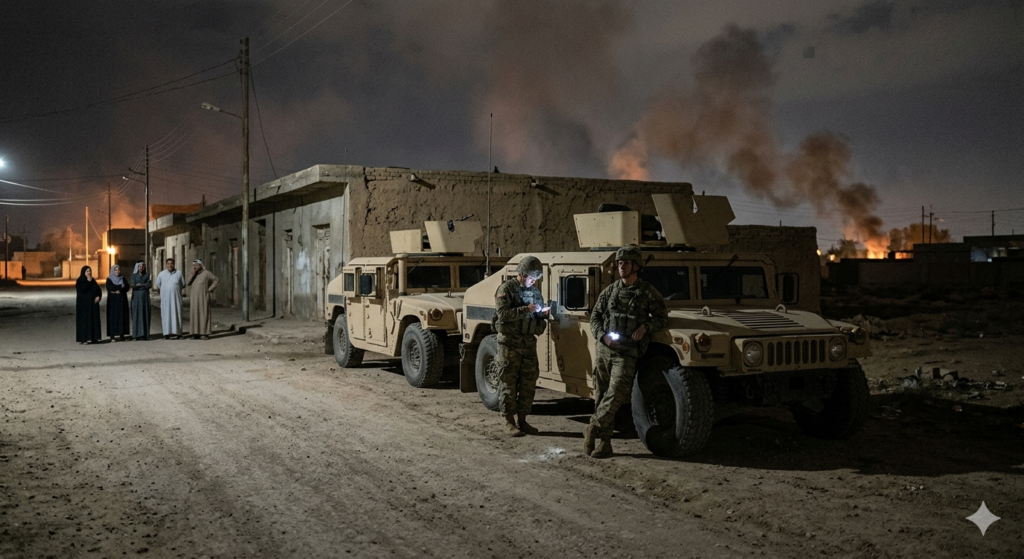
Meanwhile, civilians living in parts of the Middle East remain caught in the middle of rising geopolitical tensions.
Residents in several areas impacted by regional instability described growing fear, uncertainty, and anxiety as military activity intensifies. Families already struggling with economic hardship and political unrest now face renewed worries about security conditions deteriorating even further.
Humanitarian organizations monitoring the situation have expressed concern that continued military escalation could worsen displacement crises and place additional pressure on fragile infrastructure in conflict-prone areas.
International leaders, including European diplomats and United Nations officials, have urged both Washington and Tehran to pursue restraint and reopen diplomatic communication channels before the confrontation escalates beyond control.
Several governments are now quietly working behind the scenes to reduce tensions and prevent retaliatory actions that could ignite a wider regional conflict.
Despite these efforts, analysts say the political environment on both sides may make de-escalation difficult in the short term.
In the United States, pressure remains high for leaders to demonstrate military strength and protect American personnel overseas. In Iran, government officials face internal expectations to respond forcefully to perceived aggression from Washington.
This dangerous dynamic has fueled growing online discussions surrounding risk of wider war in Middle East as international observers fear that even isolated incidents could rapidly expand into a larger geopolitical crisis.
Energy markets have also reacted nervously to the latest developments.
Oil traders and economic analysts are closely watching the situation for signs that further instability could disrupt critical shipping lanes or impact global fuel prices. The Middle East remains one of the most strategically important regions for global energy production, making any military escalation there a major concern for international markets.
Financial experts warn that prolonged instability could contribute to rising inflation pressures and broader economic uncertainty worldwide.
At the same time, intelligence officials continue monitoring potential cyber threats, militia movements, and regional military positioning linked to the growing standoff.
Military experts note that the current environment remains highly unpredictable because of the number of armed actors operating across the region, many with competing interests and varying levels of coordination with Tehran.
Search interest surrounding latest US Iran military tensions today has climbed sharply as Americans seek updates on the evolving confrontation and its possible consequences for U.S. national security.
For now, both Washington and Tehran appear determined to avoid all-out war while simultaneously refusing to appear weak politically or militarily.
That fragile balance may prove increasingly difficult to maintain.
As military operations continue and diplomatic pressure intensifies, the world is watching closely to see whether the current crisis can be contained — or whether the latest confrontation marks the beginning of a far more dangerous chapter in the long-running conflict between the United States and Iran.