Deadly Floods Unleash Hundreds of Snakes in Southern China as Death Toll Rises
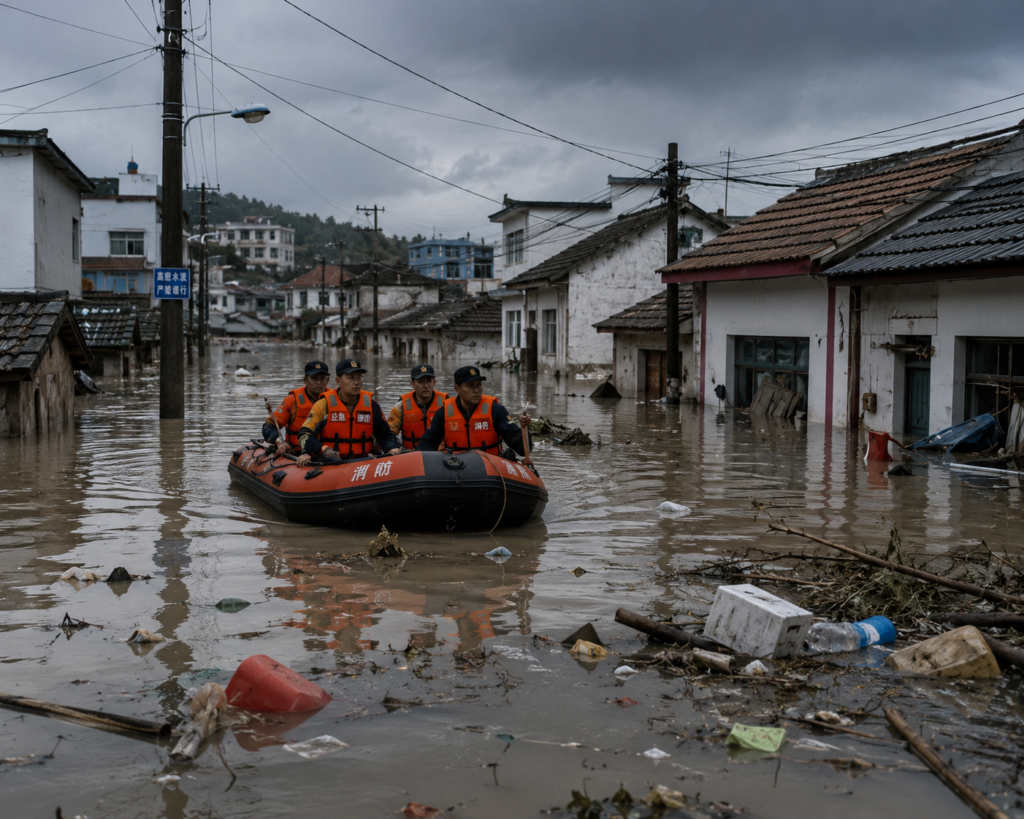
Torrential rains from Tropical Storm Maysak trigger a dam collapse, claiming dozens of lives and sending nearly a thousand snakes—including venomous cobras—sweeping into flooded communities.
BEIJING — The death toll from catastrophic flooding in southern China has climbed to at least 39, with authorities confirming that a reservoir dam collapse in Hengzhou alone claimed 26 lives. But as rescue teams continue searching for nine people still missing in the broader Guangxi region, residents are facing an unsettling new threat: hundreds of snakes, including venomous cobras, are loose in the floodwaters.
A Deadly Storm’s Toll
Tropical Storm Maysak pummeled southern Guangxi with record rainfall starting Saturday, dumping between 4 and 16 inches across most areas — and more than 35 inches in the hardest-hit regions. The deluge overwhelmed reservoirs, breached dams, and stranded thousands of people in homes and buildings for days.
The initial death toll reported Tuesday stood at six. But that number has since risen sharply as rescue teams reached previously inaccessible areas. Vice Mayor Ding Wei of Nanning city confirmed that the partial collapse of a reservoir dam sent a wall of water surging through Hengzhou, claiming 26 lives.
Snakes on the Loose
As if the floodwaters weren’t terrifying enough, residents now face an extraordinary danger. A snake breeding farm in Hengzhou was destroyed by the surging waters, releasing an estimated 800 to 900 snakes into nearby communities. Among them are venomous cobras — the only species among the escapees with dangerously potent venom.
Videos circulating on Chinese social media show the reptiles being carried off by the current as water levels rose across the city. Local media reported that some snakes have been spotted attempting to enter houses, prompting authorities to stock up on antivenom and issue urgent safety advisories.
A village official told local media that most of the escaped snakes are believed to be non-venomous water snakes and rat snakes. But the presence of cobras has made the situation significantly more dangerous. A woman in her 40s or 50s was reportedly bitten by a venomous snake in Yunbiao Town and later died after delays in reaching medical care due to blocked roads.
More Than Just Snakes
The flooding has unleashed chaos well beyond the reptile escape. A zoo in Guigang reported that more than 100 animals are missing, including two zebras, four porcupines, and dozens of tropical birds. Meanwhile, an animal shelter operator in Binyang county has been working tirelessly to rescue about 200 cats and dozens of dogs, bringing the dogs through strong currents two at a time. The cats, the operator said, climbed up to the rafters as the waters rose.
A Massive Rescue Operation Underway
The scale of the disaster is staggering. More than 130,000 people have been evacuated. Rescue teams have deployed drones and some 5,700 boats in a massive relief operation, battling stiff currents and debris to reach people trapped by the waters.
On Thursday, rescuers were still bringing out more than 10,000 trapped students and teachers from a cluster of schools in Guigang, northeast of Hengzhou. Vice Mayor Ding said floodwaters are slowly receding, but more rain is expected in the coming days.
Adding to the region’s misery, Typhoon Bavi is now at sea and forecast to pass just north of Taiwan before making landfall in Zhejiang or Fujian province on Saturday. The island of 23 million people is bracing for heavy rain.
Why Snake Farms Exist
The snake escape has drawn attention to a little-known aspect of China’s agricultural economy. Snake farms are lucrative enterprises in the country, raising reptiles to sell to restaurants for food, as well as for traditional medicine and leather. The farm destroyed in Hengzhou was part of this broader industry, which has faced scrutiny from animal welfare advocates but remains a significant economic activity in southern China.
A local snake breeder noted that most of the escaped snakes are unlikely to survive after being submerged in floodwater for too long. But that’s cold comfort for residents now navigating streets where venomous reptiles may be lurking.
What Residents Are Being Told
Authorities have urged locals not to try catching snakes with their hands if they find them sheltering in their homes. Emergency teams have been organized to capture the escaped reptiles using fish nets and stun guns.
Residents have been advised on what to do if they encounter a snake, and medical facilities have been stocked with antivenom to treat potential bites. But with roads still flooded and rescue operations ongoing, access to medical care remains a concern — as the woman who died from a snakebite tragically demonstrated.
A Region Reeling
The disaster in Guangxi is a stark reminder of how extreme weather events — intensified by a warming climate — can cascade into compound catastrophes. A tropical storm triggers flooding. Flooding breaches a dam. The dam collapse unleashes a wall of water. The water destroys a snake farm. And suddenly, a community already fighting for survival is also fighting off venomous snakes.
For the families of the 39 confirmed dead, for the nine still missing, and for the 130,000 people displaced from their homes, the nightmare is far from over. And with Typhoon Bavi approaching, the region may not have much time to catch its breath.