Fragile U.S.-Iran Peace Effort Faces Breaking Point as New Strikes Raise Fears of Wider Regional Conflict
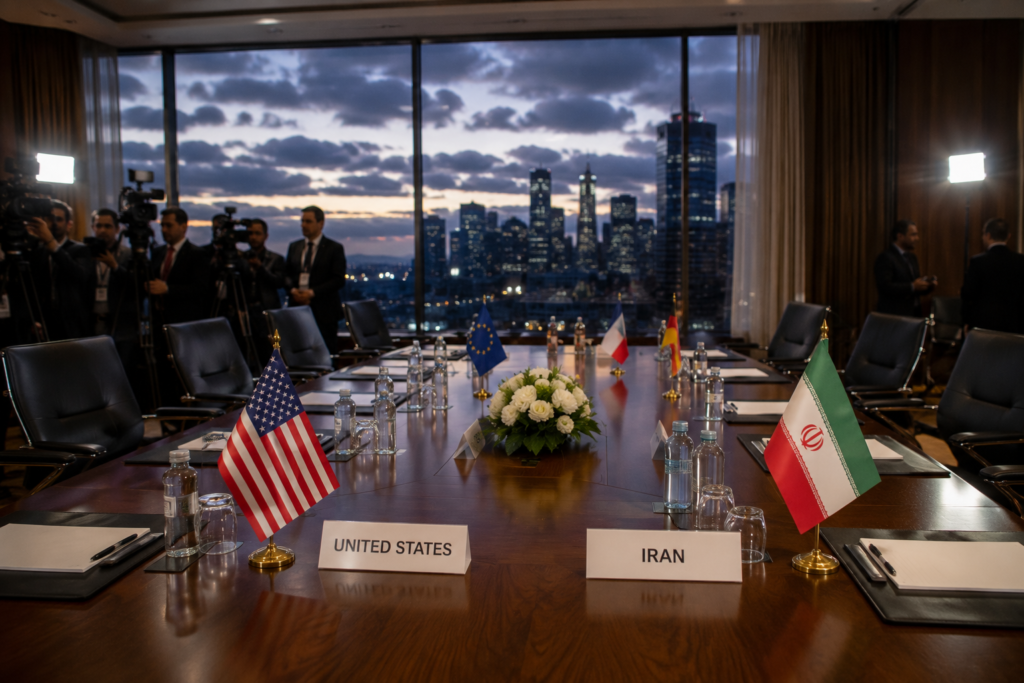
The fragile diplomatic progress that recently offered hope for easing tensions between the United States and Iran is now facing its most serious test yet, as a new wave of military actions threatens to derail peace efforts and push the region back toward a dangerous cycle of escalation.
Just days after both sides appeared to be moving toward a more stable framework aimed at reducing hostilities, fresh military strikes, retaliatory attacks, and increasingly hostile rhetoric have reignited fears that the Middle East could once again become the center of a broader geopolitical crisis.
The latest developments underscore how quickly diplomatic gains can unravel when trust between adversaries remains deeply fragile.
Officials on both sides have accused one another of violating the terms of a recently established interim agreement that was intended to reduce military confrontations, reopen critical maritime routes, and create space for further negotiations on long-standing disputes.
What was initially viewed as a potential breakthrough is now being overshadowed by renewed military activity.
Recent reports indicate that Iran launched missile and drone attacks targeting U.S. military facilities in parts of the Gulf region following warnings from Washington that further violations could trigger additional military responses. The United States subsequently carried out strikes against Iranian military-related targets, further intensifying tensions.
The rapidly changing situation has sparked global concern regarding U.S.-Iran conflict escalation and diplomacy, one of the most closely watched geopolitical stories of the year.
At the center of the dispute is the Strait of Hormuz, one of the world’s most strategically important waterways.
The narrow maritime corridor serves as a critical route for global energy supplies, with millions of barrels of oil passing through the region every day. Any disruption to shipping traffic can affect fuel prices, financial markets, and economic stability across multiple continents.
Recent incidents involving commercial vessels have further complicated the situation.
Following reports of attacks on shipping traffic, military responses from both sides intensified, placing additional pressure on diplomatic efforts that were already struggling to gain momentum.
The resulting uncertainty has elevated concerns surrounding Strait of Hormuz shipping security concerns, a topic now dominating discussions among policymakers, investors, and international security experts.
Many analysts warn that prolonged instability in the region could have consequences far beyond the Middle East.
Energy markets remain highly sensitive to developments involving the Strait of Hormuz. Even temporary disruptions can contribute to higher transportation costs, inflationary pressures, and increased uncertainty for businesses and consumers worldwide.
For global leaders, the challenge is becoming increasingly complex.
While military responses may provide short-term deterrence, diplomatic experts argue that sustainable stability ultimately depends on successful negotiations. Yet those negotiations become far more difficult when both parties accuse each other of violating commitments.
This dynamic has fueled growing interest in Middle East peace negotiations under pressure, as governments attempt to prevent the latest tensions from spiraling into a broader regional confrontation.
Adding another layer of complexity is the involvement of regional actors whose security concerns often intersect with the broader U.S.-Iran relationship.
Military activity in neighboring areas, including Lebanon and other parts of the region, has increased concerns that localized incidents could trigger wider consequences. Diplomatic observers warn that interconnected conflicts can rapidly expand beyond their original scope when multiple stakeholders become involved.
The situation has also revived discussions about nuclear negotiations.
For years, disagreements surrounding Iran’s nuclear program have been among the most challenging issues in relations between Washington and Tehran. Recent diplomatic efforts were expected to create opportunities for renewed discussions, but escalating military actions now threaten to complicate those prospects.
That uncertainty continues driving searches related to future of U.S.-Iran nuclear talks, particularly as policymakers weigh potential pathways toward de-escalation.
Financial markets are also paying close attention.
Oil traders, shipping companies, insurers, and multinational corporations are monitoring developments hour by hour. The possibility of prolonged instability in one of the world’s most important energy corridors remains a significant concern for global economic planning.
The broader story reflects a recurring challenge in international diplomacy.
Even when agreements are reached, maintaining them often proves far more difficult than negotiating them in the first place. Misunderstandings, security incidents, political pressures, and competing interpretations can quickly undermine fragile progress.
Experts say this is particularly true in relationships marked by decades of mistrust.
The United States and Iran have experienced repeated cycles of confrontation and negotiation over many years. Each new agreement is often viewed through the lens of past disputes, making confidence-building measures difficult to sustain.
As a result, discussions surrounding global impact of Gulf region tensions continue gaining attention among international observers.
Despite the latest setbacks, some diplomats remain cautiously optimistic.
They argue that communication channels remain open and that neither side appears eager to pursue a full-scale military confrontation. Instead, many believe the current phase represents a high-stakes struggle to establish leverage ahead of future negotiations.
Whether that optimism proves justified remains uncertain.
The coming days may determine whether recent military exchanges remain isolated incidents or evolve into a broader crisis capable of reshaping regional security dynamics.
For now, governments around the world are urging restraint while carefully monitoring developments.
The stakes extend far beyond Washington and Tehran.
Energy markets, maritime commerce, regional stability, and international security all remain connected to the outcome of this increasingly fragile situation.
The latest escalation serves as a reminder that diplomacy and conflict often exist side by side in global affairs. Progress can emerge quickly, but so can setbacks.
As military tensions continue to rise, the future of the peace effort hangs in the balance.
Whether leaders can preserve the diplomatic process or allow events to push the region toward deeper confrontation may become one of the defining geopolitical questions of the year.