Brazil Investigates Possible Ebola Cases as Global Health Officials Race to Contain Expanding Outbreak
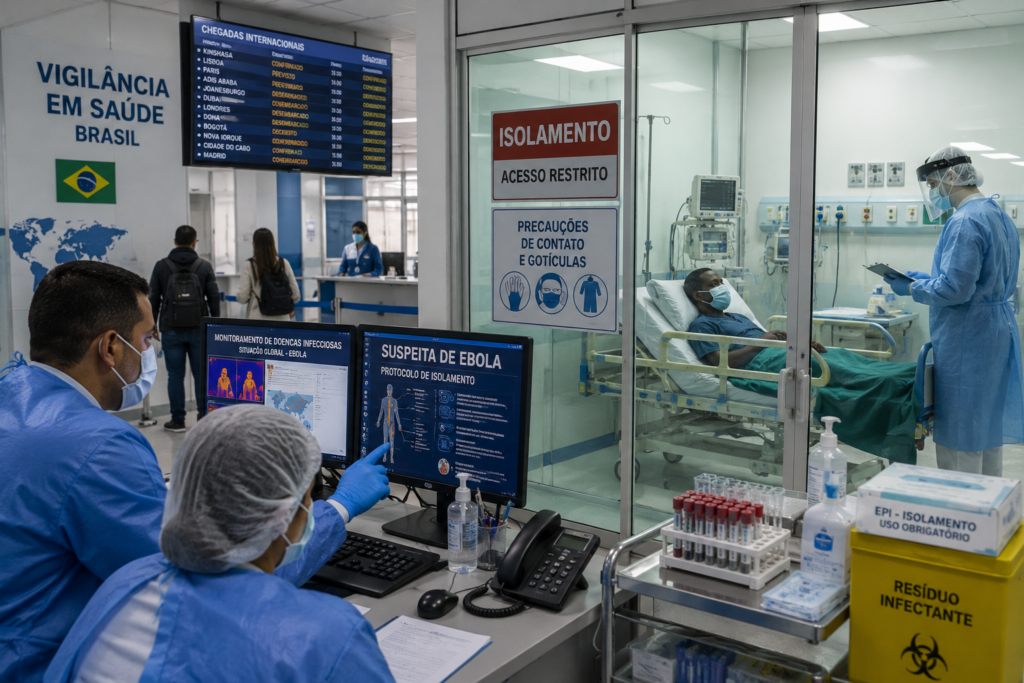
A growing Ebola outbreak in Central Africa has triggered international concern after Brazilian health authorities launched investigations into two possible Ebola cases, raising fresh fears that the deadly virus could move beyond the regions currently battling the epidemic.
Health officials in Brazil activated emergency monitoring procedures after two travelers recently arriving from African nations displayed symptoms consistent with viral infections associated with Ebola. While authorities stress that neither case has been confirmed, the developments have intensified global attention on an outbreak that has already placed health agencies on high alert.
The situation comes as the Democratic Republic of Congo continues confronting one of its most serious Ebola outbreaks in recent years. Public health experts warn that the scale of the crisis may be significantly larger than current official numbers suggest.
Online searches for Brazil possible Ebola cases under investigation, Ebola outbreak spreading beyond Africa, and global health emergency Ebola response have surged as people seek information about the potential international implications of the outbreak.
Brazilian officials confirmed that one patient in São Paulo, a 37-year-old traveler from the Democratic Republic of Congo, was isolated after developing symptoms that matched the criteria for a suspected Ebola infection. Medical teams immediately implemented precautionary containment measures while conducting specialized testing.
Initial laboratory results reportedly did not confirm Ebola infection. However, health authorities emphasized that monitoring would continue until all necessary evaluations are completed.
A second patient in Rio de Janeiro also prompted concern after presenting symptoms including chills, coughing, and gastrointestinal illness. Officials later indicated that the individual tested positive for malaria, but the broader investigation remains active as health teams continue reviewing the case.
Brazil’s Health Ministry has repeatedly stressed that the overall risk to the country remains low. Nevertheless, authorities have increased surveillance efforts and strengthened precautionary protocols at healthcare facilities.
The developments highlight growing concern surrounding the rapidly evolving outbreak in Central Africa.
The Democratic Republic of Congo has reported hundreds of confirmed Ebola cases and more than one thousand suspected infections since health officials formally identified the outbreak. Neighboring Uganda has also reported infections, increasing concern about regional spread.
According to global health organizations, the outbreak involves the Bundibugyo strain of Ebola, a relatively rare variant that currently lacks an approved vaccine or targeted treatment.
Search activity connected to Democratic Republic Congo Ebola outbreak updates, Bundibugyo Ebola strain health risks, and international disease surveillance response measures continues rising as health agencies work to assess the outbreak’s full reach.
One of the biggest challenges facing health officials is uncertainty regarding how long the virus circulated before being detected.
Several international experts believe Ebola may have spread through multiple communities before authorities officially recognized the outbreak. That possibility has complicated containment efforts and increased concern about undetected cases.
The World Health Organization has warned that the true number of infections could be substantially higher than confirmed figures currently indicate.
In some affected areas, ongoing violence, political instability, and limited healthcare access have slowed response efforts. Medical teams have struggled to conduct testing, contact tracing, and patient monitoring in several remote regions.
Public health workers are also dealing with misinformation and community mistrust, issues that have historically complicated Ebola response operations.
Despite these challenges, health officials have reported encouraging signs as some infected patients have recovered.
Several healthcare workers who contracted the virus during treatment efforts were recently discharged after successful recoveries. Medical experts say those cases demonstrate that early diagnosis and supportive care can significantly improve survival outcomes.
The recoveries have provided a measure of optimism amid an otherwise concerning public health emergency.
Growing attention surrounding Ebola patient recovery treatment success, Brazil health authorities monitoring travelers, and international outbreak containment efforts reflects increasing public interest in both the risks and progress associated with the crisis.
Experts emphasize that Ebola is not transmitted as easily as respiratory viruses like COVID-19.
The disease spreads primarily through direct contact with bodily fluids from infected individuals or contaminated materials. Because of that transmission pattern, rapid identification, isolation, and contact tracing remain critical tools for limiting outbreaks.
Nevertheless, international travel continues to present challenges.
As travelers move between continents, health agencies must quickly identify possible infections while avoiding unnecessary public panic. Airports, hospitals, and border health programs have strengthened screening procedures in several countries following reports of suspected cases outside Africa.
Brazilian authorities have coordinated closely with international health organizations while continuing laboratory evaluations and monitoring efforts.
Officials insist there is currently no evidence of widespread transmission inside Brazil. However, precautionary measures remain in place as investigations continue.
Global health specialists say the situation demonstrates how interconnected modern disease surveillance has become.
An outbreak beginning in a remote region can quickly attract worldwide attention as governments work to prevent potential cross-border spread. Rapid communication, testing capacity, and international cooperation have become essential components of outbreak response strategies.
The current Ebola emergency is also renewing discussions about healthcare preparedness, research investment, and global disease monitoring systems.
Many experts argue that stronger early-warning capabilities could help identify outbreaks before they expand into larger public health crises.
For now, health authorities continue emphasizing caution rather than alarm.
While suspected cases in Brazil have not resulted in confirmed Ebola diagnoses, officials believe aggressive monitoring remains necessary as the outbreak in Central Africa continues evolving.
The coming weeks will likely prove critical.
Whether containment efforts successfully slow transmission or additional suspected cases emerge internationally may determine how global health agencies respond moving forward.
For millions following the story, the developments serve as a reminder that infectious disease threats remain a challenge requiring constant vigilance, international cooperation, and rapid public health action.