Zohran Mamdani’s Political Influence Reshapes New York Primaries, Signaling a New Era for Democrats
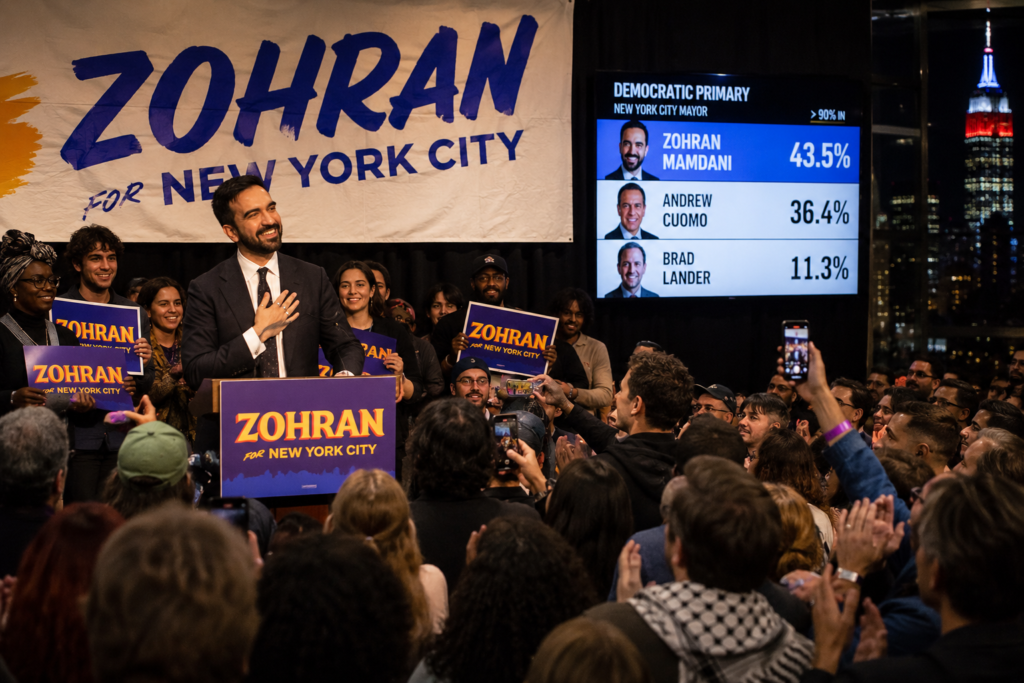
A series of closely watched primary elections in New York has delivered a powerful message to the Democratic Party: a new generation of progressive leaders is gaining momentum, and Mayor Zohran Mamdani has emerged as one of the most influential political figures driving that shift.
Tuesday’s primary results marked a major turning point in New York politics, with several candidates backed by Mamdani securing significant victories in congressional races. The outcomes not only strengthened the mayor’s standing within the party but also intensified a broader national debate about the future direction of Democratic politics.
For months, political strategists, activists, and elected officials had viewed these contests as a test of Mamdani’s influence beyond City Hall. The results suggest that his political brand now extends well beyond New York’s mayoral office.
Several progressive candidates aligned with Mamdani’s vision successfully defeated establishment-backed rivals, signaling growing voter enthusiasm for candidates advocating ambitious reforms on housing, immigration, affordability, and economic inequality. The victories are being viewed as a major endorsement of the movement that helped propel Mamdani into office.
The most striking aspect of the election night results was the success of candidates challenging traditional Democratic power structures. In multiple races, voters chose newcomers and progressive voices over candidates backed by influential party leaders and long-standing political organizations.
Political analysts say the results highlight a growing appetite among Democratic voters for fresh leadership and a more aggressive approach to issues affecting working-class Americans.
At the center of the conversation is the question of whether New York’s political transformation reflects a broader national trend.
Supporters argue that voters are increasingly frustrated with conventional politics and are embracing candidates who offer bold solutions to rising housing costs, wage stagnation, healthcare concerns, and economic insecurity.
The election outcomes have elevated discussions surrounding progressive Democratic candidates winning primaries, a trend that many political observers believe could continue in future elections.
The victories also demonstrate the increasing power of grassroots organizing. Rather than relying solely on traditional political networks, many successful campaigns focused heavily on community engagement, volunteer mobilization, and direct voter outreach.
For younger voters in particular, these campaigns resonated strongly.
Many of the winning candidates emphasized affordability, housing access, public transportation improvements, and economic opportunity—issues that continue to dominate conversations among younger generations struggling with rising living expenses.
Political experts note that New York Democratic primary election results could have implications far beyond state lines.
Because New York plays such a significant role in national politics, shifts within the state’s Democratic electorate are often closely watched by strategists across the country. Future congressional races and even presidential campaigns may study these results carefully to better understand changing voter priorities.
The outcomes also reveal growing ideological divisions within the Democratic Party.
While moderates continue to hold significant influence, progressive candidates appear increasingly capable of building winning coalitions in urban areas. This evolving dynamic is expected to create important strategic decisions for party leadership as they prepare for future elections.
One major question emerging from the primaries is how newly elected progressive lawmakers will interact with the broader Democratic caucus in Washington.
Some observers anticipate areas of tension, particularly on issues involving foreign policy, immigration reform, economic regulation, and government spending. Others believe the new representatives could help energize younger voters and strengthen Democratic turnout in key elections.
The political rise of Mamdani has become one of the most discussed developments in American politics over the past year.
Once viewed primarily as a local leader, he is increasingly being seen as a national figure capable of influencing congressional races and shaping policy discussions far beyond New York City.
That growing influence has fueled conversations about Zohran Mamdani political influence growing and what it means for the future of progressive politics in the United States.
Many of the successful candidates shared a common message focused on affordability and economic fairness. Their campaigns frequently addressed rising rents, cost-of-living pressures, healthcare expenses, and workforce opportunities.
Those concerns continue to rank among the most important issues for voters nationwide.
The primary results may also serve as a warning sign for incumbents who appear disconnected from changing voter priorities.
Across several contests, challengers successfully argued that new leadership was needed to address modern economic realities and evolving community concerns. That argument appeared to resonate with significant portions of the electorate.
Meanwhile, national political organizations are expected to analyze the results closely as they prepare for the upcoming general election cycle.
Many strategists believe these races offer valuable insights into voter behavior, coalition-building strategies, and emerging political trends.
The broader implications could extend into debates surrounding future direction of Democratic Party, particularly as party leaders attempt to balance progressive energy with broader electoral appeal.
For now, one conclusion is difficult to ignore.
Mamdani’s endorsements carried significant weight, and the candidates he supported translated that backing into meaningful victories. The results have strengthened discussions around grassroots progressive movement in America and the growing role local leaders can play in shaping national politics.
The election outcomes also reinforce the importance of young voter turnout shaping elections, a factor that increasingly influences modern political campaigns.
As Democrats look ahead to future contests, the lessons from New York’s primaries are likely to remain at the center of political discussions.
Whether these victories represent the beginning of a lasting realignment or a uniquely New York phenomenon remains uncertain.
What is clear, however, is that the political landscape has shifted—and many within the Democratic Party are now paying close attention to where that shift may lead next.