Alan Greenspan Dies at 100: The Federal Reserve Icon Who Shaped Modern America’s Economic Future
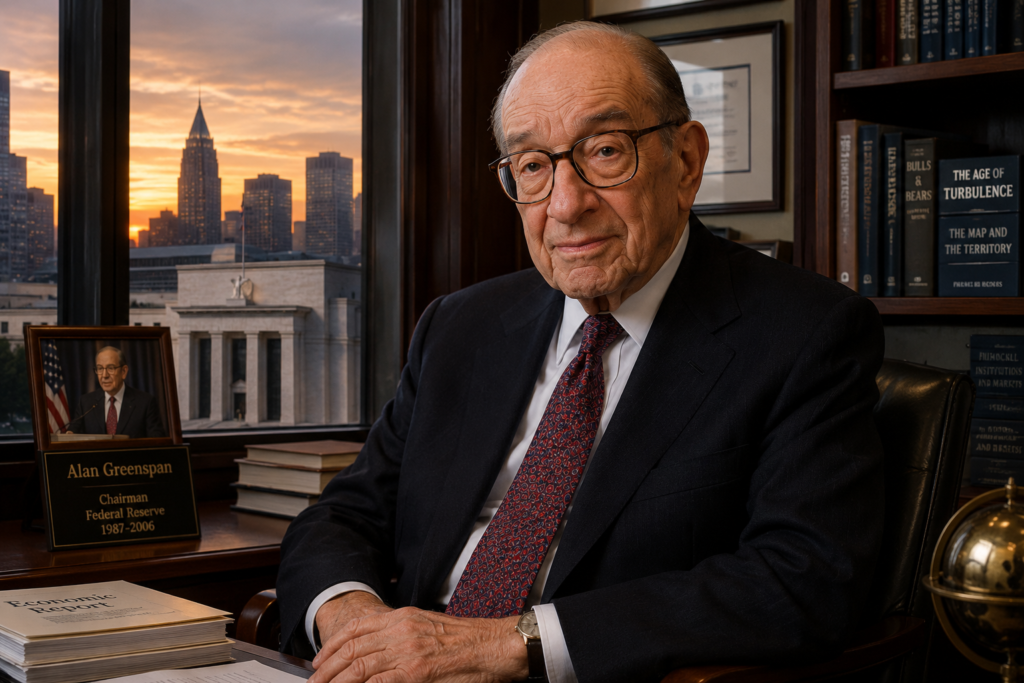
The United States has lost one of the most influential economic figures in modern history.
Alan Greenspan, the longtime chairman of the Federal Reserve and one of the most recognizable names in global finance, has died at the age of 100. His passing marks the end of an era for American economic policy and closes a remarkable chapter in the history of the nation’s central banking system.
For nearly two decades, Greenspan stood at the center of some of the most important economic decisions affecting millions of Americans. From stock market crashes and recessions to periods of extraordinary growth, his leadership helped shape the direction of the U.S. economy during a transformative period in American history.
Born in New York City in 1926, Greenspan demonstrated exceptional mathematical abilities from an early age. While many remember him as an economist, his first passion was music. He studied at the prestigious Juilliard School before eventually turning his attention toward economics, a field that would ultimately define his legacy.
His journey into economic policymaking began long before he entered the Federal Reserve. Over the years, Greenspan built a reputation as a highly respected economic consultant and advisor. His ability to interpret complex economic data earned him recognition in both business and government circles.
That reputation eventually led to one of the most powerful positions in the financial world.
In 1987, President Ronald Reagan appointed Greenspan to lead the Federal Reserve. What followed was an extraordinary tenure that would span nearly nineteen years and four presidential administrations. Few public officials in American history have maintained such influence across changing political landscapes.
Greenspan’s first major challenge arrived almost immediately.
Only months after taking office, financial markets experienced the historic stock market crash of October 1987. Investors around the world feared a broader economic collapse. The Federal Reserve responded aggressively, reassuring markets that sufficient liquidity would remain available to support the financial system. Many economists credit those actions with helping stabilize investor confidence during a period of significant uncertainty.
Over the following years, Greenspan became a household name.
His comments were scrutinized by investors, business leaders, policymakers, and journalists worldwide. Even subtle remarks could trigger significant movements in financial markets. The influence of the Federal Reserve chairman became so prominent during his tenure that many referred to him as “The Maestro,” a reflection of the enormous respect he commanded across the financial community.
Under his leadership, the United States experienced extended periods of economic expansion, technological innovation, and rising consumer confidence. The booming 1990s economy, fueled in part by rapid advances in technology and productivity, unfolded largely during Greenspan’s time at the Federal Reserve.
At the same time, his legacy remains the subject of intense debate among economists.
Supporters argue that his steady approach helped maintain economic stability during numerous challenges. They point to his management of financial crises, inflation concerns, and periods of market volatility as evidence of effective leadership.
Critics, however, contend that some of the policies implemented during his tenure contributed to financial imbalances that later became apparent during the global financial crisis. Questions surrounding regulation, risk management, and market oversight continue to shape discussions about his long-term impact on the economy.
The debate over Greenspan’s legacy illustrates just how influential he remained long after leaving office.
Even years after stepping down as Federal Reserve chairman in 2006, economists continued examining the effects of decisions made during his leadership. His speeches, writings, and public appearances remained closely watched by financial professionals and policymakers around the world.
Beyond economics, Greenspan was known for his distinctive communication style.
His carefully worded public statements became legendary. Financial journalists often joked that interpreting Greenspan’s remarks required almost as much analysis as interpreting economic data itself. That deliberate approach contributed to the mystique surrounding his leadership and helped shape the culture of modern central banking.
His personal life also attracted public attention. Greenspan was married to veteran television journalist Andrea Mitchell, and together they became one of Washington’s most recognizable power couples.
As news of his death spreads, tributes are expected from economists, policymakers, former government officials, and business leaders across the United States and around the world.
Many will remember him as a central figure behind Federal Reserve economic policy legacy, a leader whose decisions influenced interest rates, employment trends, inflation levels, and financial markets for nearly two decades.
Others will focus on the broader lessons associated with Alan Greenspan impact on US economy, examining how his leadership continues to influence central banking discussions today.
His death also renews attention on longtime Federal Reserve chairman dies, a milestone moment that marks the passing of one of the most influential economic policymakers of the modern era.
For many Americans, Greenspan represented stability during periods of uncertainty. For investors, he became a symbol of market confidence. For historians, he will remain a defining figure in the evolution of modern finance.
As the nation reflects on his century-long life, one fact remains undeniable: Alan Greenspan helped shape the economic landscape of America in ways that will be studied, debated, and remembered for generations.
His influence extended far beyond Wall Street. It reached into homes, businesses, retirement accounts, and financial institutions across the country, leaving behind a legacy intertwined with history of modern American central banking and the continuing conversation about economic leadership during financial crises.
Few economists ever become household names. Fewer still leave a mark that lasts a century.
Alan Greenspan did both.