How a Trump-Dana White Alliance Brought UFC to the White House Lawn
WASHINGTON, D.C. — What began as an unusual idea discussed between President Donald Trump and UFC President Dana White has evolved into one of the most ambitious and controversial sporting events ever staged on federal property.
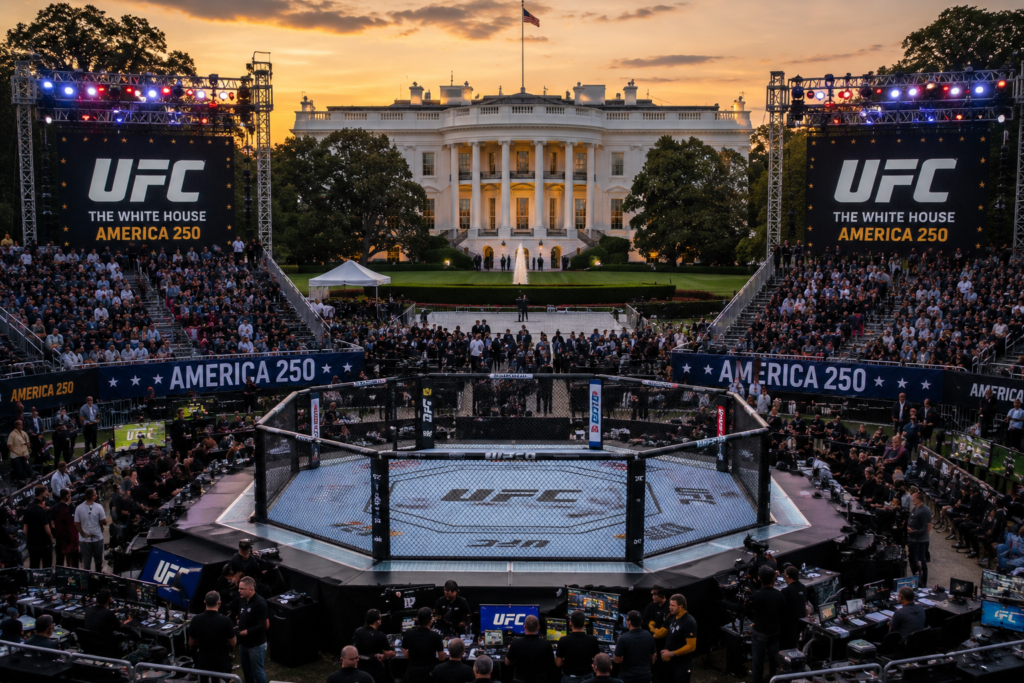
This weekend, the White House South Lawn is set to host a large-scale UFC event tied to celebrations marking America’s 250th anniversary. The project has attracted national attention not only because of its location but also because of the enormous logistical effort required to transform one of the most recognizable government properties in the world into a professional mixed martial arts venue.
According to court filings and government documents, the production has required support from more than seven federal agencies, hundreds of workers, extensive security planning, and an investment exceeding $60 million.
The event represents a remarkable intersection of politics, sports, entertainment, and presidential influence.
A Friendship That Shaped a Historic Event
The relationship between Donald Trump and Dana White stretches back more than two decades.
Long before UFC became a global sports powerhouse, Trump offered support to the organization during its growth years. Over time, that relationship developed into one of the most visible alliances in American sports and politics.
Now that connection has culminated in an unprecedented spectacle that places an official UFC fight card directly on White House grounds.
Supporters view the event as a unique celebration of American culture and athletic competition. Critics argue that hosting a professional sporting event at the White House blurs the line between government symbolism and private entertainment.
Regardless of political opinion, the event has generated enormous public interest around UFC fight on White House lawn, one of the most searched political-sports stories of the year.
Building an Arena at America’s Most Famous Address
Transforming the South Lawn into a UFC venue has proven to be a massive undertaking.
Construction crews spent weeks assembling temporary infrastructure, including seating areas, broadcast facilities, lighting systems, security checkpoints, and the iconic UFC octagon. Reports indicate that hundreds of contractors and workers participated in the setup process.
Federal agencies ranging from security and transportation authorities to aviation and emergency management officials coordinated planning efforts to ensure the event could operate safely.
The scale of preparation has drawn attention to White House UFC event logistics planning, highlighting the extraordinary resources necessary to host a major live sporting event in such a sensitive location.
The $60 Million Question
One figure has dominated public discussion: $60 million.
Court filings indicate that more than $60 million has been invested in planning, infrastructure, staffing, production, and event-related operations. Officials have stated that the funding is being provided by UFC and affiliated organizations rather than direct taxpayer appropriations for event production.
The financial scale immediately sparked debate.
Supporters argue that the event provides a once-in-a-generation showcase tied to the nation’s 250th anniversary celebration. Critics question whether a sporting event of this magnitude belongs on government property regardless of funding sources.
The controversy has helped fuel searches for $60 million UFC White House event, a phrase that continues trending across political and sports news discussions.
Legal Challenges Failed to Stop the Show
The event faced significant legal obstacles in recent weeks.
Several plaintiffs sought court intervention to halt the UFC card, arguing that federal property was being used inappropriately and raising concerns about commercialization of public space.
However, a federal judge ultimately rejected those efforts, allowing preparations to continue and the event to proceed as scheduled. Judges concluded that the challengers had not demonstrated sufficient legal standing or immediate harm necessary to justify an injunction.
The ruling effectively cleared the final major hurdle standing between organizers and fight night.
As a result, interest in federal lawsuit against UFC White House has surged among voters, legal analysts, and sports fans alike.
A New Era of Political Spectacle?
The event has also reignited debate about the evolving relationship between politics and entertainment.
American presidents have long welcomed championship teams, cultural performers, and public celebrations to the White House. Yet hosting a professional combat sports event represents something entirely different.
Political analysts note that modern media increasingly rewards spectacle, creating opportunities for politicians and public figures to connect with audiences in unconventional ways.
Some observers view the UFC event as an innovative celebration of American sports culture. Others see it as another example of entertainment becoming deeply intertwined with political branding.
This broader discussion is reflected in growing attention toward politics and professional sports crossover, a topic receiving renewed focus as the event approaches.
Massive Audience Expected
Organizers anticipate significant attendance both on-site and through broadcast platforms.
Reports suggest thousands of spectators will be present inside the temporary venue, while additional visitors are expected to gather in nearby viewing areas. Millions more could follow the event through television and streaming coverage.
The audience size reflects UFC’s continued popularity and the unique appeal of staging a major sporting event at a location typically associated with diplomacy, governance, and national ceremonies.
Interest has accelerated around America 250 anniversary UFC celebration, particularly among younger audiences who follow both politics and combat sports.
What Happens Next?
As final preparations conclude, attention now shifts from construction crews and legal filings to the fighters themselves.
The event is expected to deliver a full UFC card under global media attention unlike anything the promotion has experienced before.
Whether viewed as a historic celebration, a political spectacle, or an ambitious experiment, the White House UFC event has already secured a place in American cultural history.
The success or failure of the production may ultimately influence how future administrations think about using iconic public spaces for large-scale public events.
For now, one thing is certain: a friendship that began years ago between a future president and a sports promoter has helped create one of the most unusual moments in modern American sports history.