Tourist Accused of Throwing Rock at Endangered Hawaiian Monk Seal Says Online Backlash Has Escalated Into Threats and Harassment
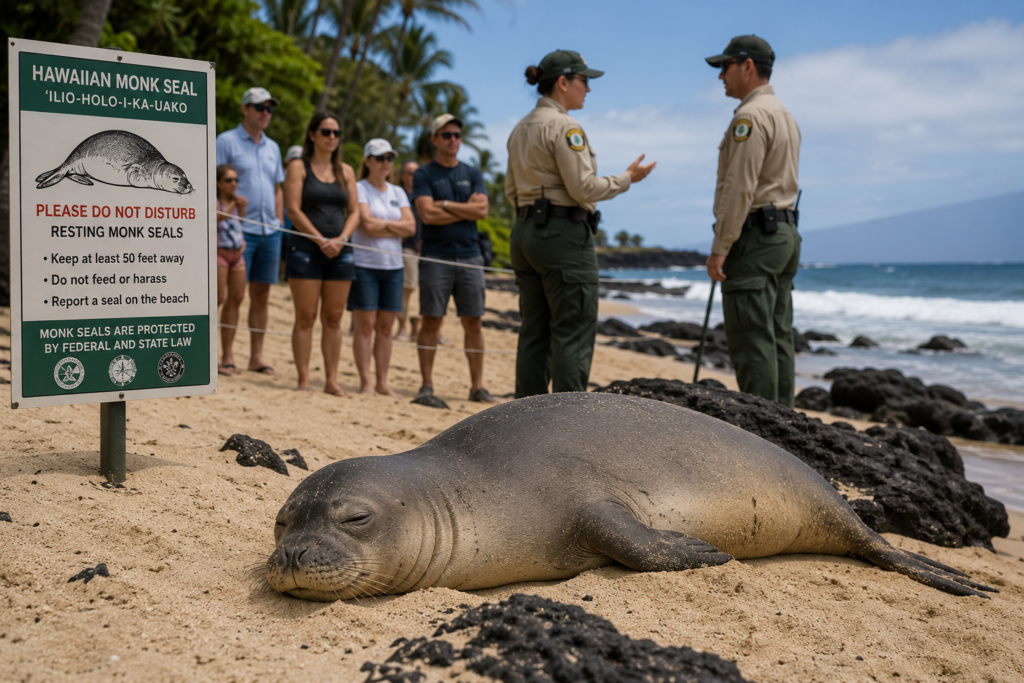
A federal wildlife case in Hawaii that sparked outrage across social media is now raising additional questions about public accountability, online harassment, and the limits of digital justice.
The controversy centers on a Washington state tourist accused of throwing a large rock at an endangered Hawaiian monk seal on a Maui beach earlier this month. The incident, captured on video and shared widely online, quickly generated national attention and condemnation from wildlife advocates, local residents, and public officials. Now, the accused man’s attorney says the backlash has intensified beyond criticism and entered dangerous territory.
According to court filings and statements from his legal team, 38-year-old Igor Lytvynchuk of Covington, Washington, has allegedly been subjected to threats, harassment, doxing, and even a physical assault since the video spread across the internet.
The case has become one of the most talked-about examples of endangered wildlife protection enforcement in recent months, drawing attention far beyond Hawaii and reigniting debates over how society responds when viral incidents involve protected animals.
Federal prosecutors allege that Lytvynchuk threw a coconut-sized rock toward an endangered Hawaiian monk seal near Lahaina on Maui. Witnesses recorded the encounter, and authorities say the rock narrowly missed the animal’s head while causing it to abruptly alter its behavior.
The video rapidly spread online, generating anger among viewers who viewed the act as a reckless attack on one of Hawaii’s most vulnerable species.
According to investigators, when confronted by witnesses at the scene, the tourist allegedly responded that he did not care and was wealthy enough to pay any fines that might result. Those comments became a focal point of public outrage and helped drive the story into national headlines.
The incident occurred in Lahaina, a community still rebuilding after the devastating wildfires that struck Maui in 2023. For many residents, the monk seal involved in the case had become a familiar and cherished symbol of resilience and recovery, adding emotional weight to the allegations.
The story has fueled increased interest in Hawaiian monk seal conservation efforts, with environmental groups emphasizing the fragile status of the species.
Wildlife experts estimate that only about 1,600 Hawaiian monk seals remain in the wild, making them one of the rarest marine mammals in the world. Federal and state laws provide extensive protections, and authorities routinely remind beach visitors to keep their distance and avoid any actions that could disturb the animals.
Lytvynchuk now faces federal charges under both the Endangered Species Act and the Marine Mammal Protection Act. If convicted, he could face prison time and substantial financial penalties. Prosecutors argue that the actions shown in the video represent unlawful harassment of a protected species.
However, the defense has presented a very different interpretation of what happened.
His attorney says Lytvynchuk did not recognize the animal as a Hawaiian monk seal and instead believed it was an aggressive sea lion threatening nearby sea turtles. According to the defense, his intention was not to injure the animal but to move it away from the turtles.
Whether that explanation will influence the legal proceedings remains uncertain.
What is already clear is that public reaction has been intense.
The attorney claims his client’s personal information has been circulated online, resulting in doxing, threatening messages, and disturbing deliveries sent to his residence. He also alleges that Lytvynchuk was physically assaulted following the incident, although no police report was filed regarding that encounter.
The allegations have added a new dimension to a case that was already generating widespread attention.
Supporters of wildlife protection argue that strong public reactions reflect growing concern about the treatment of endangered species and the importance of enforcing conservation laws. At the same time, legal experts note that online outrage can sometimes escalate beyond criticism into behavior that raises separate legal and ethical concerns.
The situation highlights growing interest in viral wildlife crime social media reactions, a trend in which environmental incidents increasingly become major online events within hours.
Federal authorities have stressed that enforcement decisions should occur through the legal system rather than through public retaliation.
Meanwhile, conservation advocates hope the case will serve as a reminder of the responsibilities that come with visiting sensitive natural environments.
Hawaii’s beaches are home to numerous protected species, including monk seals and sea turtles. Experts consistently advise visitors to observe wildlife from a safe distance and contact authorities if they believe an animal is in distress rather than attempting intervention themselves.
The case has also intensified conversations about tourist interactions with protected wildlife and whether additional educational efforts are needed for visitors unfamiliar with Hawaii’s unique ecosystem.
Some officials believe greater awareness could help prevent future incidents involving endangered animals.
Others argue that existing rules are already clear and that violations should continue to be prosecuted aggressively to deter similar behavior.
For now, the legal proceedings are expected to determine whether federal wildlife laws were violated.
But outside the courtroom, the controversy has already become a broader story about conservation, social media accountability, and public reaction in the digital age.
As the case moves forward, it remains a powerful example of how a single moment captured on video can spark nationwide debate, affect individual lives, and draw renewed attention to the protection of endangered species.
The growing attention surrounding the case has made it a key example of federal wildlife protection law enforcement and a reminder of the delicate balance between environmental advocacy and responsible public discourse.
At its core, the controversy reflects two issues that continue to resonate across the country: protecting vulnerable wildlife and ensuring that justice remains rooted in legal processes rather than online outrage.