Houston’s World Cup Moment Arrives as Fans Brace for High Prices, Massive Crowds, and Historic Soccer Energy
Houston is rapidly transforming into one of America’s biggest soccer capitals as excitement builds for the 2026 FIFA World Cup, but for many fans, the celebration comes with growing concerns over affordability, logistics, and access.
Across the city, giant countdown clocks, public viewing plans, transportation upgrades, and community festivals are creating a wave of anticipation ahead of one of the largest sporting events ever hosted in the United States. Yet while global soccer fever is spreading across Texas, many Houston residents say the dream of attending a match inside the stadium may already be financially out of reach.
The city is expected to host seven World Cup matches at NRG Stadium, bringing tens of thousands of international visitors into Houston over several weeks. Officials have described the event as a once-in-a-generation opportunity to showcase Houston’s diversity, business strength, food culture, and growing influence in international sports.
But even before kickoff, conversations around Houston World Cup ticket prices rising, FIFA fan festival Houston experience, and 2026 World Cup travel costs America are dominating online discussions.
For many local families, ticket costs have become the biggest obstacle.
Fans searching for official seats say prices for premium matches have climbed into the thousands of dollars, while resale markets continue pushing average tickets far beyond what many households can comfortably afford. Some soccer supporters who dreamed of attending marquee international matchups now say they are settling for lower-demand games simply to experience the tournament in person.
Others say they have already given up on entering the stadium entirely.
Instead, city leaders and event organizers are directing attention toward Houston’s large-scale public fan experiences, which are expected to become central gathering points during the tournament.
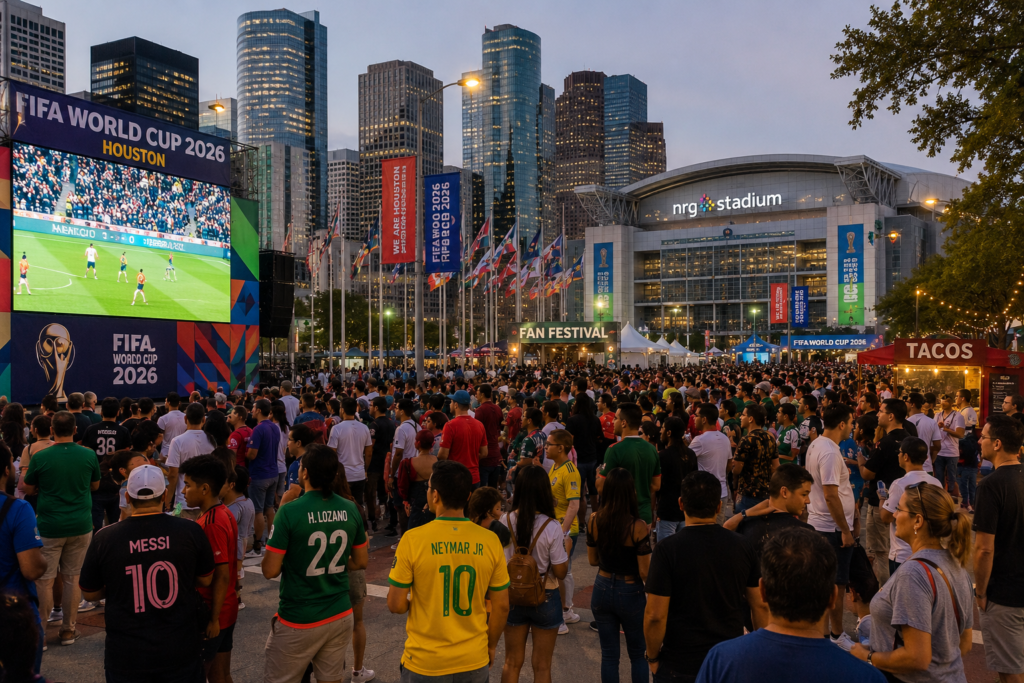
The official FIFA Fan Festival in Houston’s East Downtown district will serve as a massive public viewing destination throughout the competition. Plans include giant outdoor screens, live entertainment, international food vendors, music events, cultural showcases, and interactive soccer-themed activities designed to recreate stadium-like energy outside the arena itself.
Organizers believe the fan festival could attract enormous daily crowds, especially during U.S. national team matches and later knockout rounds.
At the same time, smaller community events are emerging across Houston neighborhoods as businesses, sports bars, schools, and cultural organizations prepare for the global spotlight.
The city’s growing soccer identity is becoming increasingly visible.
Recently, Houston hosted major trophy tour events that drew thousands of visitors eager to take photos with the World Cup trophy. Local youth tournaments, public soccer courts, and international cultural programs are also expanding ahead of the tournament.
The excitement reflects how dramatically soccer’s popularity has grown in the United States over the past decade.
Still, beneath the celebration, practical concerns remain.
Many residents worry about transportation congestion, hotel pricing, summer heat, security coordination, and whether local infrastructure is fully prepared for millions of visitors expected across the broader tournament.
Online discussions about Houston World Cup transportation concerns, affordable FIFA World Cup fan events, and best places watch World Cup Houston continue gaining momentum as travelers begin finalizing plans.
Some residents have also criticized what they see as a sudden rush of city improvements tied directly to international visibility. Road repairs, downtown beautification projects, public transit upgrades, and infrastructure work are accelerating across key areas connected to the tournament.
Critics argue many of these improvements could have happened years earlier.
Supporters, however, say the World Cup is providing a rare opportunity to modernize important sections of the city while generating long-term economic benefits through tourism, investment, and international exposure.
Houston businesses are preparing aggressively for the economic impact.
Restaurants, hotels, transportation companies, entertainment venues, and retailers are all positioning themselves for a surge in visitors from around the world. Hospitality experts expect soccer tourism to generate hundreds of millions of dollars in local spending during the tournament period.
Food culture is expected to become one of Houston’s strongest attractions.
Fan festival organizers have already highlighted Houston’s global culinary diversity, with plans for vendors representing Latin American, Middle Eastern, African, Asian, and Southern American cuisines. Officials say the goal is to showcase the city as one of America’s most internationally connected destinations.
Meanwhile, community leaders are emphasizing inclusion and accessibility.
Free public viewing events, youth soccer clinics, educational programs, and neighborhood festivals are being promoted as ways to ensure residents who cannot afford stadium tickets can still participate in the historic moment.
Many fans say that emotional connection matters just as much as attending the matches themselves.
For longtime Houston soccer supporters, the tournament represents validation after years of watching the sport slowly grow in the American mainstream. Families who have followed international soccer for generations now see their city preparing to host the world’s biggest sporting event on American soil.
And despite frustrations over pricing and logistics, excitement continues to build.
Social media posts featuring countdowns, jersey collections, public murals, and fan celebrations are already flooding local online communities. Businesses are launching World Cup-themed promotions months ahead of kickoff, while schools and youth leagues are preparing special events tied to the tournament.
Even people who may never enter the stadium say they still want to be part of the atmosphere.
That atmosphere could ultimately define Houston’s World Cup legacy more than any single match result.
As the tournament approaches, the city finds itself balancing opportunity with pressure — attempting to deliver a world-class global sports experience while managing affordability concerns, infrastructure challenges, and enormous public expectations.
For many Houstonians, the World Cup is no longer something happening somewhere else.
It’s arriving directly in their neighborhoods, streets, restaurants, parks, and public spaces — bringing both excitement and uncertainty along with it.
And whether fans are inside NRG Stadium or watching from packed outdoor festivals downtown, Houston is preparing to become one of the central stages of global soccer in America.