Pope Leo Brings Message of Justice to Italy’s ‘Land of Fires’ as Families Demand Answers Over Toxic Waste Crisis
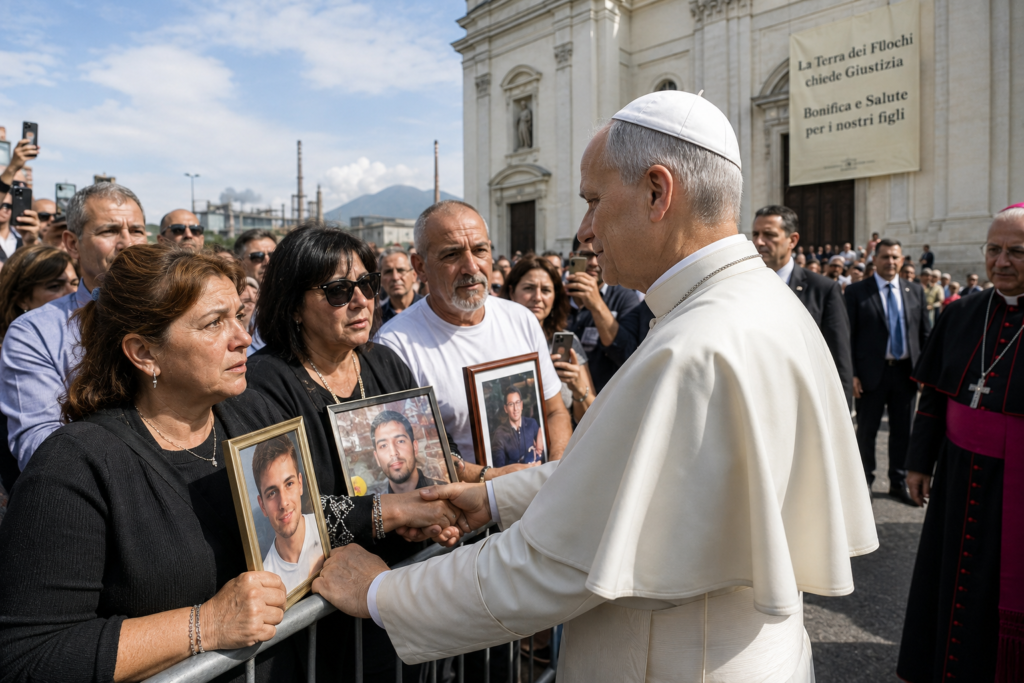
In a powerful and deeply emotional visit to southern Italy, Pope Leo XIV met with families whose lives have been forever changed by decades of illegal toxic waste dumping, delivering a message of compassion, accountability, and environmental justice.
The visit took place in Acerra, a town near Naples located within the infamous “Land of Fires,” a region that has become synonymous with environmental contamination, public health concerns, and years of frustration among residents who believe authorities failed to protect their communities.
For many families, the Pope’s arrival represented more than a pastoral visit. It was an acknowledgment of years of grief, unanswered questions, and a struggle for recognition that has stretched across generations.
As crowds gathered in churches, public squares, and community spaces, many carried photographs of loved ones who had died from cancer and other serious illnesses they believe are connected to toxic pollution. Parents, grandparents, and community leaders shared stories of loss while calling for stronger action to address one of Italy’s most controversial environmental disasters.
The growing attention surrounding Italy toxic waste pollution health crisis reflects increasing global concern about the long-term consequences of environmental neglect and industrial contamination.
During his visit, Pope Leo spoke directly to families affected by pollution-related illnesses and emphasized the need to prioritize human dignity over financial gain.
He criticized organizations and individuals who have profited from activities that damage communities, the environment, and public health. The Pope also condemned what he described as years of impunity that allowed environmental harm to continue without sufficient accountability.
The message resonated strongly with residents who have spent years seeking justice.
Many believe the environmental crisis in the region was not simply the result of poor oversight but a consequence of systematic illegal dumping and waste-burning operations that allegedly involved criminal networks and corrupt business interests.
Searches for environmental justice for affected families have increased significantly as communities around the world confront similar concerns involving pollution and public health.
The area known as the “Land of Fires” has long been associated with illegal waste disposal operations.
Over the years, investigators and environmental groups have documented allegations involving the burial, dumping, and burning of industrial waste across large portions of the Campania region.
What was once considered one of Italy’s most fertile agricultural landscapes gradually became known for toxic smoke, contaminated land, and alarming health statistics.
Residents argue that the environmental damage has affected not only the physical landscape but also the economic future of local communities.
Farmers have faced challenges maintaining consumer confidence in regional agricultural products, while families have endured years of uncertainty regarding potential health risks.
Interest surrounding illegal toxic waste dumping in Italy continues to grow as international audiences learn more about the region’s environmental struggles.
A major turning point came when European human rights judges concluded that Italian authorities had failed for decades to adequately protect residents from the dangers associated with toxic waste contamination.
The ruling intensified pressure on government officials and accelerated efforts to improve environmental monitoring, transparency, and cleanup initiatives. Authorities were instructed to improve information-sharing and establish more comprehensive systems for tracking contaminated sites and public health risks.
For local families, however, legal decisions alone cannot erase years of suffering.
Many continue to mourn children, parents, and relatives who developed serious illnesses. Some residents believe environmental exposure contributed to unusually high rates of cancer and other diseases within affected communities.
The topic has fueled widespread interest in cancer concerns linked to pollution exposure, particularly as researchers continue studying the long-term effects of environmental contamination.
Throughout the visit, Pope Leo emphasized that environmental issues are ultimately human issues.
He described the crisis as one that affects families, communities, workers, and future generations. Rather than focusing solely on environmental damage, he highlighted the social consequences of pollution, including economic hardship, declining public trust, and the emotional toll carried by affected families.
His remarks also reinforced a broader commitment to environmental stewardship and ethical responsibility.
Observers noted that the visit signals Pope Leo’s intention to continue advocating for environmental protection while connecting those concerns to social justice, human dignity, and community well-being.
The conversation extends far beyond Italy.
Around the world, governments, businesses, and environmental organizations are facing growing pressure to address pollution, industrial waste management, and climate-related challenges.
Public interest in corporate accountability for environmental damage has expanded as communities increasingly demand transparency and stronger safeguards against environmental harm.
For many residents of Acerra, the Pope’s visit offered something they have rarely received: visibility.
Families who have spent years feeling overlooked suddenly found their stories receiving international attention. Their experiences became part of a larger discussion about responsibility, justice, and the obligation to protect vulnerable communities.
Community leaders expressed hope that the renewed spotlight would accelerate cleanup efforts, strengthen environmental protections, and encourage policymakers to prioritize public health.
Search trends involving Pope Leo environmental justice message have risen sharply as people around the world respond to the Pope’s remarks and the emotional stories shared by affected families.
As the visit concluded, many residents described a mixture of sorrow and hope.
The grief remains profound, and the challenges facing the region are far from resolved. Yet the presence of the Catholic Church’s leader brought renewed attention to a crisis that many believe has been ignored for too long.
For families carrying photographs of lost children and loved ones, the day represented more than a symbolic gesture.
It was a moment of recognition.
A moment when their pain was seen.
And a moment when calls for justice, accountability, and healing reached a global audience.
While the road ahead remains difficult, residents say they are determined to continue demanding answers, pursuing environmental restoration, and ensuring that future generations inherit a safer and healthier community than the one they were given.