Legal Deadline Looms as U.S. Iran Conflict Sparks Power Struggle
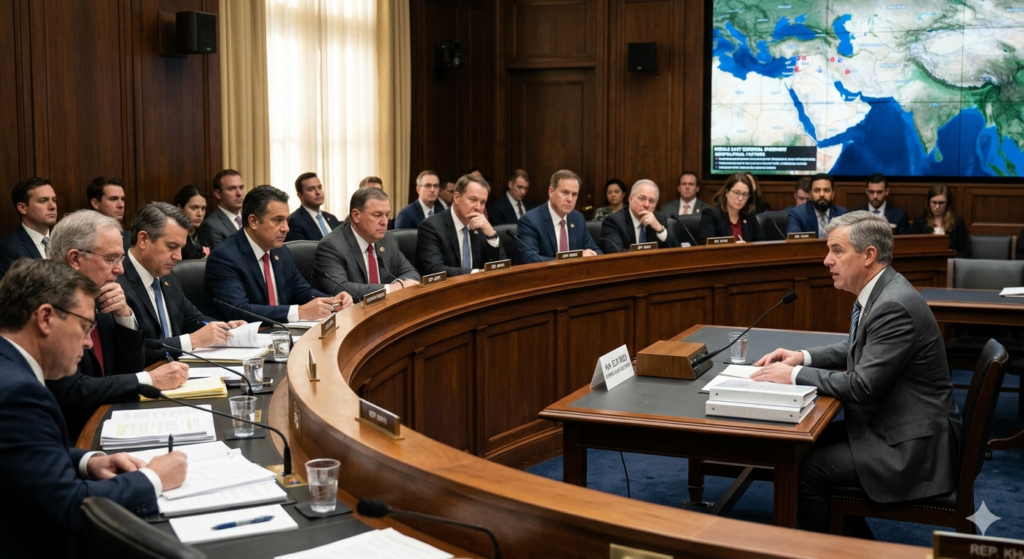
A growing clash between the White House and Congress is reshaping the national debate over U.S. military involvement in Iran, as lawmakers push to enforce a critical legal threshold that could determine how long American forces can remain engaged without explicit approval.
At the center of the dispute is the War Powers Resolution, a decades-old law designed to limit presidential authority in deploying U.S. troops into prolonged conflicts. Under the statute, the executive branch can initiate military action, but must seek congressional authorization if hostilities extend beyond a 60-day window.
Now, as tensions between the United States and Iran escalate, lawmakers from both parties are raising concerns about whether the administration is approaching—or potentially exceeding—that threshold. The issue has reignited a long-standing debate over the balance of power between Congress and the presidency when it comes to matters of war.
The debate over 60 day war powers authorization threshold has become a focal point in Washington, with legislators demanding clarity on the timeline and scope of U.S. military actions. Some argue that the administration must formally seek approval to continue operations, while others contend that existing authorizations or national security concerns justify ongoing engagement.
Defense Secretary Pete Hegseth has been at the center of these discussions, appearing before lawmakers to address questions about military strategy, troop deployments, and legal authority. During recent hearings, he emphasized that the administration is acting within its constitutional powers to protect U.S. interests and respond to emerging threats.
However, several members of Congress remain unconvinced. They argue that without clear authorization, extended military involvement risks undermining the legislative branch’s role in decisions of war and peace. The congressional push to limit presidential war powers authority reflects broader concerns about accountability and oversight in times of conflict.
Complicating matters further is the rapidly evolving situation on the ground. Rising hostilities between U.S. forces and Iranian-backed groups have heightened fears of a wider confrontation. Analysts warn that even limited engagements could escalate quickly, drawing the United States deeper into a regional conflict.
The rising tensions between United States and Iran conflict are influencing not only military strategy but also political calculations in Washington. Lawmakers are weighing the risks of escalation against the need to project strength, creating a delicate balancing act for policymakers.
In the background, legal experts are closely examining how the War Powers Resolution applies to the current situation. While the law sets a clear 60-day guideline, its interpretation has often been contested by successive administrations. Presidents from both parties have argued that certain military actions fall outside its scope, citing constitutional authority as commander in chief.
This ongoing ambiguity has contributed to repeated conflicts between Congress and the executive branch. The legal interpretation of war powers resolution in modern conflicts remains a contentious issue, with no definitive resolution despite decades of debate.
For many lawmakers, the current situation represents an opportunity to reassert congressional authority. Some have proposed resolutions or measures that would require explicit approval for continued military action, while others are calling for greater transparency from the administration.
Public opinion is also playing a role in shaping the debate. Americans are increasingly attentive to how and why military force is used, particularly after years of prolonged conflicts overseas. The question of whether the United States should deepen its involvement in another potential conflict is one that resonates across the political spectrum.
The public concern over US military involvement overseas conflicts is adding pressure on elected officials to justify their positions and decisions. Voters are demanding clear explanations about the objectives, risks, and potential outcomes of any military engagement.
Meanwhile, the administration has sought to frame its actions as necessary for national security. Officials argue that responding to threats in the region is essential to protecting American personnel and maintaining stability. They also emphasize the importance of deterrence, warning that inaction could embolden adversaries.
Still, critics caution that without a clearly defined strategy and congressional backing, the United States could find itself entangled in a conflict with uncertain objectives. The lessons of past military engagements continue to inform the current debate, as policymakers seek to avoid repeating previous mistakes.
The situation is further complicated by the broader geopolitical context. U.S.-Iran tensions are intertwined with regional dynamics, including alliances, rivalries, and ongoing conflicts. Any escalation could have far-reaching implications for global security, energy markets, and diplomatic relations.
The geopolitical implications of escalating US Iran tensions are being closely monitored by international observers, who recognize that the stakes extend well beyond Washington. The outcome of this debate could influence not only U.S. policy but also the stability of the broader Middle East.
As the 60-day threshold approaches—or is perceived to be approaching—the pressure on both Congress and the administration is intensifying. Lawmakers are expected to continue pressing for answers, while the White House faces the challenge of balancing legal, political, and strategic considerations.
Ultimately, the unfolding situation highlights a fundamental question at the heart of American governance: who has the authority to decide when and how the nation goes to war?
The answer, as history has shown, is rarely straightforward. But as tensions with Iran continue to rise, the urgency of that question has never been more apparent.
The ongoing conflict between executive authority and congressional oversight serves as a reminder that decisions about war are not only about strategy and security—they are also about the principles that define the nation’s democratic system.