Pentagon Under Pressure: Defense Secretary Faces Scrutiny as Iran Tensions and Supreme Court Battles Intensify
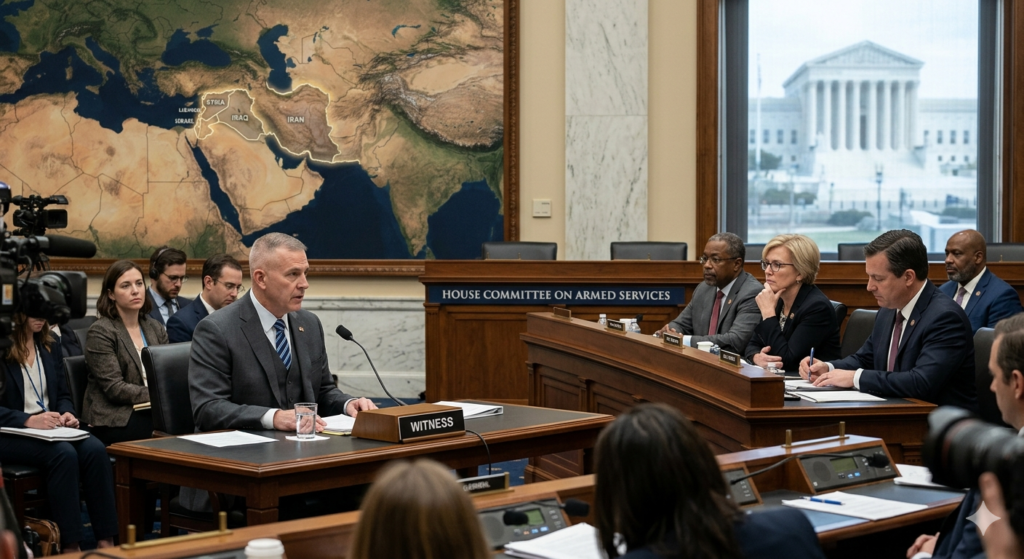
Washington found itself at the center of a high-stakes convergence of national security concerns, political friction, and legal battles this week, as top officials faced mounting questions over U.S. defense strategy and global stability.
At the heart of the unfolding developments is Defense Secretary Pete Hegseth, who has come under increasing scrutiny from lawmakers during a series of tense congressional hearings. Members of the Armed Services Committee pressed him on U.S. military readiness, decision-making protocols, and the administration’s broader strategy toward escalating tensions with Iran.
The hearings reflected a growing sense of urgency among both Democrats and Republicans, as concerns mount over how the United States is navigating an increasingly volatile Middle East. Lawmakers sought clarity on how the Pentagon is preparing for potential conflict scenarios, particularly amid fears of further escalation.
The concerns over U.S. military readiness amid Iran tensions have become a defining issue in Washington, with officials demanding detailed answers on troop deployments, defensive capabilities, and contingency planning. Hegseth, while defending the administration’s approach, emphasized that the Pentagon remains committed to maintaining deterrence while avoiding unnecessary conflict.
Still, some lawmakers expressed frustration, arguing that key questions about long-term strategy remain unanswered. The tone of the hearings underscored the political stakes, as national security becomes a focal point in the broader policy debate.
Adding to the complexity is the ongoing strain in U.S.-Iran relations. Recent developments have heightened fears of confrontation, with both sides exchanging warnings that have captured global attention. Analysts note that even minor miscalculations in such an environment could have far-reaching consequences.
The rising geopolitical risks involving U.S. and Iran conflict dynamics are not only influencing military planning but also shaping economic outlooks. Energy markets, global trade routes, and diplomatic alliances are all being affected by the uncertainty surrounding the region.
Meanwhile, the political landscape in Washington is being shaped by a parallel set of developments unfolding in the judicial system. The Supreme Court is once again at the center of national attention, with several high-profile cases raising questions about the balance of power and the future of key policies.
Legal experts say the outcomes of these cases could have lasting implications, not just for the administration but for the broader direction of federal authority. Issues ranging from executive power to regulatory authority are being closely examined, reflecting the ongoing tension between different branches of government.
The Supreme Court decisions impacting executive power and policy direction are becoming a critical part of the national conversation, as policymakers and citizens alike look for clarity on how legal rulings will shape governance in the years ahead.
In Congress, the intersection of defense policy and judicial developments is creating a uniquely complex political environment. Lawmakers are not only grappling with immediate security concerns but also considering how legal constraints may influence future actions.
This dual focus has intensified debates over accountability and transparency. Critics argue that the administration must provide clearer communication on both military strategy and legal positioning, while supporters contend that certain details must remain confidential to protect national interests.
The debate over government transparency in national security decisions continues to divide opinion, highlighting the challenges of balancing openness with operational security. For many Americans, these discussions are more than abstract policy debates—they are directly tied to concerns about safety, stability, and trust in leadership.
Beyond Washington, the ripple effects of these developments are being felt across the country. Public opinion is increasingly shaped by how these issues are reported and interpreted, with media coverage playing a crucial role in framing the narrative.
Experts point out that in today’s fast-paced information environment, the way stories are communicated can significantly influence public perception. From congressional hearings to Supreme Court rulings, each development contributes to a broader understanding of the nation’s direction.
The impact of political narratives on public trust in leadership is particularly evident in moments like these, when multiple high-stakes issues converge. As Americans navigate a complex flow of information, the need for clear, accurate reporting becomes more important than ever.
Looking ahead, the situation remains fluid. Further congressional hearings are expected, with lawmakers likely to continue pressing for answers on defense strategy and international relations. At the same time, upcoming Supreme Court decisions could reshape key aspects of governance, adding another layer of uncertainty.
For Defense Secretary Hegseth, the coming weeks will be critical in addressing concerns and reinforcing confidence in the Pentagon’s approach. His ability to communicate effectively with both lawmakers and the public will play a significant role in shaping perceptions of the administration’s handling of national security.
Ultimately, this moment reflects a broader reality of modern governance, where military strategy, political dynamics, and legal frameworks are deeply interconnected. Decisions made in one arena often have cascading effects across others, underscoring the complexity of leadership in a rapidly changing world.
The intersection of defense policy legal battles and global tensions serves as a powerful reminder of the challenges facing policymakers today. As the United States navigates these issues, the outcomes will likely have lasting implications not only for national security but for the country’s role on the global stage.