Trump Declares Strait of Hormuz “Open” as U.S. and Iran Trade Deadly Strikes in High-Stakes Showdown
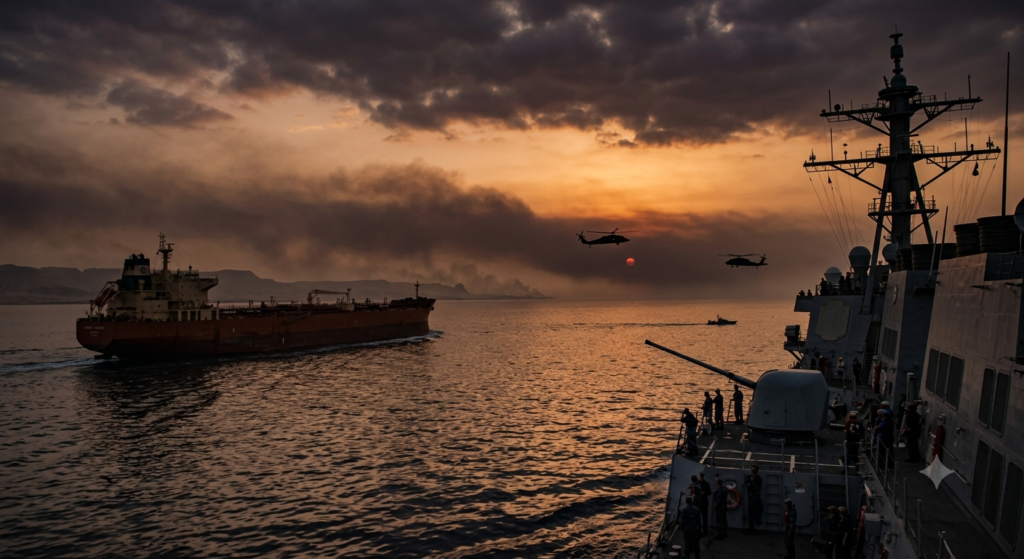
A fragile June deal lies in ruins after a weekend of missile and drone attacks, leaving the world’s most vital oil passageway at the center of a dangerous confrontation.
President Donald Trump declared Sunday that the Strait of Hormuz remains open to commercial traffic, directly contradicting Tehran’s insistence that it has effectively closed the strategic waterway. The bold assertion came as U.S. and Iranian forces exchanged heavy missile and drone assaults across the Gulf, with Tehran targeting American facilities in allied states and sending oil prices surging.
The escalation has shattered a tentative agreement signed just last month, exposing what experts are calling a central weakness in the June 14 memorandum of understanding: it failed to establish an unconditional right for commercial vessels to use the strait without Iranian interference. Now, oil prices are rising sharply as the U.S. and Iran fight for control of the Strait of Hormuz, threatening to hit American consumers directly at the pump.
A Critical Waterway Under Siege
The Strait of Hormuz is no ordinary stretch of water. Approximately 20% of the world’s oil supplies transited through this narrow passage before the current crisis erupted. It remains the single most important chokepoint for global energy supplies, making any disruption a matter of immediate international concern.
The latest wave of violence began when Iran opened fire on a ship attempting to transit through the strait on a route Tehran considered unauthorized. That attack triggered a swift U.S. military response, with American forces striking 140 targets across Iran. Iran retaliated in kind, launching a fresh barrage of strikes aimed at American military assets throughout the Middle East.
Iran insists it controls the Strait of Hormuz, with officials asserting the waterway is closed until further notice. U.S. Central Command has forcefully rejected that claim, stating plainly: “Iran does not control the Strait of Hormuz. Maritime activity remains normal”.
A Deal Unravels
The current confrontation represents a stunning reversal from just weeks ago. On June 14, Trump and Iran’s president signed a framework deal that included language Tehran interpreted as giving it control over traffic through the strait. Among other concessions, Trump agreed to end a U.S. military blockade of Iranian ports and allow Iran to resume oil sales for 60 days in return for reopening the strait.
That agreement now appears to be crumbling. Trump has since warned that the June deal may be “over,” alleging that Tehran derailed the tentative understanding following an Iranian military strike on a commercial vessel. The collapse has sent energy prices higher and exposed the fragility of diplomatic efforts to secure one of the world’s most critical maritime passages.
Trump administration Iran policy struggles to maintain credibility as both sides accuse each other of bad faith. The president faces anger over high gas prices and spiking inflation, intensifying pressure to resolve the crisis quickly.
What’s at Stake for American Consumers
For U.S. households, the confrontation isn’t just a distant geopolitical drama. Oil prices and Strait of Hormuz tensions are directly linked, and any sustained disruption threatens to push gasoline prices higher at a time when inflation remains a top concern for voters.
Before the current crisis, global oil markets had been stabilizing after months of volatility. That stability is now evaporating. Brent crude prices jumped following the weekend strikes, and analysts warn that further escalation could drive prices significantly higher.
The stakes extend beyond gasoline. Approximately 20% of the world’s oil and liquefied natural gas passed through the strait before the conflict intensified. Any prolonged closure would ripple through global supply chains, affecting everything from manufacturing to transportation costs.
The Military Reality on the Ground
On the ground, the situation remains fluid and dangerous. U.S. and Iranian forces have exchanged heavy missile and drone assaults, with Tehran targeting American facilities in Gulf states. The Islamic Revolutionary Guard Corps Navy has been particularly active, attacking commercial vessels and asserting Iranian control over shipping lanes.
US Iran military confrontation in the Gulf shows no signs of abating. Iran’s lead negotiator has sent clear messages to Washington, but those communications have done little to de-escalate the violence. Both sides appear to be digging in, with each new attack prompting retaliation from the other.
CENTCOM has maintained that the strait remains open, but the reality for commercial shipping is more complicated. Vessels attempting to transit face the very real risk of Iranian harassment or attack, making insurance costs skyrocket and forcing many shipping companies to reconsider their routes.
A History of Tension
The current crisis is the latest chapter in a long history of confrontation over the Strait of Hormuz. Iranian officials have threatened to close the waterway several times over past decades but never actually followed through. The disparity in forces between Iran and the United States and its allies has historically kept the risk of a full closure low.
But this time feels different. The June agreement’s ambiguity over control of the strait has created a dangerous gray area that both sides are exploiting. Iran believes the deal gave it authority over traffic through the waterway. The United States insists it did not. That fundamental disagreement has now escalated into open conflict.
What Comes Next
The coming days will be critical. Trump has declared the ceasefire “over” following the exchange of strikes. Iran has launched new attacks and insists the strait is closed. The United States has rejected that claim and continues to assert its commitment to keeping the waterway open.
For now, the Strait of Hormuz remains a battleground—both militarily and diplomatically. The outcome of this confrontation will have profound implications for global energy markets, U.S. foreign policy, and the stability of the entire Middle East.
Global energy markets Strait of Hormuz crisis has become the defining geopolitical story of the summer. And for American consumers already feeling the pinch of inflation, the stakes couldn’t be higher.