Empire State Building Security Under Scrutiny After Daring Spire Climb Ends in Arrests
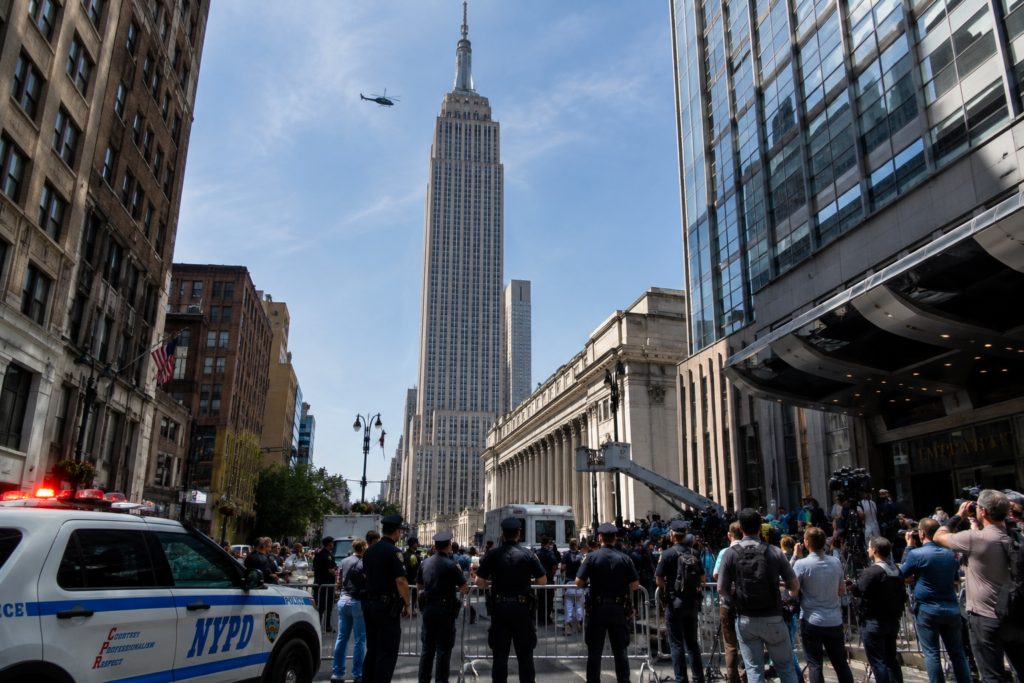
One of New York City’s most recognizable landmarks became the center of an extraordinary security incident after two climbers reached the top of the Empire State Building’s transmission spire, drawing the attention of thousands of onlookers, emergency responders, and millions of people following the event online.
The unauthorized climb, which unfolded in broad daylight, temporarily disrupted normal operations at the iconic Midtown Manhattan skyscraper and immediately raised new questions about security at one of America’s busiest tourist destinations.
Authorities later took both climbers into custody without reports of injuries, but the unusual incident has sparked a nationwide conversation about urban climbing, public safety, and protecting high-profile landmarks.
Witnesses first noticed the pair high above the observation decks after they climbed onto the building’s antenna structure. The climbers displayed a large banner carrying a message promoting peace while balancing hundreds of feet above the public viewing areas.
The dramatic scene quickly attracted crowds on nearby streets as television helicopters circled overhead and social media filled with videos recorded from surrounding buildings and sidewalks. Emergency crews secured the area while officials monitored the climbers’ movements from both the ground and the air.
For many New Yorkers, the event was unlike anything they had ever witnessed.
The Empire State Building welcomes millions of visitors every year and has long been regarded as one of the country’s most secure and recognizable landmarks. Seeing unauthorized individuals reach its uppermost transmission structure surprised tourists, office workers, and security experts alike.
The incident has fueled growing online discussion surrounding Empire State Building security investigation, with many people asking how the climbers managed to access a restricted portion of the building.
Officials have not publicly explained exactly how the pair gained access to the antenna, and investigators are reviewing the sequence of events leading up to the climb. Security specialists say understanding that timeline will be critical in determining whether additional protective measures are necessary.
After remaining on the spire for several minutes, the climbers began descending. During the descent, one individual appeared to propose marriage to the other before they embraced, creating another unexpected moment that quickly spread across social media platforms.
Once both climbers returned to an accessible area of the structure, New York police officers safely took them into custody. Authorities later announced multiple criminal charges related to the unauthorized climb and ongoing investigation.
Although the proposal attracted widespread public attention, safety experts emphasized that the greatest concern remained the extreme risks associated with climbing active communication infrastructure.
The Empire State Building’s antenna supports numerous broadcast operations serving the New York metropolitan area. During the incident, broadcasters temporarily shifted some transmissions to backup facilities while emergency protocols remained in effect.
That operational response has increased interest in New York landmark safety protocols, particularly regarding how iconic buildings manage unexpected security incidents while minimizing disruption for visitors and surrounding businesses.
Building management stated that visitors and tenants were never placed in direct danger during the incident. Nevertheless, observation areas were temporarily cleared while emergency personnel worked to resolve the situation safely. Normal operations later resumed.
Security professionals note that skyscrapers present unique challenges.
Unlike many public buildings, iconic towers combine tourism, office space, broadcasting equipment, maintenance infrastructure, and restricted mechanical areas within a single property. Protecting those different environments requires sophisticated access controls, surveillance systems, and coordination between private security teams and law enforcement.
The incident has also renewed conversations surrounding unauthorized skyscraper climbing incidents, a phenomenon that has occasionally attracted attention around the world through social media and documentary filmmaking.
Experts warn that these activities involve extraordinary dangers, including high winds, extreme heights, structural hazards, and exposure to broadcast equipment.
Even experienced climbers face substantial risks, and authorities consistently discourage such activities because they can endanger both participants and emergency responders.
The event also demonstrates how rapidly unusual public incidents can capture national attention.
Within minutes, images and videos of the climb appeared across multiple digital platforms, turning what initially seemed like a localized emergency into one of the day’s most widely discussed stories.
Communications analysts say viral events increasingly shape public awareness before official investigations are complete, creating additional challenges for emergency agencies attempting to provide accurate information in real time.
Interest has continued growing around viral urban climbing social media, as authorities examine whether online visibility encourages increasingly dangerous stunts.
Meanwhile, tourism experts believe the incident is unlikely to affect the Empire State Building’s long-term popularity.
The landmark remains one of New York City’s most visited attractions and an internationally recognized symbol of American architecture. Millions of travelers continue visiting its observation decks each year to experience panoramic views of Manhattan.
Still, security reviews are expected to examine whether additional safeguards could further reduce opportunities for unauthorized access to restricted sections of the building.
The broader discussion extends beyond a single skyscraper.
Across the United States, operators of landmark buildings, bridges, towers, and public attractions continue evaluating how to balance visitor accessibility with increasingly sophisticated security requirements.
As investigators continue reviewing the circumstances surrounding the climb, many experts believe the incident will become an important case study for building security professionals nationwide.
The combination of global attention, operational disruption, and successful emergency coordination highlights the importance of preparedness in protecting some of America’s most recognizable public spaces.
For New Yorkers, the episode will likely be remembered as one of the most unusual moments in the recent history of the Empire State Building.
For security officials, however, it represents something more significant: an opportunity to strengthen procedures, evaluate vulnerabilities, and ensure that one of the world’s most famous skyscrapers remains both welcoming and secure for generations of visitors to come.