Ukraine Expands Long-Range Strike Campaign as Key Russian Defense Facility Comes Under Attack
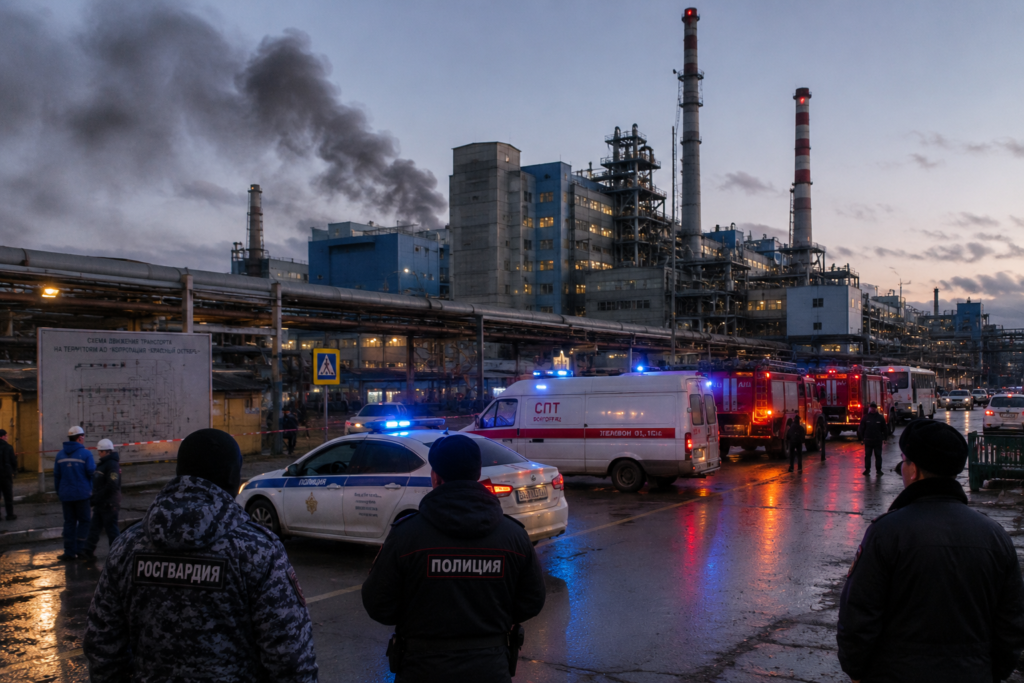
The war in Ukraine entered another significant phase this week after Ukrainian forces reportedly carried out a long-range strike targeting a major defense-related industrial facility deep inside Russia, highlighting Kyiv’s growing ability to project military pressure far beyond the front lines.
The reported attack occurred in Russia’s Volgograd region, an area located hundreds of miles from active combat zones and home to several strategic industrial and military-linked facilities. The incident has once again drawn international attention to the evolving nature of the conflict, where advanced drone technology and long-range strike capabilities are increasingly reshaping battlefield dynamics.
Ukrainian officials described the operation as part of a broader effort to weaken Russia’s military-industrial infrastructure, which plays a critical role in supporting ongoing military operations. While independent verification of all battlefield claims remains difficult during wartime, both Ukrainian and Russian sources acknowledged that a significant security incident occurred in the region.
The strike reflects a broader trend that has emerged over the past year.
Rather than focusing exclusively on frontline engagements, Ukrainian military planners have increasingly sought to target logistics hubs, fuel depots, weapons production facilities, transportation networks, and defense-related industrial sites located far from the battlefield.
Military analysts say this strategy is designed to reduce Russia’s ability to sustain military operations over the long term while forcing authorities to divert additional resources toward protecting critical infrastructure.
The latest developments have intensified discussion around Ukraine long-range drone strike strategy, which has become one of the defining characteristics of the conflict’s modern phase.
Residents in parts of the Volgograd region reported hearing explosions and seeing emergency response activity following the incident. Local authorities later confirmed that security and emergency personnel had been deployed to the affected area while investigations and damage assessments continued.
Russian officials have repeatedly stated that air defense systems have successfully intercepted many incoming threats. However, the growing frequency of attacks targeting locations deep inside Russian territory has raised questions about the challenges involved in protecting vast industrial and strategic networks spread across the country.
For Ukraine, such operations carry both military and symbolic significance.
Supporters argue that strikes against defense-linked facilities demonstrate that no part of the military supply chain is entirely beyond reach. They also contend that targeting infrastructure directly connected to military production may help reduce future battlefield threats.
Critics, meanwhile, warn that escalating long-range attacks could increase regional tensions and potentially trigger broader security risks.
The latest operation has also renewed attention on Russian military infrastructure under pressure, particularly as both sides continue adapting their strategies in response to evolving battlefield realities.
Ukrainian President Volodymyr Zelenskyy has consistently emphasized the importance of increasing domestic weapons production, strengthening air defense capabilities, and expanding long-range strike capacity.
In recent months, Ukraine has accelerated efforts to develop and deploy domestically produced drone systems capable of reaching targets located far beyond traditional combat zones.
Defense experts note that relatively inexpensive drone technologies have transformed modern warfare by enabling smaller nations to challenge larger adversaries in ways that were previously difficult or impossible.
The growing use of unmanned aerial systems has significantly altered military planning on both sides of the conflict.
As a result, conversations surrounding modern drone warfare in Ukraine continue to dominate military and geopolitical discussions around the world.
The reported strike also comes at a time when international leaders remain focused on finding pathways toward greater regional stability while simultaneously supporting national security objectives.
Diplomatic efforts aimed at reducing hostilities have repeatedly encountered obstacles, leaving military developments as the primary driver of events on the ground.
For global observers, the attack serves as another reminder that the conflict remains highly dynamic despite periods in which frontline changes appear limited.
Many analysts believe the war is increasingly becoming a contest of industrial capacity, technological innovation, and long-term endurance rather than solely territorial control.
That shift has elevated the importance of impact of defense industry on war, as both countries seek to strengthen production capabilities while disrupting those of their opponent.
The Volgograd incident highlights how industrial facilities have become critical components of modern military strategy.
Factories, transportation networks, energy infrastructure, and supply chains now play an increasingly central role in determining operational effectiveness and long-term sustainability.
The strike has also reinforced concerns regarding deep strikes inside Russian territory, a development that has become more common as Ukraine expands its military reach through advanced drone operations.
Security experts point out that such attacks often carry strategic messaging objectives in addition to their direct military impact.
By demonstrating an ability to reach locations previously considered relatively secure, military planners can influence public perception, resource allocation decisions, and broader strategic calculations.
At the same time, Russian authorities continue investing heavily in air defense systems, electronic warfare technologies, and protective measures designed to counter emerging threats.
The ongoing competition between offensive drone capabilities and defensive countermeasures is rapidly becoming one of the defining features of twenty-first-century warfare.
For international policymakers, these developments offer valuable insights into how future conflicts may unfold.
Military planners across the globe are closely studying lessons from Ukraine, particularly regarding the effectiveness of drones, infrastructure targeting, and decentralized operational strategies.
The broader implications extend far beyond Eastern Europe.
Governments, defense organizations, and security experts continue evaluating how technological innovation is transforming traditional military doctrines and strategic assumptions.
The latest strike has therefore attracted attention not only because of its immediate impact but also because of what it reveals about the future of warfare.
As the conflict continues, both sides are expected to pursue new technologies, adapt operational methods, and seek advantages across multiple domains.
For now, the reported attack in Volgograd underscores the continuing intensity of the war and the growing importance of future of military drone technology in shaping military outcomes.
While the long-term consequences remain uncertain, one conclusion is increasingly clear: the battlefield is no longer defined solely by front lines.
Instead, it now extends deep into supply networks, industrial centers, and strategic infrastructure, creating a new reality that continues to reshape one of the world’s most closely watched conflicts.