Effort to Disqualify Republican Sen. Dan Sullivan Intensifies Alaska’s 2026 Political Battle
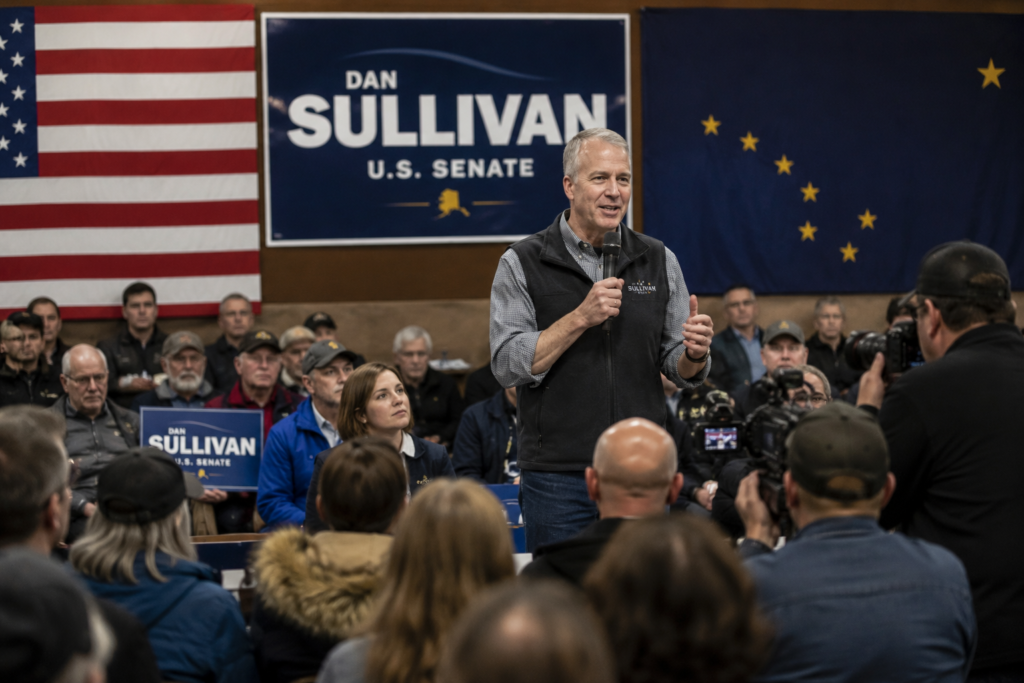
Alaska’s political landscape is heating up more than a year before the 2026 elections, as a new effort to challenge Republican Senator Dan Sullivan’s eligibility has sparked a fierce legal and political debate that could reshape one of the country’s most closely watched Senate races.
The controversy centers on an attempt by a group of Alaskans to have Sullivan disqualified from the Republican primary ballot. The challengers argue that Sullivan does not meet residency-related constitutional requirements to run for office in Alaska, while the senator’s supporters dismiss the effort as a politically motivated attempt to weaken a strong incumbent ahead of a difficult election cycle.
The dispute has quickly evolved from a technical legal challenge into a broader battle over representation, political identity, and the future direction of Alaska’s Republican Party.
A Challenge That Could Reshape The Race
Dan Sullivan, a former Alaska attorney general and Marine Corps reservist, has served in the U.S. Senate since 2015 and remains one of the state’s most recognizable Republican figures. He is expected to seek another term in 2026 and has already begun building campaign momentum.
But opponents are now trying to block his path to the ballot before voters ever get a chance to decide.
The challengers claim Sullivan’s residency history raises questions about whether he fully satisfies Alaska’s constitutional requirements for Senate candidates. They argue that the issue deserves judicial review and that election officials should closely examine his eligibility before certifying the ballot.
Sullivan’s legal team has strongly rejected those claims, arguing that he has long maintained ties to Alaska and clearly qualifies to run. Supporters say the challenge is little more than an election-year tactic designed to create headlines and distract from policy debates.
The dispute has rapidly become one of the most discussed examples of Dan Sullivan Alaska Senate ballot challenge as political observers watch how courts and election officials respond.
Why The Case Matters Nationally
Although the fight is unfolding in Alaska, the implications extend far beyond the state.
The 2026 Senate map is expected to be highly competitive, and both parties are closely watching every potentially vulnerable seat. Republicans currently view Alaska as a stronghold, but Democrats hope that internal divisions or legal controversies could create unexpected openings.
Election experts say even unsuccessful ballot challenges can have political consequences by forcing campaigns to divert time, money, and attention toward legal defense rather than voter outreach.
The case is also fueling broader conversations about 2026 Alaska Senate election controversy, particularly as voters across the country become increasingly focused on candidate qualifications, residency rules, and election integrity.
Residency Rules At The Center Of The Debate
At the heart of the dispute is the question of what qualifies as residency for federal officeholders.
The U.S. Constitution requires senators to be inhabitants of the state they represent at the time of election, but the interpretation of residency can sometimes become legally complex. Courts often consider factors such as property ownership, voting records, tax filings, family ties, and demonstrated intent to remain connected to a state.
Supporters of the challenge argue that public officials should be held to strict standards when representing a state in Congress. Sullivan’s allies counter that he has clearly lived, worked, and built his political career in Alaska for years.
Legal scholars note that residency disputes are relatively uncommon in Senate races, but they can become politically explosive because they touch on questions of legitimacy and representation.
The ongoing battle has intensified interest in Republican Senate candidate residency dispute, especially among voters concerned about constitutional qualifications for federal office.
Alaska’s Unique Political Environment
Alaska has long been known for its independent-minded electorate and unconventional political dynamics.
The state’s ranked-choice voting system, geographic isolation, and mix of conservative, libertarian, and moderate voters often produce elections that defy national expectations. Candidates frequently emphasize personal authenticity and local roots, making residency and identity especially important political issues.
Sullivan has traditionally benefited from strong support among Republican voters, veterans, and conservatives focused on energy policy, national security, and federal land issues. But challengers hope the legal dispute could create doubts among some voters and energize opposition groups.
Political analysts say the case could become a defining issue in Alaska Republican primary legal fight, particularly if it drags on for months and dominates campaign coverage.
What Courts And Election Officials Could Do
Several outcomes remain possible.
A court could dismiss the challenge quickly, ruling that Sullivan clearly meets residency requirements. Alternatively, judges could allow the case to proceed and require additional evidence regarding his eligibility. Election officials may also face pressure to review documentation before finalizing the primary ballot.
Legal experts say courts are generally cautious about removing major-party candidates from ballots unless the evidence is compelling and clearly supported by law.
Even so, the mere existence of the challenge ensures continued political turbulence.
Campaigns, donors, and national party organizations are already monitoring the situation closely because Alaska’s Senate seat could become strategically important in determining control of Congress.
The dispute has strengthened attention around Senate ballot eligibility legal challenge, a phrase increasingly appearing in political analysis and election law discussions.
Sullivan’s Campaign Pushes Back
Sullivan’s campaign has framed the challenge as an attack on Alaska voters rather than a legitimate legal concern.
Supporters argue that voters — not political activists or courts — should decide who represents the state in the Senate. They also point to Sullivan’s military service, years in public office, and long-standing involvement in Alaska politics as evidence of his commitment to the state.
The senator continues emphasizing policy issues such as energy development, national defense, fisheries, and federal regulations affecting Alaska’s economy.
Campaign strategists believe maintaining focus on those issues will help prevent the residency dispute from overshadowing Sullivan’s broader political message.
Still, the challenge guarantees that questions about his eligibility will remain part of the public conversation for the foreseeable future.
A Test Of Alaska’s Political Identity
Beyond the legal arguments, the case reflects deeper tensions within Alaska politics about who gets to define the state’s identity and representation.
Some voters view the challenge as a necessary accountability measure. Others see it as an attempt to weaponize technicalities against a political opponent.
That divide mirrors broader national trends in which legal battles, ballot access disputes, and constitutional questions increasingly become central features of election campaigns.
For now, Sullivan remains a leading figure in Alaska politics and a likely favorite in the Republican primary. But the effort to disqualify him has ensured that the 2026 race will begin under a cloud of legal uncertainty — and with far more national attention than many expected this early in the election cycle.