Karen Read Says Public Support Has Only Grown Since Acquittal as She Launches New Legal Fight
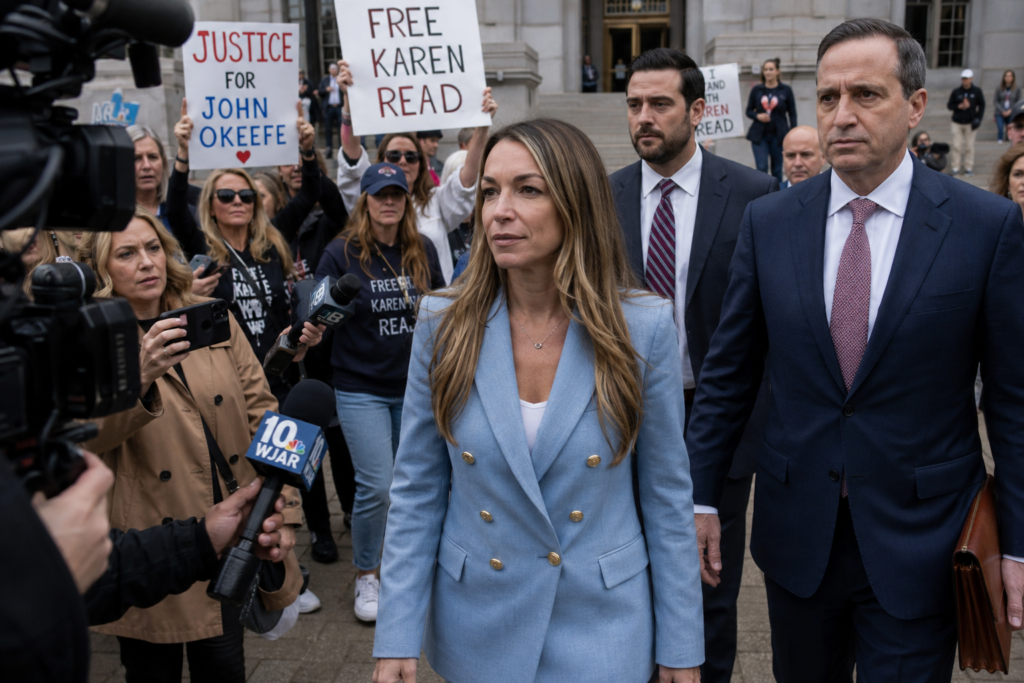
Nearly a year after one of America’s most closely watched criminal trials came to an end, Karen Read says life has changed dramatically — and according to her, public support has never been stronger.
The Massachusetts woman, who was acquitted of the most serious charges in the death of her boyfriend, Boston police officer John O’Keefe, is now speaking publicly about life after the verdict, a new lawsuit against law enforcement agencies, and why she believes the fight surrounding the case is far from over.
In her first major television interview since her acquittal, Read described a reality that looks very different from what many expected following years of intense media coverage, courtroom battles, and public controversy.
According to Read, strangers regularly approach her in restaurants, stores, and public places, often offering words of encouragement rather than criticism. She even joked that supporters frequently insist on paying for her meals when they recognize her.
The comments come after a legal saga that captivated audiences across the country and transformed a local Massachusetts investigation into a national true-crime phenomenon.
A Case That Divided Public Opinion
The case centered on the death of John O’Keefe, a Boston police officer who was found unresponsive outside a home in Canton, Massachusetts, during a snowstorm in January 2022.
Prosecutors argued that Read struck O’Keefe with her SUV after a night of drinking and left the scene. Read consistently denied the allegations and maintained that she had been wrongly accused.
The legal battle stretched over multiple years and included a mistrial before a second jury ultimately cleared Read of murder, manslaughter, and leaving the scene charges. She was convicted only on a drunken driving-related offense and received probation.
The verdict immediately sparked intense debate across social media, legal circles, and true-crime communities.
The case became one of the most discussed examples of high profile criminal trial public reaction in recent years.
From Defendant to Public Figure
What makes the story unusual is how Read’s public image evolved during the legal proceedings.
While many criminal defendants attempt to avoid attention after a trial concludes, Read has remained highly visible.
Supporters organized rallies throughout the proceedings, attended court hearings, and actively promoted claims that the investigation was flawed. Following her acquittal, many of those supporters have continued advocating on her behalf.
Read now says she rarely encounters hostility in public.
During recent interviews, she claimed she has not personally met anyone who believes she was responsible for O’Keefe’s death, despite years of public debate surrounding the case.
The ongoing discussion has helped fuel interest in Karen Read acquittal public support movement, a topic that continues generating significant online engagement.
New Lawsuit Targets Investigators
At the center of Read’s latest legal effort is a civil lawsuit filed against the Massachusetts State Police and local law enforcement agencies involved in the investigation.
The lawsuit alleges serious misconduct, investigative failures, and institutional problems that Read claims contributed to her prosecution.
Court filings reference allegations involving former investigators whose conduct became a major issue during the criminal proceedings.
One investigator was ultimately dismissed after internal reviews found misconduct related to inappropriate communications connected to the case. Another officer resigned amid separate scrutiny.
The lawsuit seeks compensation for legal expenses, reputational damage, emotional distress, and other losses that Read argues resulted from the investigation.
The filing has reignited conversations about police misconduct lawsuit after acquittal and whether law enforcement agencies should face greater accountability when investigations come under question.
O’Keefe Family Continues Pursuit of Civil Claims
Although the criminal case largely concluded with Read’s acquittal, legal challenges remain.
Members of O’Keefe’s family continue pursuing separate civil claims connected to his death. Those proceedings operate under a different legal standard than criminal trials and could keep aspects of the case in court for years.
The continuing legal activity ensures that the story remains relevant well beyond the original verdict.
For many observers, the case has evolved into a broader debate about policing, prosecutorial discretion, media influence, and public trust in the justice system.
That broader discussion reflects growing interest in wrongful prosecution allegations against police, particularly in cases involving disputed investigations and conflicting evidence.
A Story That Still Resonates
Even after years of hearings, testimony, and national media attention, public fascination with the case remains remarkably strong.
Documentaries, podcasts, television specials, and online communities continue analyzing evidence and debating what happened during the final hours of O’Keefe’s life.
For Read, however, the focus appears to have shifted.
She says her current mission centers on exposing what she views as systemic failures and ensuring accountability within institutions that played a role in her prosecution.
Whether supporters view her as a victim of a flawed investigation or critics continue to question aspects of the case, one reality is clear: the controversy surrounding Karen Read has not disappeared.
Instead, it has entered a new chapter — one increasingly defined by civil litigation, public advocacy, and ongoing debate over the future of criminal justice accountability.
As legal battles continue and new information emerges, the case remains one of the most compelling examples of criminal justice accountability debate nationwide, a story that continues to resonate far beyond a Massachusetts courtroom.