Trump Says Iran Wants to Negotiate as Protest Death Toll Surges Amid Violent Crackdown
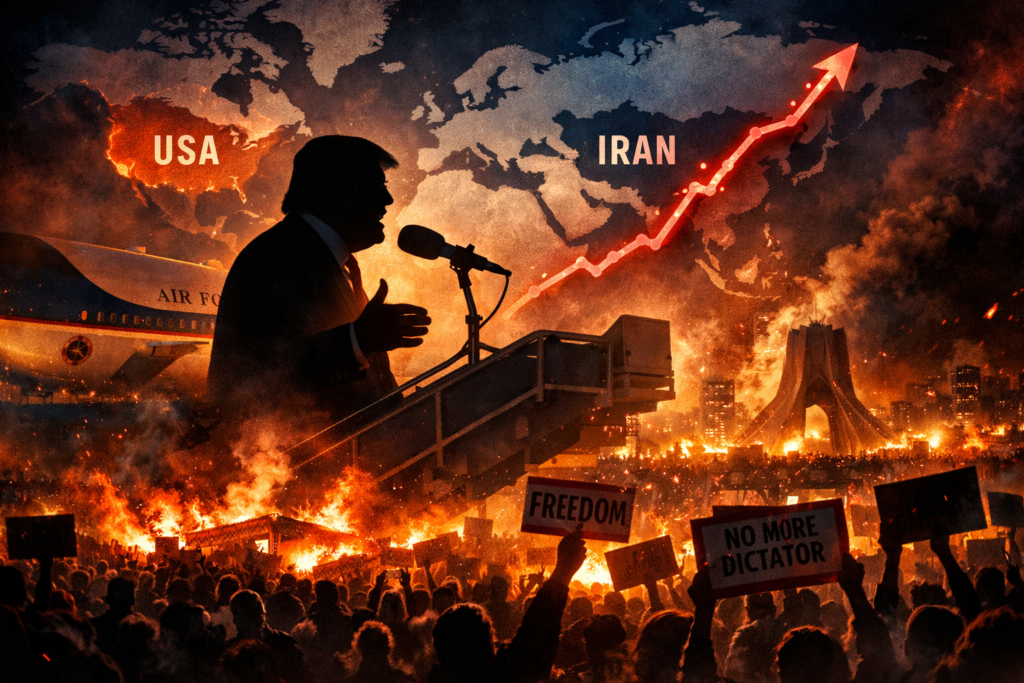
DUBAI / WASHINGTON, D.C. — With nationwide protests in Iran entering their third week and the estimated death toll rising sharply, U.S. President Donald Trump said Tehran has expressed a willingness to negotiate with Washington — a surprising development as the United States weighs its response to a brutal crackdown that has drawn global condemnation. According to activists and rights groups monitoring the unrest, more than 500 people have been killed and tens of thousands detained since demonstrations began in late December 2025. The protests, which began over soaring prices and economic hardship, rapidly evolved into a broader movement challenging Iran’s clerical leadership and its political system. Iranian authorities have responded with deadly force, arresting more than 10,600 protesters and imposing a near-total internet and communications blackout that has made independent verification of casualty figures difficult.
Mounting Death Toll and Human Rights Concerns
Human rights groups such as the Human Rights Activists News Agency (HRANA) — a U.S.–based organization that tracks unrest inside Iran — reported that the death toll from the crackdown has climbed to at least 544 people, including both protesters and security personnel. The Norway-based Iran Human Rights group has confirmed at least 192 protester fatalities, though it cautions that the actual figure could be significantly higher due to limited access to reliable information. Despite conflicting tallies, activists and rights groups agree that the violence has been widespread, with security forces using live ammunition, heavy weaponry, and mass arrests to suppress demonstrations. Iranians inside the country and abroad have decried the crackdown as one of the most severe in recent memory, with videos — though difficult to verify — showing scenes of heavy gunfire in cities across the country. The unrest has also brought international attention to Iran’s long-standing economic woes, including plummeting currency value, rising inflation, and widespread dissatisfaction with government priorities. What began as protests over economic grievances quickly transformed into open calls for political change and greater freedoms.
Trump’s Public Comments: Negotiation or Pressure Tactic?
In a rare public statement on the crisis, President Trump said that Iranian leaders had contacted the United States and expressed interest in negotiating with Washington. Speaking aboard Air Force One, Trump said that officials from Tehran reached out, and that “a meeting is being set up” to discuss issues including Tehran’s nuclear program and missile development. Yet he also warned that the United States might take action before talks occur if conditions on the ground worsen. “I think they’re tired of being beat up by the United States,” Trump told reporters, asserting that Iran desires negotiations but may face pressure to act before formal talks begin. “Iran wants to negotiate,” he said, while suggesting that diplomatic efforts are underway even as other options are weighed. The president’s comments mark a notable shift in tone — from stern warnings and threats of strong responses to an acknowledgment of diplomatic overtures from Tehran. Trump also stated that “the military is looking at it, and we’re looking at some very strong options” to respond if Iran continues its violent crackdown or threatens U.S. interests or allies.
Iran’s Reaction and Regional Risks
Iranian officials, while suggesting a willingness for dialogue, have simultaneously issued harsh rhetoric against foreign interference. Parliament speaker Mohammad Bagher Qalibaf warned that U.S. forces and Israel would be “legitimate targets” if Washington carries out military strikes to protect demonstrators. Iranian state media also broadcast pro-regime rallies with slogans such as “Death to America” and “Death to Israel,” underscoring a deep and pervasive mistrust of Western involvement. Tehran’s stance reflects a delicate balancing act: on one hand, the regime is under immense domestic pressure due to mass protests and international scrutiny; on the other, it remains deeply resistant to perceived foreign influence or intervention, especially from the United States and Israel. Iranian leaders have insisted that the unrest is driven by “foreign meddling,” and have framed demonstrations as threats to national sovereignty and stability.
International Response and Diplomatic Dynamics
Global reactions have been mixed, with some nations and organizations condemning Iran’s crackdown while urging restraint and a peaceful resolution. The United Nations, European governments, and human rights advocates have called for an end to violence and respect for free expression. However, none have committed to overt military involvement, instead pushing for strengthened sanctions, monitoring mechanisms, and humanitarian support. The United States, under Trump’s leadership, has reiterated its support for Iranian protesters while maintaining broad strategic interests in the region, including curbing Tehran’s nuclear ambitions and ballistic missile program. Trump’s suggestion of negotiation may reflect a desire to steer Iran toward diplomatic engagement on these issues, even amid rising internal unrest.
Protests at Home and Abroad
Support for the Iranian protest movement has spread globally, with rallies held in cities across Europe, North America, and the Middle East. Diaspora communities and human rights advocates have called on world leaders to pressure Tehran for accountability and to uphold human rights. Many demonstrators abroad cite reports of mass arrests, disappearances, and indiscriminate use of force by Iranian security forces. Amid internet blackouts and severe communication restrictions inside Iran, activists abroad have played a crucial role in relaying updates, photos, and videos to international media. Despite connectivity challenges, images of protests and solidarity marches have circulated widely, drawing international sympathy and support.
Paths Forward: Diplomacy, Sanctions, or Military Action?
As Trump’s administration continues reviewing its options, analysts suggest that the U.S. response could range from targeted sanctions and cyber operations to diplomatic engagement or — in the most extreme scenario — limited military action. Trump has publicly stated that the United States will respond strongly if Iranian forces escalate violence or target American personnel or allies. Yet even as diplomatic channels open, many observers remain skeptical whether negotiation can co-exist with threats of force. Iranian leaders have historically resisted foreign pressure, and any U.S. intervention — perceived as aggressive — could strengthen hard-line factions within Tehran. For now, the international community watches closely as Iran grapples with one of its most significant protest movements in decades, and as Washington seeks to balance diplomatic overtures with accountability for human rights violations.