Immigration Crackdown Puts Haitian Caregivers and Vulnerable Seniors in Peril
As the Trump administration ends Temporary Protected Status for hundreds of thousands of Haitians, a quiet crisis is unfolding in homes and nursing facilities across America—where immigrant caregivers have become the lifeline for elderly and disabled Americans who now face losing the people they trust most.
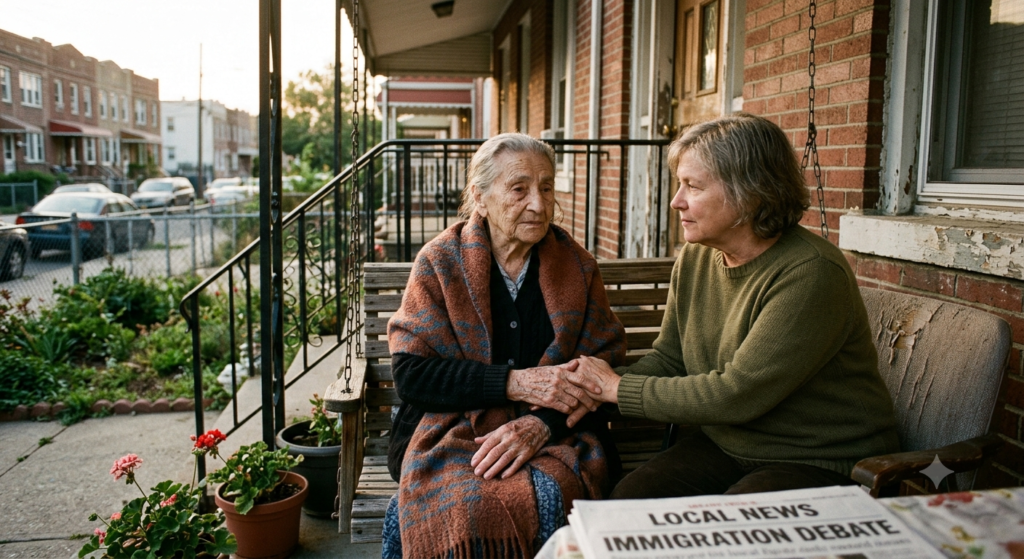
NEW YORK — At 91 years old, Solange French doesn’t ask for much. She needs someone to bring her eggs in the morning, soup or fish at lunch, and a steady hand when it’s time to shower. She needs help getting to doctor’s appointments, buying groceries, and keeping her home clean.
For the past three years, that someone has been Martha Nelson—a 69-year-old Haitian home health aide who came to the United States after the devastating 2010 earthquake flattened her homeland. Nelson is more than a caregiver; she’s French’s companion, her confidante, the woman who calls on weekends to make sure she’s eaten and nag her to get out of bed.
“She’s with me all the time,” French says. “Life would be impossible.”
Now, that life is hanging in the balance.
A Supreme Court Ruling Upends Thousands of Lives
The Supreme Court sided with the Trump administration last month, clearing the way for the administration to end Temporary Protected Status for approximately 350,000 Haitians and 6,000 Syrians. Immigration advocates warn the ruling could eventually apply to a broader group of 1.3 million people from 17 countries. While some attorneys and labor unions have argued that work authorizations may remain intact pending lower court rulings, the Department of Homeland Security has already signaled its intent, referencing lyrics from a 1998 hit song: “It’s closing time, which means you don’t have to go home, but you can’t stay here.”
For employers, the confusion has already led to painful decisions. Some have begun terminating TPS holders, fearing they might be in breach of the law. The impact is rippling through an industry already stretched thin.
The Caregiver Crisis No One Saw Coming
Across the United States, care homes and home health agencies are bracing for the loss of workers who have become indispensable. The numbers tell a stark story: roughly one in five workers in the U.S. is foreign-born, and immigrants are significantly overrepresented in caregiving roles. Among home health aides, one-third are immigrants.
At The Arc Rockland, a group home for disabled people in Nanuet, New York, the facility stands to lose 19 caregivers with TPS—on top of 20 others it lost to immigration changes last year. Katy Sanchez, a resident, describes the workers as “like family.” “If they are forced to leave, it would be devastating,” she says.
At Cabrini of Westchester, a nursing home in Dobbs Ferry, New York, eight Haitian workers with TPS are awaiting their fate. The facility’s workforce is about 75% immigrant. Simone Smith, the vice president of human resources, senses “almost a hopelessness” among those facing deportation. The facility is prepared to scramble for replacement staffers from nursing agencies and plead with remaining workers to take overtime shifts. But as anyone in long-term care knows, there’s no replacing the relationships these workers have built.
A Bond That Transcends Employment
For Anna Fischbein, an 87-year-old Holocaust survivor living in Sunny Isles, Florida, the loss is deeply personal. For the past decade, the same Haitian health aide visited her home every week. But Jewish Community Services of South Florida terminated the aide along with 17 others when their TPS lapsed.
“I lost not only a lady working for me,” Fischbein says, her voice breaking into sobs. “I lost a friend.”
That sentiment echoes across the country. In lives upended by age or disability, a cherished caregiver is a lifeline. They are the first people residents see when they wake up and the last they see before bed. They notice subtle changes before anyone else, ensure small comforts, and bring humanity to moments of humiliation.
The Impossible Choice Facing Haitian Workers
For a Haitian worker who loses TPS, the choice is unbearable. They can attempt to stay in the U.S. and find underground work, living in constant fear that authorities will eventually find and remove them. Or they can return to a country so plagued by gang violence and poverty that many believe it would amount to a death sentence.
“I’m afraid all the time,” says a Haitian man working at a Brooklyn nursing home, who asked for anonymity out of concern for his safety. “I pay tax to the country. I’m a good person. … All I want is to work. When you work, you are a person.”
Two Women, One Journey, Two Eras
Outside a simple brick house in Queens, Nelson stands guard as French steps through her door. The two women made the same journey from Port-au-Prince to New York—four decades apart. French arrived in 1970, drawn by opportunity. She built businesses as a hairdresser and seamstress. Her late husband worked as an electrician and contractor. They bought their home. Their children received good educations.
They believed they achieved the American dream.
Nelson arrived after the 2010 earthquake. At home, she ran a butcher shop, but in New York she found work in caregiving. She began working for French about three years ago, after French fell and broke her hip.
Both women felt welcomed by the U.S. when they arrived. But French is saddened to see how views on immigrants have evolved. “America is a good country,” she says, “but it has changed.”
An Uncertain Future
For now, Nelson and French continue their routine, knowing each shift may be Nelson’s last. Nelson carries a copy of her work authorization everywhere—zipped in a black cloth pouch, just in case she is stopped. Each Sunday, she sinks to her knees in church, praying for an answer.
She worries for herself and for French. “It makes me feel depressed,” Nelson says. “It could be difficult for her without me.”
As the administration moves forward with its immigration crackdown, the human cost is becoming impossible to ignore. Behind the policy debates and court rulings are real people—elderly Americans who face losing their lifelines, and immigrant workers who have dedicated their lives to caring for others, only to be told that their time is up.