Loyalist Turned Putin Critic Arrested as Kremlin Cracks Down on Dissent
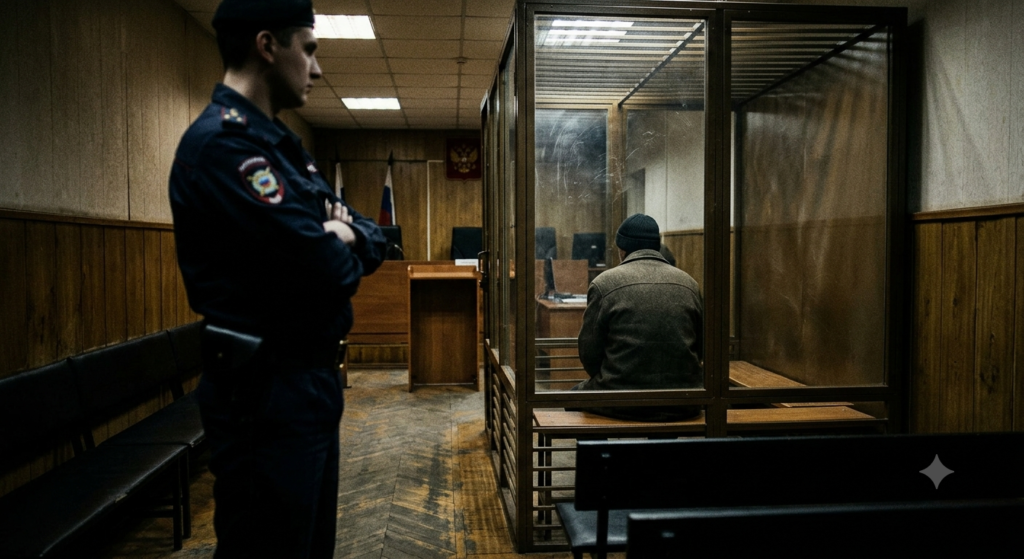
A former pro-Kremlin blogger who shocked Russia with a viral manifesto against Vladimir Putin has been detained, as authorities intensify their response to mounting opposition over the Ukraine war.
MOSCOW — A former Kremlin loyalist who publicly renounced Vladimir Putin in a viral social media manifesto has been arrested and charged with spreading false information about Russia’s armed forces, state media reported Friday.
The detention of Ilya Remeslo, 42, came on the same day that opposition politician and former presidential hopeful Boris Nadezhdin appeared in court on separate charges — a coordinated display of force signaling that the Kremlin is tightening its grip as internal dissent over the war in Ukraine continues to grow.
Remeslo, once a vocal critic of the late opposition leader Alexei Navalny who even testified against him in court, stunned many in Russia when he published a lengthy Telegram post in March titled “Five reasons why I stopped supporting Vladimir Putin”. In the scathing manifesto, he accused the Russian leader of being “a war criminal and thief,” among a litany of other criticisms.
The day after his essay went viral, Remeslo was admitted to a psychiatric hospital under unclear circumstances. He emerged after several weeks and continued criticizing Putin on social media with renewed vigor, later describing his hospitalization as “the price” of his words about the Russian leader.
Up to a Decade Behind Bars
Remeslo was detained in St. Petersburg early Friday and could face up to 10 years in prison if convicted, according to Russia’s state news agency Tass, which cited law enforcement sources. The charge — spreading false information about the armed forces — has become a standard tool for silencing opponents of the Ukraine war and has been used to jail numerous dissidents since the Kremlin launched its full-scale invasion in 2022.
His lawyer, Sergey Badashmin, told Tass that Remeslo will be brought to Moscow for a hearing to determine pre-trial restrictions. It remains unclear whether Remeslo is contesting the charge.
The arrest represents a dramatic fall from grace for a man who spent years as a loyal foot soldier for the Kremlin’s propaganda machine. His public defection — and the visceral, personal nature of his attacks on Putin — made him a particularly high-value target for the security services.
A Courtroom Show Trial
Just as news of Remeslo’s detention spread, a court hearing was underway in the Moscow region for Boris Nadezhdin, a 63-year-old opposition politician and former presidential candidate. Nadezhdin was barred from challenging Putin in the 2024 election and was declared a “foreign agent” last week — a designation the Kremlin routinely uses to discredit and marginalize its opponents.
He was accused of displaying “extremist symbols” stemming from a 2023 post on his Telegram channel that included a link to a YouTube stream featuring a photo of Navalny. Russian authorities have designated Navalny and his Anti-Corruption Foundation as extremist organizations and banned them. Nadezhdin denies the charge.
In what proved to be a more lenient ruling than many had feared, the court fined Nadezhdin just 1,000 rubles — roughly $12 — and set him free. But the “foreign agent” designation remains in place, preventing him from running in parliamentary elections this September.
In his court address, Nadezhdin said the purpose of his trial was to “shut me up and not let me run in parliamentary elections”. Before the hearing, he had said he did not rule out leaving the country for the sake of his family — a path many Kremlin opponents have been forced to take. But he later announced that he had received an official notification prohibiting him from leaving Russia, a decision he planned to appeal.
A Warning to Would-Be Dissidents
The dual actions against Remeslo and Nadezhdin send an unmistakable message: the Kremlin is prepared to use the full weight of its legal and security apparatus to silence critics, whether they are lifelong opposition figures or former allies who have broken ranks.
When Nadezhdin attempted to run against Putin in 2024, long lines of supporters waited to back his candidacy with their signatures — a rare public display of anti-Kremlin sentiment that clearly rattled the authorities. The Kremlin works diligently to create a perception of total support for Putin among the voting public, and any visible opposition is swiftly crushed.
Remeslo’s case is particularly striking because of his background. He was not an outsider or a lifelong dissident — he was one of them, a loyalist who helped attack Navalny and defend the Kremlin’s positions. His defection was therefore more threatening than that of a traditional opposition figure. If even a committed pro-Kremlin activist could turn against Putin, who else might follow?
A Growing Crackdown
The arrests come amid a broader intensification of the Kremlin’s crackdown on dissent. Since the invasion of Ukraine, authorities have systematically targeted anti-war activists, independent journalists, and anyone perceived as a threat to the regime’s narrative. The “foreign agent” law, originally passed in 2012, has been expanded and weaponized against a growing list of opponents.
The parliamentary elections scheduled for September are being closely watched for signs of public discontent. But with Nadezhdin barred from running, Remeslo behind bars, and Navalny’s movement effectively dismantled, the Kremlin appears determined to ensure that no meaningful opposition remains to challenge its grip on power.
For now, Remeslo awaits his fate in a Moscow jail cell — a stark reminder that in today’s Russia, even a change of heart can land you in prison.