500 Feared Dead as Rohingya Refugee Boats Capsize Off Myanmar Coast in Latest Maritime Tragedy
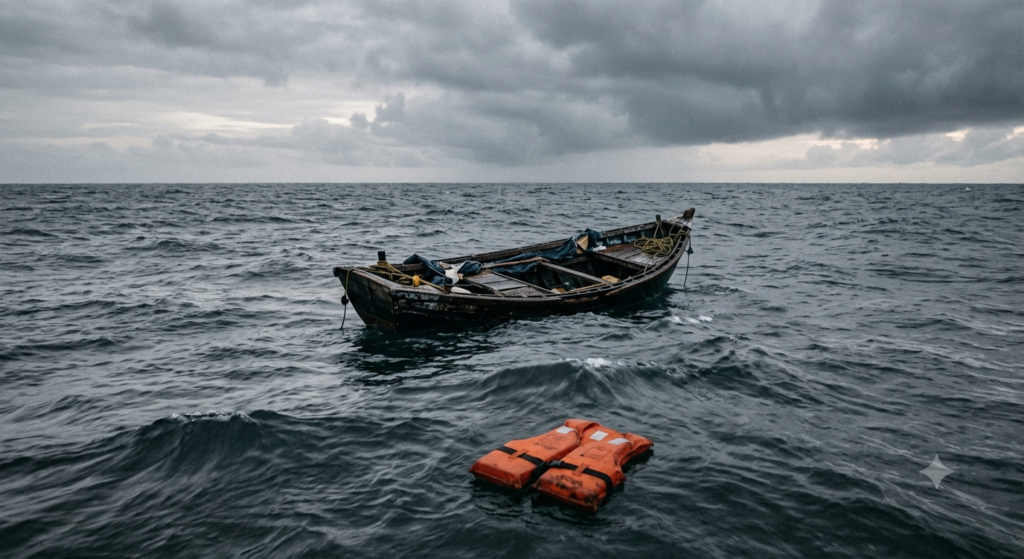
Two vessels carrying more than 500 people vanished in the Bay of Bengal, marking yet another devastating chapter in the Rohingya refugee crisis as families risk everything for a chance at survival.
GENEVA — More than 500 people are feared dead after two boats carrying Rohingya refugees capsized off Myanmar’s coast in recent days, United Nations agencies announced Thursday, in what would be one of the deadliest maritime disasters involving the persecuted ethnic minority in years.
The two vessels departed from Myanmar’s conflict-ravaged Rakhine State in late June, carrying mostly Rohingya passengers, including some who had traveled from overcrowded refugee camps across the border in Bangladesh. The first boat, believed to have been carrying around 250 people, lost contact shortly after setting sail. The second vessel, reportedly carrying approximately 280 people, is believed to have sunk off Myanmar’s Ayeyarwady coast on July 8.
“While the incidents and casualty figures have yet to be officially confirmed, UNHCR and IOM are gravely concerned by the potentially devastating loss of life,” the International Organization for Migration and the UN refugee agency said in a joint statement.
A Perilous Journey at the Worst Possible Time
The timing of the voyages made them especially dangerous. These journeys took place outside the regular sailing season, when maritime conditions in the Bay of Bengal are typically more hazardous. Monsoon rains and rough seas have made the waters particularly treacherous, and recent torrential rain and flooding across the region would have compounded the risks.
For the Rohingya, however, the danger of staying has become greater than the danger of leaving. Driven away by violence at home and desperate conditions in crowded refugee camps in Bangladesh, Myanmar’s long-persecuted Muslim minority have for years risked their lives on flimsy wooden vessels, hoping to reach safety and opportunity in countries like Malaysia, Indonesia, and Thailand.
The exodus from Rakhine began in earnest in 2017, when the Myanmar military launched an offensive that the United States later declared a genocide. At least 730,000 Rohingya sought shelter in neighboring Bangladesh. Today, approximately 1.2 million stateless, predominantly Muslim Rohingya remain trapped in overcrowded refugee camps in Bangladesh.
A Crisis That Keeps Getting Worse
The plight of the Rohingya has only deepened since Myanmar’s 2021 military coup, which triggered a widespread civil war that has engulfed Rakhine State. The Rohingya population has been caught in the crossfire between government troops and the rebel Arakan Army, with no safe haven in sight.
Meanwhile, conditions in Bangladesh’s refugee camps have grown increasingly desperate. Steep cuts to foreign aid by the United States and other countries have led to ration cuts in the camps, leaving families hungry and hopeless. The refugees have no way to safely return to Myanmar, where the military that killed thousands of Rohingya in 2017 remains in charge. The Rohingya still living in Myanmar face severe restrictions, with many confined to internment camps.
The deteriorating situation has led to an increasing number of Rohingya attempting the dangerous ocean crossing to Malaysia on rickety boats. Thousands have died in the process, including babies, children, and pregnant women. Local maritime authorities have frequently abandoned Rohingya at sea, often ignoring reports of boats in distress.
The Deadliest Route in the World
The Bay of Bengal and Andaman Sea have become the world’s deadliest maritime route for refugees and migrants. According to UNHCR, nearly 900 Rohingya refugees were reported missing or dead at sea in the northern Indian Ocean in 2025 alone—out of more than 6,500 who attempted such perilous sea crossings.
This year, nearly 300 people have already been reported dead or missing in the Andaman Sea and Bay of Bengal, including Rohingya refugees and Bangladeshi nationals. If the latest casualties are confirmed, that number will rise dramatically.
A Pattern of Tragedy
The latest disaster follows a familiar pattern. In November, a boat carrying Rohingya community members sank off Langkawi near the Thailand-Malaysia border, with only about a dozen survivors. Each tragedy underscores the desperate calculus facing Rohingya families: stay in camps with no future, or risk everything for a chance at survival.
Acting police Brig. Gen. Soe Lin Aung, the spokesperson for Myanmar’s Ministry of Home Affairs, declined to comment on the latest incidents. Spokespeople for Myanmar’s president and the Ayeyarwady region’s government did not respond to requests for comment.
What This Means for the World
The tragedy unfolding off Myanmar’s coast is not just a regional crisis—it is a global failure. The Rohingya have been stateless for generations, denied citizenship by Myanmar and treated as unwelcome burdens by their neighbors. The international community has repeatedly condemned Myanmar’s treatment of the Rohingya, but meaningful action has been slow to materialize.
For the families of the more than 500 people now feared dead, the pain is immeasurable. For those still trapped in camps, the message is clear: the world has not done enough to protect them. And for as long as the conditions that drive Rohingya to risk their lives at sea persist, more tragedies will follow.
The UNHCR and IOM have called for urgent action to address the root causes of the Rohingya crisis and to provide safe and legal pathways for refugees seeking protection. But for the hundreds lost in the Bay of Bengal, that call comes too late.