New York’s Famous Pizza and Bagels Face a Recipe Revolution as State Weighs Food Additive Ban
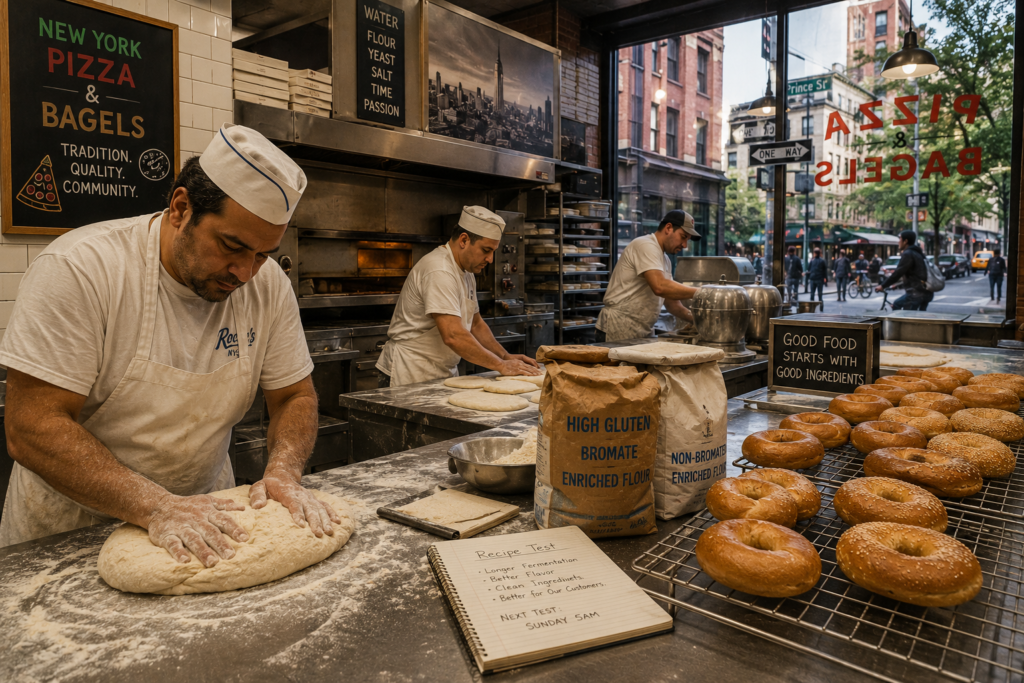
New York’s legendary pizza slices and iconic bagels could soon undergo one of the biggest changes in decades as state leaders consider a food safety measure targeting a controversial baking ingredient found in thousands of restaurants, bakeries, and dough-making operations across the state.
At the center of the debate is potassium bromate, a flour additive commonly used to strengthen dough, improve texture, and speed up production. The proposed legislation, which has already cleared the state legislature and now awaits a final decision from Governor Kathy Hochul, has sparked intense discussion among bakers, restaurant owners, food safety experts, and loyal customers.
For generations, New York-style pizza and bagels have been celebrated for their unique texture, chewiness, and consistency. Many bakery operators credit potassium bromate for helping create those characteristics, particularly in high-volume commercial production. However, health advocates argue the additive has long been associated with safety concerns and has already been restricted or banned in numerous countries around the world.
The growing controversy has fueled nationwide interest in New York pizza and bagel ingredient ban, with consumers increasingly asking whether one of America’s most recognizable food traditions is about to change.
Supporters of the legislation say the move is primarily about public health rather than altering beloved recipes. Scientific studies conducted over several decades have raised concerns about potassium bromate, leading regulators in parts of Europe, Asia, and North America to prohibit or limit its use in food production.
Many food safety advocates believe New York is simply catching up with standards already adopted elsewhere.
Yet for bakery owners and pizza makers, the issue is far more complicated.
Many businesses have relied on bromated flour for years because it helps dough rise more consistently, improves elasticity, and reduces preparation time. For operations producing hundreds or even thousands of products daily, those efficiencies can significantly affect costs and workflow.
The debate has sparked widespread discussion around potassium bromate health concerns in baking, a topic increasingly appearing in food industry conversations across the United States.
Some New York pizza makers have already started experimenting with alternative flour products in anticipation of possible regulatory changes.
Interestingly, not everyone sees the transition as a negative development.
Several restaurant owners report that switching to non-bromated flour has produced surprisingly positive results. Some say longer fermentation times create richer flavors, lighter crusts, and improved overall quality. Others argue that moving away from chemical shortcuts encourages more traditional baking methods.
Food historians note that while bromated flour became deeply embedded in modern commercial baking, many highly respected bakeries around the world produce exceptional bread, pizza, and bagels without using the additive at all.
Interest surrounding future of New York style pizza continues rising as customers wonder whether they will notice any difference in taste, texture, or appearance.
For bagel shops, however, the transition could be particularly challenging.
New York bagels are famous for their distinctive combination of crisp outer texture and chewy interior. Many bakers believe bromated flour has played an important role in helping achieve that consistency at scale. Replacing it may require adjustments to fermentation schedules, ingredient ratios, and production techniques.
Those operational changes could increase labor costs and potentially affect pricing.
Some bakery owners worry consumers may ultimately pay more for products if businesses are forced to adopt more time-intensive preparation methods.
That concern has generated growing search traffic related to how additive ban affects bagel makers, particularly among small business owners and food industry professionals.
The proposed law extends beyond pizza and bagels.
The broader legislation targets several food additives and seeks to increase transparency regarding ingredients used in consumer products. Supporters argue that consumers deserve greater visibility into substances used in the foods they purchase every day.
The measure also reflects a broader trend across the country.
States are increasingly pursuing their own food safety regulations as public interest grows regarding additives, artificial dyes, preservatives, and chemical ingredients commonly used in processed foods.
As awareness expands, lawmakers are facing increased pressure to address ingredients that have generated scientific debate for years.
Online discussions involving food safety laws changing restaurant recipes have become increasingly popular as consumers pay closer attention to ingredient labels and health-related concerns.
Despite fears that the legislation could fundamentally alter New York’s food culture, many experts believe any changes will likely be gradual rather than dramatic.
The bill would provide businesses with a transition period, allowing restaurants, bakeries, and suppliers time to adapt recipes, source alternative ingredients, and adjust operations before enforcement begins.
Industry analysts say most customers may never notice significant differences once businesses complete the transition.
In fact, some food experts predict the opposite outcome.
By encouraging longer fermentation processes and higher-quality ingredients, they believe the legislation could potentially improve product quality while addressing health concerns at the same time.
Searches surrounding consumer demand for healthier bakery ingredients continue climbing as Americans increasingly prioritize transparency and ingredient quality when making food choices.
The debate ultimately highlights a larger national conversation about balancing tradition, business practicality, public health, and consumer expectations.
For New Yorkers, pizza and bagels are more than food—they are cultural symbols deeply connected to the city’s identity.
That is why even a seemingly small ingredient change has generated such passionate reactions.
Whether viewed as an overdue public health measure or a challenge to longstanding culinary traditions, the proposed legislation is already reshaping conversations throughout the food industry.
As state leaders prepare to make a final decision, restaurant owners, bakers, and millions of customers will be watching closely to see whether one of New York’s most iconic food traditions is about to enter a new chapter.