Walmart Defies Consumer Slowdown With Strong Sales Growth as Rising Fuel Costs Test Household Budgets
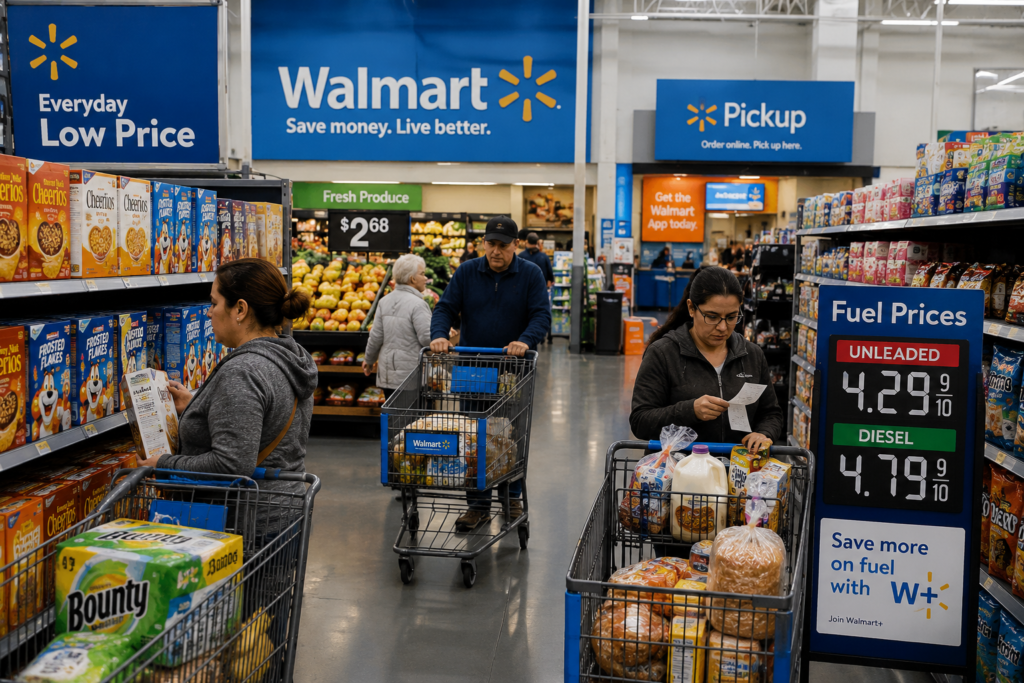
America’s largest retailer is once again proving its resilience in a challenging economic environment, posting strong quarterly results even as rising fuel prices, persistent inflation, and global supply chain pressures continue weighing on consumers across the country.
Walmart’s latest earnings report paints a picture of an American economy where households remain cautious about spending but continue prioritizing value, convenience, and affordability. While the retail giant delivered better-than-expected sales growth, company executives also signaled caution about the months ahead as economic uncertainty continues to influence consumer behavior.
The company reported strong first-quarter performance, driven by increased demand for groceries, essential household goods, online shopping services, memberships, and advertising revenue. Revenue climbed significantly compared with the same period a year earlier, demonstrating Walmart’s ability to attract shoppers from a wide range of income levels.
However, behind the strong numbers lies a more complicated story about the financial pressures facing American families.
Search interest surrounding Walmart earnings amid rising fuel prices has surged as consumers look for clues about the health of the U.S. economy and the future direction of retail spending.
According to company leadership, rising gasoline prices have become one of the most significant challenges affecting both shoppers and retailers. Fuel costs exceeding $4 per gallon in many areas have forced households to rethink spending priorities, often reducing discretionary purchases while focusing more heavily on necessities.
That shift has played directly into Walmart’s strengths.
The retailer has continued emphasizing low-priced groceries, household essentials, and budget-friendly products, helping it gain market share even as consumer confidence weakens. Company executives said many shoppers are actively searching for ways to stretch their budgets further, creating opportunities for retailers known for affordability.
The trend has contributed to growing online conversations involving American consumers seeking lower grocery prices, as inflation continues impacting everyday purchasing decisions.
Despite the positive sales results, Walmart maintained relatively conservative annual forecasts for both revenue growth and profitability. Executives appear cautious about predicting stronger performance until there is greater clarity surrounding fuel prices, inflation trends, and overall consumer demand.
The company’s outlook reflects broader concerns spreading throughout the retail industry.
Several major retailers have recently warned investors about slower spending patterns, weaker consumer sentiment, and increased economic uncertainty. Americans continue facing higher living expenses across housing, transportation, insurance, and food categories, leaving many households with less flexibility for discretionary purchases.
Interest surrounding consumer spending trends in the United States continues rising as economists attempt to gauge whether households will remain resilient through the remainder of the year.
One bright spot for Walmart remains its rapidly expanding digital business.
The company’s e-commerce division delivered impressive growth during the quarter, reflecting consumers’ increasing preference for online shopping, home delivery, and curbside pickup services. Digital sales have become one of Walmart’s most important growth engines, helping the company compete more aggressively against other major online retailers.
Beyond traditional retail operations, Walmart is also generating substantial revenue from newer business segments.
Advertising services, membership programs, and marketplace operations continue growing at a rapid pace. These businesses generally produce higher profit margins than traditional merchandise sales, helping offset rising operational costs elsewhere in the company.
Searches tied to Walmart ecommerce and membership growth strategy have increased significantly as investors examine how the retailer is transforming beyond its traditional big-box store model.
Another notable trend involves changing customer demographics.
Historically, Walmart’s customer base was heavily associated with budget-conscious shoppers. Today, however, the company is increasingly attracting higher-income households seeking convenience, fast delivery options, and value during periods of economic uncertainty.
That broadening appeal has become a major competitive advantage.
As inflation affects consumers across income levels, more affluent shoppers who may have previously favored specialty retailers are increasingly turning to Walmart for groceries, household essentials, and online purchases.
Meanwhile, rising fuel costs are creating challenges not only for consumers but also for Walmart itself.
Transportation, logistics, and delivery expenses have all increased, putting pressure on operating margins. Company leaders said they have attempted to absorb many of these additional costs rather than passing them directly to customers whenever possible.
The growing conversation around fuel costs impacting retail company profits reflects wider concerns throughout the business community.
Higher energy prices affect nearly every aspect of retail operations, from trucking and distribution to warehouse management and delivery services. Companies must balance maintaining competitive prices with protecting profitability.
Global geopolitical events are also adding complexity to the economic landscape.
Rising tensions in key international regions have increased costs for certain raw materials, packaging products, and supply chain operations. Combined with lingering disruptions from previous trade policies and import restrictions, these challenges continue creating uncertainty for major retailers.
Discussions surrounding inflation and household budget challenges 2026 remain among the most searched economic topics as families monitor grocery bills, transportation costs, and monthly expenses.
Despite these pressures, Walmart’s strong quarter suggests that American consumers have not stopped spending altogether.
Instead, many appear to be becoming more selective.
Households are increasingly prioritizing necessities, comparing prices more carefully, and seeking greater value from every purchase. Retailers capable of meeting those expectations are likely to outperform competitors during periods of economic stress.
For Walmart, that strategy appears to be working.
The company’s combination of low prices, expanding digital services, grocery dominance, and operational scale continues helping it navigate a difficult economic environment better than many rivals.
As the year progresses, investors, economists, and consumers alike will be watching closely to see whether rising fuel costs and inflation eventually slow spending further—or whether America’s value-focused shopping habits continue fueling Walmart’s growth.