Deadly Strike on Kyiv Apartment Building Deepens Ukraine’s Humanitarian Crisis as Zelenskyy Condemns Russia
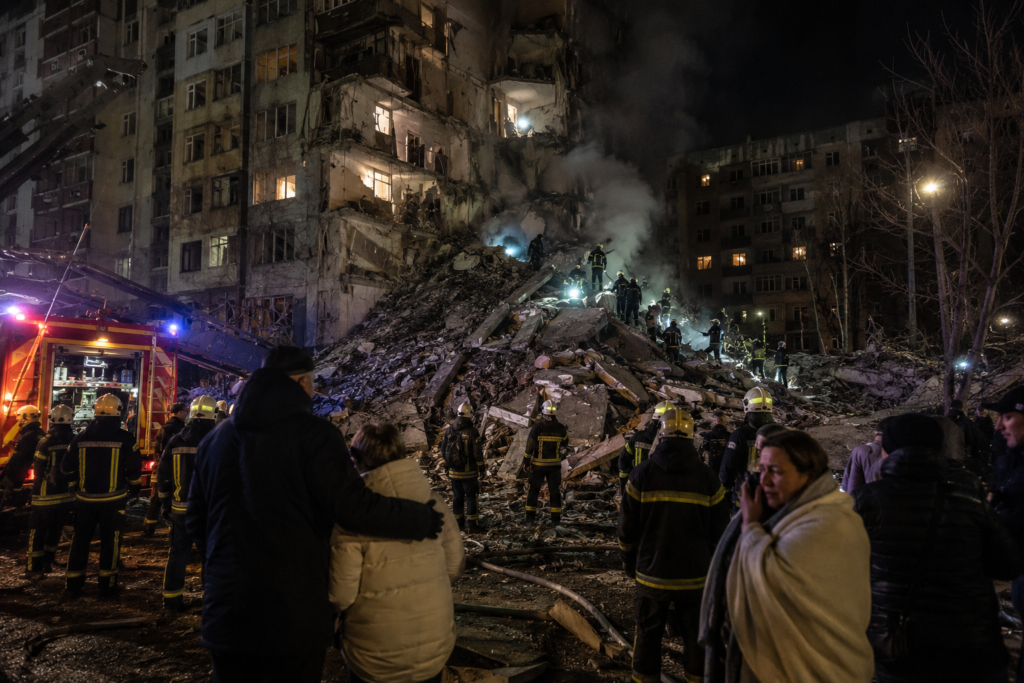
A devastating strike on a residential apartment building in Kyiv has intensified global concern over the worsening humanitarian toll of the war in Ukraine after dozens of civilians were killed or injured in one of the deadliest recent attacks on the capital.
Ukrainian President Volodymyr Zelenskyy strongly condemned the assault, describing it as another brutal example of the ongoing violence civilians continue facing as the war enters yet another painful chapter marked by destruction, displacement, and emotional trauma across the country.
Emergency crews spent hours searching through shattered concrete, twisted metal, and collapsed sections of the apartment complex as rescue operations continued into the night. Officials confirmed that at least 24 people lost their lives in the strike, while many others were injured or trapped beneath the rubble.
The attack has once again drawn international attention to the growing civilian cost of the conflict and the continuing vulnerability of urban areas far from active battlefield front lines.
Search interest surrounding Russia missile strike on Kyiv civilians surged globally after images from the scene spread rapidly across television broadcasts and social media platforms.
Residents described scenes of panic and chaos moments after the explosion tore through the building.
Witnesses reported hearing loud blasts before smoke and debris filled the surrounding neighborhood. Families rushed outside in confusion while rescue workers and emergency personnel attempted to reach survivors trapped inside damaged sections of the structure.
For many Ukrainians, the attack reinforced the emotional reality that ordinary civilian life remains deeply fragile even in areas not traditionally viewed as active combat zones.
The strike also reflects the increasingly psychological nature of the war, where attacks on civilian infrastructure carry emotional and symbolic consequences far beyond immediate military objectives.
President Zelenskyy used strong language while responding publicly to the incident, accusing Russia of continuing a campaign that places innocent civilians at extreme risk.
Ukrainian officials have repeatedly urged Western allies to provide additional air defense systems and military support capable of protecting cities from missile and drone attacks.
The latest tragedy has intensified discussions involving Ukraine air defense support against Russia as international leaders face growing pressure to expand assistance for Kyiv.
Russia has consistently argued that its military operations target strategic and military-related infrastructure. However, repeated strikes affecting residential areas, hospitals, schools, and civilian facilities have generated widespread condemnation from Western governments and international human rights organizations throughout the conflict.
The war has now stretched through years of relentless violence, leaving millions displaced and entire communities psychologically exhausted.
Children growing up amid repeated air raid sirens, destroyed neighborhoods, and constant uncertainty have become one of the defining humanitarian images of the conflict.
Mental health experts warn that the long-term emotional impact on Ukrainian civilians may continue for generations even after active fighting eventually ends.
Conversations surrounding civilian casualties in Ukraine war crisis have intensified online as people across the world react emotionally to the latest attack.
The destruction in Kyiv also highlights how modern warfare increasingly affects civilian populations directly rather than remaining limited to traditional military battlefields.
Apartment buildings, transportation systems, energy infrastructure, and public services have all repeatedly become part of the broader conflict environment.
For civilians living in major Ukrainian cities, daily life now exists under the constant possibility of sudden violence.
Despite the ongoing danger, many residents continue trying to preserve ordinary routines — working jobs, attending school, reopening businesses, and supporting local communities amid extraordinary hardship.
That resilience has become a defining feature of Ukrainian society throughout the war.
Meanwhile, international diplomats continue struggling to identify realistic pathways toward ending the conflict.
Peace discussions remain stalled as military operations persist across multiple regions, and neither side appears prepared to make major concessions publicly.
Global leaders increasingly worry the war may continue evolving into a prolonged geopolitical and humanitarian crisis with worldwide economic and security consequences.
Interest surrounding global response to Ukraine apartment attack has climbed sharply as governments and international organizations condemn the latest civilian deaths.
The attack also arrives during a period of broader instability across Europe and the international system.
Energy security concerns, military spending increases, refugee pressures, and geopolitical polarization continue shaping global politics because of the ongoing conflict.
European governments remain especially sensitive to escalation risks, fearing the war could expand further or create deeper instability throughout the region.
At the same time, public attention in some countries has gradually shifted toward domestic political and economic issues after years of continuous war coverage.
Ukrainian leaders, however, continue warning that reduced international focus could weaken support at a critical moment.
Zelenskyy and other officials argue the conflict represents not only a struggle for Ukrainian sovereignty but also a larger test involving democratic stability, international law, and civilian protection in modern warfare.
Searches tied to Volodymyr Zelenskyy response to Russian attacks continue rising as international audiences follow the Ukrainian president’s increasingly urgent appeals for support.
For survivors in Kyiv, however, the geopolitical debates unfolding globally feel deeply personal.
Families who lost loved ones are now confronting unimaginable grief while rescue workers continue recovering victims from destroyed homes. Many residents face the painful task of rebuilding lives amid uncertainty over whether future attacks could happen again.
Humanitarian organizations say the emotional strain on civilians living under repeated threat conditions cannot be overstated.
Exhaustion, trauma, anxiety, and grief have become part of daily reality for millions of Ukrainians.
As smoke cleared from the shattered apartment building and emergency workers continued combing through debris, the latest tragedy served as another reminder that the war’s most devastating consequences are often carried not by soldiers alone, but by ordinary civilians trying to survive amid prolonged conflict.
And with no clear resolution in sight, fears continue growing that the humanitarian suffering inside Ukraine may deepen even further in the months ahead.