Texas Reaches Grim Death Penalty Milestone With 600th Execution Since 1982
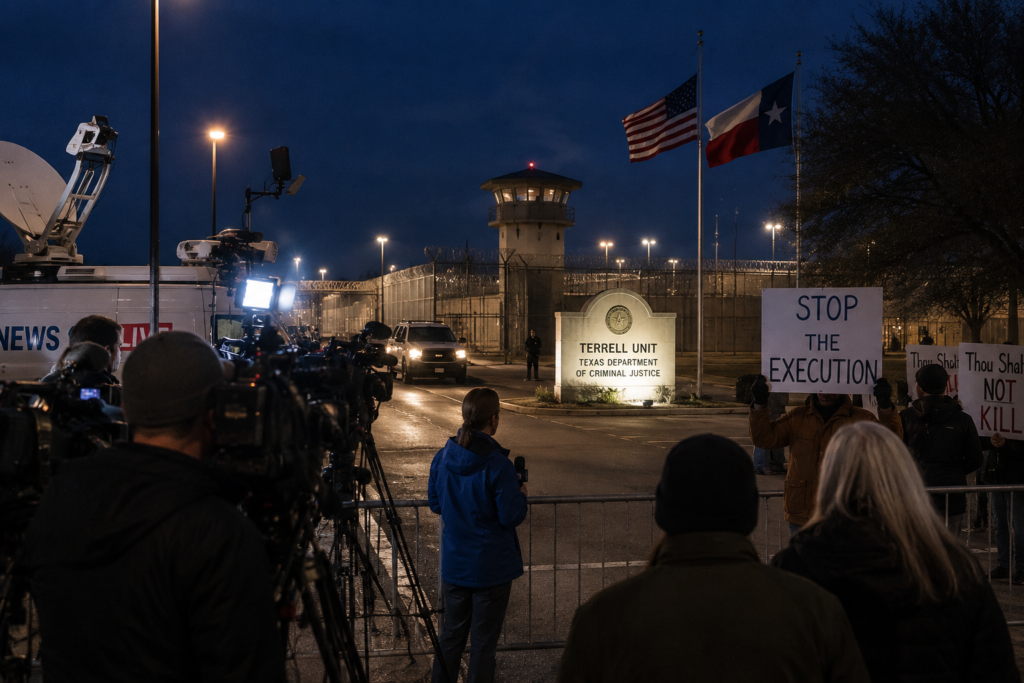
Texas has once again become the center of America’s death penalty debate after carrying out its 600th execution since the state resumed capital punishment more than four decades ago, marking a controversial milestone that continues dividing the nation over justice, morality, and the future of the U.S. criminal punishment system.
The execution involved a man convicted in the killing of a retired university professor in a case that drew national attention because of its brutality and the years-long legal battle that followed. State officials confirmed the execution was completed after multiple appeals and legal efforts failed to stop the sentence.
The moment carries enormous symbolic weight not only for Texas, but also for the broader national debate surrounding capital punishment in America.
No other state has executed more inmates in the modern era of the U.S. death penalty system than Texas. Since capital punishment resumed nationally in the late 20th century following Supreme Court rulings that reshaped death penalty procedures, Texas has remained the country’s most active execution state by a significant margin.
The latest case has reignited conversations surrounding Texas death penalty execution statistics history as Americans once again confront deeply emotional questions involving justice, punishment, and human rights.
Supporters of capital punishment argue the death penalty remains necessary in the most severe criminal cases, particularly involving violent murders and victims whose families seek closure after years of legal proceedings.
Many victims’ rights advocates believe executions serve as an important form of accountability for crimes involving extreme violence.
Critics, however, continue challenging both the morality and effectiveness of the death penalty.
Opponents argue the system carries irreversible risks, including wrongful convictions, racial disparities, unequal legal representation, and questions about whether executions genuinely deter violent crime.
Human rights organizations have also repeatedly criticized the United States for continuing capital punishment while many other democracies around the world have moved away from the practice entirely.
Online discussions involving capital punishment debate in modern America have surged following the execution milestone as legal experts, activists, and ordinary Americans debate whether the country’s death penalty system still reflects contemporary values.
The case itself remained emotionally difficult for many involved.
The victim, a retired professor, was remembered by family members and former colleagues as an intellectual figure who dedicated years to education and academic life. Prosecutors argued the killing represented an especially disturbing act of violence that justified the harshest possible punishment under Texas law.
Defense attorneys spent years pursuing appeals involving sentencing procedures and broader constitutional concerns tied to the death penalty.
But after extensive legal review, courts ultimately allowed the execution to proceed.
The milestone comes during a period when America’s use of the death penalty has been changing significantly.
While executions continue in some states, overall use of capital punishment across the country has declined compared with previous decades. Several states have abolished the death penalty entirely, while others have imposed moratoriums or sharply reduced executions.
Texas, however, continues maintaining one of the nation’s most active capital punishment systems.
That reality has made the state both a focal point for death penalty supporters and a target for human rights criticism.
Search interest surrounding 600th Texas execution sparks national reactions has climbed sharply as Americans react to the historic and controversial milestone.
Legal scholars say the broader death penalty debate now reflects changing public attitudes toward criminal justice more generally.
Questions surrounding prison reform, sentencing fairness, mental health, racial inequality, and law enforcement accountability have increasingly influenced national conversations about punishment and justice over the past decade.
Younger Americans, in particular, appear more divided about capital punishment than previous generations.
Some continue supporting executions in extreme murder cases, while others view the death penalty as outdated, ethically problematic, and vulnerable to irreversible judicial errors.
Religious organizations also remain split.
Certain faith leaders argue capital punishment violates moral principles centered on redemption and human dignity. Others believe severe crimes warrant the strongest possible legal consequences.
The emotional complexity surrounding executions often extends far beyond the courtroom.
Families of victims frequently describe years of trauma, grief, and emotional exhaustion throughout lengthy legal proceedings. At the same time, families of condemned inmates also experience deep emotional suffering as executions approach.
This dual reality makes death penalty cases uniquely painful for everyone connected to them.
Discussions tied to violent crime justice system and executions continue dominating online debate as Americans wrestle with conflicting beliefs about justice, safety, and punishment.
Internationally, the execution milestone is also drawing attention.
Most Western democracies have abolished capital punishment entirely, leaving the United States increasingly isolated among major democratic nations that still carry out executions. Human rights groups abroad continue pressuring American officials to reconsider the practice.
Supporters inside the United States, however, argue criminal justice policy should remain determined by American law and democratic processes rather than international opinion.
Meanwhile, political leaders remain cautious in addressing the issue publicly because the death penalty continues generating strong emotional reactions among voters.
Some politicians advocate maintaining executions for particularly violent crimes, while others support replacing death sentences with life imprisonment without parole.
Interest surrounding future of death penalty laws in Texas has continued rising as legal experts analyze whether shifting public attitudes could eventually reshape the state’s approach to capital punishment.
Despite decades of debate, America remains deeply divided on the issue.
For some citizens, the death penalty represents justice for victims and accountability for horrific crimes. For others, it symbolizes a criminal justice system carrying moral contradictions and irreversible risks.
Texas reaching its 600th execution milestone therefore represents more than a legal statistic.
It reflects a broader national struggle over how America defines justice, punishment, and human dignity in the modern era.
As the country continues debating criminal justice reform and the role of capital punishment, the emotional and political arguments surrounding the death penalty show little sign of fading anytime soon.