Fragile Gulf Ceasefire Faces Collapse as U.S.-Iran Tensions Push Region Toward Dangerous New Phase
Hopes for lasting stability in the Persian Gulf are fading fast as renewed clashes involving Iran-backed groups, rising military pressure, and deepening distrust between Washington and Tehran threaten to push the region into another prolonged crisis.
Despite recent diplomatic efforts aimed at reducing violence, officials and analysts now warn that the United States and Iran appear no closer to resolving the broader conflict driving instability across the Middle East. Instead, a fragile ceasefire environment is being tested by fresh confrontations at sea, military posturing, and increasingly hostile political rhetoric on both sides.
The latest escalation comes as Gulf shipping routes, strategic military bases, and regional alliances remain under intense pressure amid fears that even isolated incidents could ignite a wider confrontation with global consequences.
Security experts monitoring US Iran ceasefire tensions in Gulf say the current situation reflects a dangerous pattern where temporary pauses in violence are failing to address the deeper geopolitical conflict fueling instability throughout the region.
In recent days, military officials and regional observers have reported a series of tense maritime encounters and security incidents involving vessels operating near critical Gulf waterways. While details surrounding some incidents remain unclear, the confrontations have heightened fears about the vulnerability of international shipping lanes that carry a major portion of the world’s energy supply.
Global markets have reacted cautiously as traders assess whether prolonged instability could disrupt oil exports or increase transportation risks in one of the world’s most strategically sensitive regions.
For American officials, maintaining freedom of navigation in Gulf waters remains a top national security priority.
Pentagon leaders continue emphasizing that U.S. military forces stationed across the Middle East are prepared to respond to threats targeting American personnel, commercial vessels, or allied infrastructure. At the same time, administration officials insist Washington does not seek a wider war with Iran.
Still, critics argue that military deterrence alone has failed to produce meaningful de-escalation.
Foreign policy analysts say the absence of direct diplomatic progress between Washington and Tehran has created an increasingly unstable environment where proxy groups, militia networks, and regional power struggles continue driving conflict regardless of temporary ceasefire agreements.
Concerns surrounding Middle East maritime conflict affecting oil trade have intensified internationally as governments monitor shipping activity near the Strait of Hormuz and surrounding Gulf corridors.
Iranian officials, meanwhile, continue accusing the United States of fueling regional instability through military presence and political pressure campaigns. Leaders in Tehran have repeatedly argued that American involvement in Gulf security operations increases tensions rather than reduces them.
At the same time, Iranian-backed armed factions operating across parts of the Middle East remain central to growing security concerns.
Several regional governments fear that militant groups aligned with Tehran could launch additional attacks if tensions continue rising, potentially drawing neighboring countries deeper into the conflict.
The fragile nature of the ceasefire environment has become especially clear as Gulf nations attempt to balance security cooperation with economic stability.
Many countries in the region remain heavily dependent on uninterrupted energy exports, tourism, foreign investment, and maritime trade. A major escalation involving Iran and the United States could quickly damage fragile economic recovery efforts already challenged by inflation and global uncertainty.
Searches related to Persian Gulf military escalation latest updates have surged as international audiences follow the rapidly evolving security situation.
Military analysts say the risk of miscalculation remains one of the greatest immediate threats.
With naval patrols, surveillance operations, drones, and regional militias all operating in close proximity, experts warn that even a relatively minor confrontation could spiral unexpectedly into broader military conflict.
This concern has prompted renewed diplomatic outreach from several international governments seeking to prevent further escalation.
European officials and regional mediators have quietly encouraged both Washington and Tehran to reopen communication channels and avoid provocative actions that could undermine ceasefire efforts.
However, political realities inside both countries continue complicating diplomatic progress.
In the United States, leaders face pressure to demonstrate strength against Iranian influence while protecting American troops and strategic interests abroad. In Iran, government officials are also under domestic pressure not to appear weak in the face of U.S. military and economic pressure.
The result is a tense geopolitical environment where public rhetoric often clashes with private diplomatic efforts.
Online discussions surrounding Iran backed groups threatening Gulf stability have expanded significantly as regional security concerns dominate international headlines and policy debates.
For civilians living across the Gulf region, the uncertainty has become increasingly exhausting.
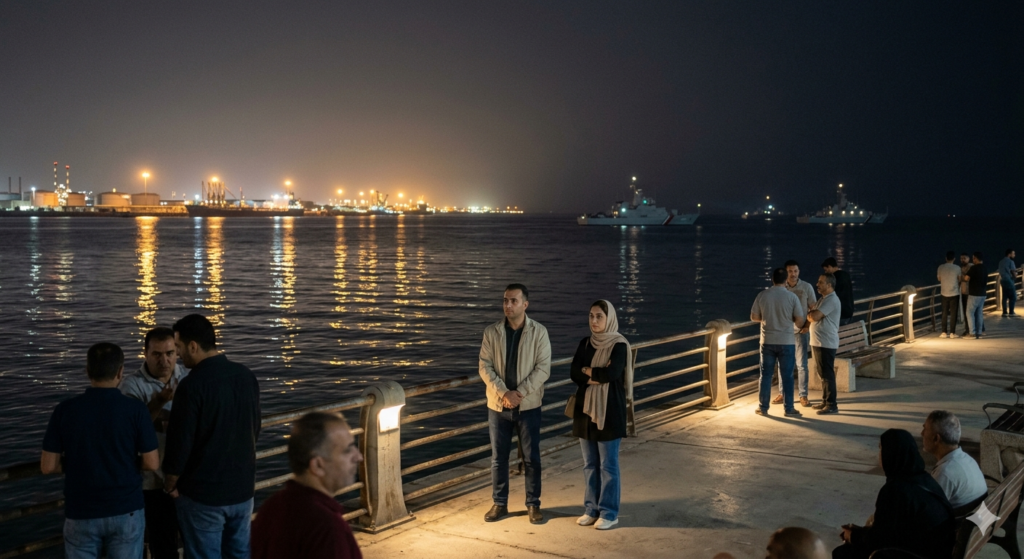
Residents in coastal cities and energy-producing regions describe growing anxiety over the possibility of wider conflict affecting daily life, business activity, and long-term stability. Families and workers connected to shipping, oil production, and regional commerce are particularly concerned about what a prolonged crisis could mean for economic security.
Humanitarian experts also warn that any large-scale military confrontation could worsen displacement crises and place additional strain on already vulnerable communities across the Middle East.
Beyond immediate security concerns, the ongoing tensions are also reshaping international alliances and defense planning.
Several Gulf states have expanded security coordination with Western partners while simultaneously pursuing cautious diplomatic engagement with Tehran in an effort to avoid direct confrontation.
This balancing act reflects the increasingly complex geopolitical reality facing countries caught between regional rivalries and global power competition.
Interest surrounding global fears over Gulf war expansion continues rising as analysts debate whether the current standoff represents a temporary phase of instability or the beginning of a more dangerous long-term conflict.
While ceasefire discussions technically remain active, many experts believe the underlying issues dividing Washington and Tehran remain unresolved.
Disputes involving military influence, regional militias, sanctions, energy security, and strategic power projection continue shaping the broader conflict landscape.
For now, both sides appear determined to avoid all-out war while simultaneously refusing major political concessions.
That uneasy balance may become increasingly difficult to maintain if Gulf confrontations continue intensifying.
As military activity, diplomatic pressure, and geopolitical tensions converge, the Persian Gulf once again stands at the center of one of the world’s most dangerous international flashpoints.
And despite temporary pauses in violence, the path toward lasting peace still appears deeply uncertain.