Sen. Cory Booker Proposes Bold Plan to Make First $75000 of Income Tax-Free, Igniting Early 2028 Political Buzz
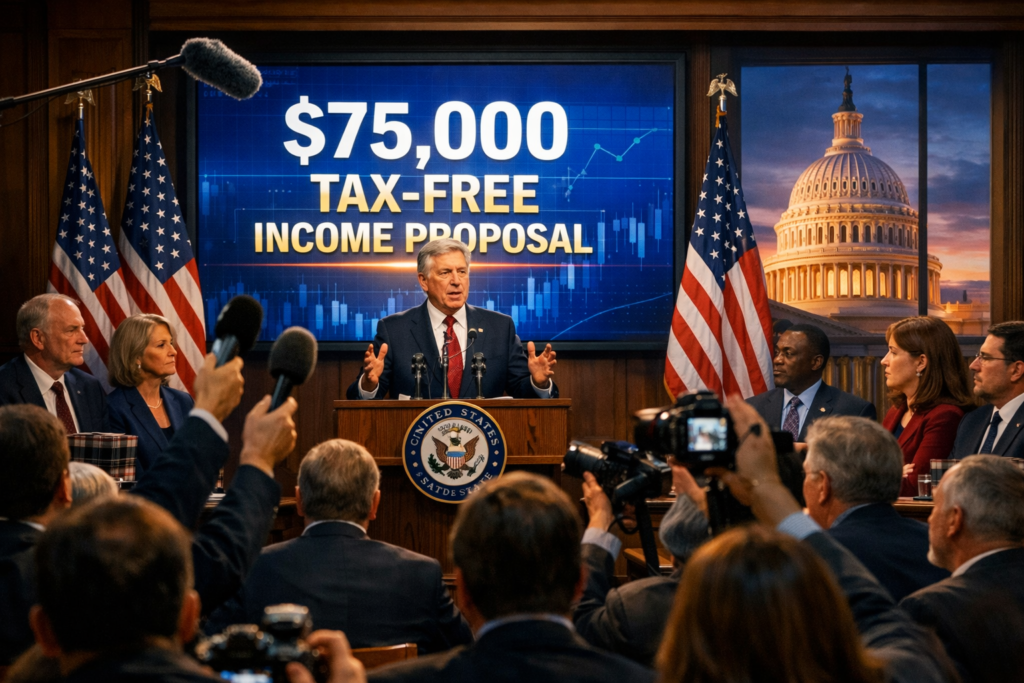
A new economic proposal from Cory Booker is drawing national attention as the New Jersey Democrat pushes a sweeping plan that would allow many Americans to earn up to $75,000 without paying federal income tax.
The proposal, which Booker recently introduced in Congress, aims to dramatically reduce the tax burden for working and middle-class Americans while reshaping the country’s approach to economic fairness. Supporters say the idea could provide meaningful relief for millions of households struggling with rising living costs.
Critics, however, are already questioning how the federal government would offset the massive loss in tax revenue.
The plan arrives at a politically significant moment, as speculation quietly grows about potential candidates for the 2028 presidential election. While Booker has not formally declared any presidential ambitions, his high-profile economic proposal is already fueling discussion about his national political future.
A Proposal Targeting Middle-Class Relief
At the center of Booker’s plan is a straightforward concept: eliminate federal income taxes on the first $75,000 of earnings for individuals and households.
In practical terms, that could significantly increase take-home pay for millions of workers across the United States.
Booker argues that the modern tax system places too much pressure on ordinary families while wealthier Americans often benefit from complex tax advantages.
By making a large portion of income tax-free, he says, the government could help close the economic gap between working families and the country’s wealthiest individuals.
Supporters of the proposal say the plan would function as a powerful financial boost for people earning moderate wages, particularly those dealing with housing costs, student loans, childcare expenses, and healthcare bills.
Economic Pressure on American Families
The proposal comes as many Americans continue to feel the strain of inflation and rising costs of living.
Although wage growth has improved in recent years, expenses related to housing, groceries, healthcare, and education remain a major burden for many households.
Booker has framed his tax proposal as part of a broader effort to rebuild the middle class and make the U.S. economy more equitable.
“Working people deserve a system that rewards effort and opportunity,” Booker has said in discussing the proposal.
By removing taxes on the first $75,000 of income, he believes families would have more money to invest in their futures — whether through saving, paying off debt, or supporting small businesses.
Questions About the Cost
While the proposal has generated excitement among some progressive economists, it has also sparked significant debate about how such a major tax reduction would be funded.
Federal income taxes generate a large portion of government revenue used to finance programs ranging from infrastructure to national defense.
If a major share of income were no longer taxed, the federal government could face substantial budget gaps unless new revenue sources are introduced.
Some economists suggest that funding could come from higher taxes on the wealthiest Americans or from closing loopholes that allow corporations and high-income individuals to minimize their tax obligations.
Others argue that the proposal could lead to deficits if not paired with spending reforms.
For now, the bill introduced by Booker represents an early framework rather than a fully detailed fiscal blueprint.
Political Implications in Washington
The proposal is already sparking lively debate on Capitol Hill, where lawmakers from both parties are examining the potential consequences of the plan.
Democrats who support more aggressive tax reform see the proposal as a bold step toward addressing income inequality.
Republican critics, however, argue that eliminating taxes on such a large share of income could undermine federal revenue and complicate budget planning.
Political strategists say the proposal also highlights Booker’s long-standing effort to position himself as a voice for economic fairness.
Throughout his career, he has emphasized policies focused on expanding opportunity, reducing poverty, and strengthening the middle class.
Early Signals for the 2028 Election
Although the next presidential election remains several years away, political observers are already watching for signs of potential candidates preparing national policy agendas.
Booker previously ran for president during the 2020 Democratic primary but withdrew before the voting began.
His new tax proposal is seen by some analysts as a way to reintroduce himself to a broader national audience while emphasizing economic issues that resonate with voters.
Whether or not Booker ultimately launches another presidential campaign, the idea of making a large portion of income tax-free is likely to influence policy debates in the coming years.
The Broader Debate Over Tax Reform
The United States has experienced decades of debate about how the tax system should be structured.
Some policymakers favor reducing taxes to stimulate economic growth and encourage investment.
Others emphasize progressive taxation that requires wealthier individuals to contribute a larger share of their income.
Booker’s proposal falls into a category that attempts to shift the tax burden away from lower and middle earners while potentially increasing pressure on higher-income households.
Such proposals often spark intense political debate because they reshape the balance between government revenue and taxpayer relief.
What Happens Next
For now, Booker’s bill faces a long legislative journey.
Passing sweeping tax reform requires broad support in Congress, and significant negotiations would likely be necessary before any version of the plan could become law.
Still, the proposal has already achieved one goal: sparking a national conversation about how the tax system could evolve in the future.
As lawmakers debate the idea and economists analyze its potential impact, the broader discussion about economic fairness and tax policy is likely to intensify.
For American workers watching from home, the question is simple but powerful: could a future tax system truly allow them to keep more of what they earn?
That conversation is only beginning.