Iran Under Pressure After Deadly Strikes: President Faces Mounting Calls to Respond as Regional Tensions Escalate
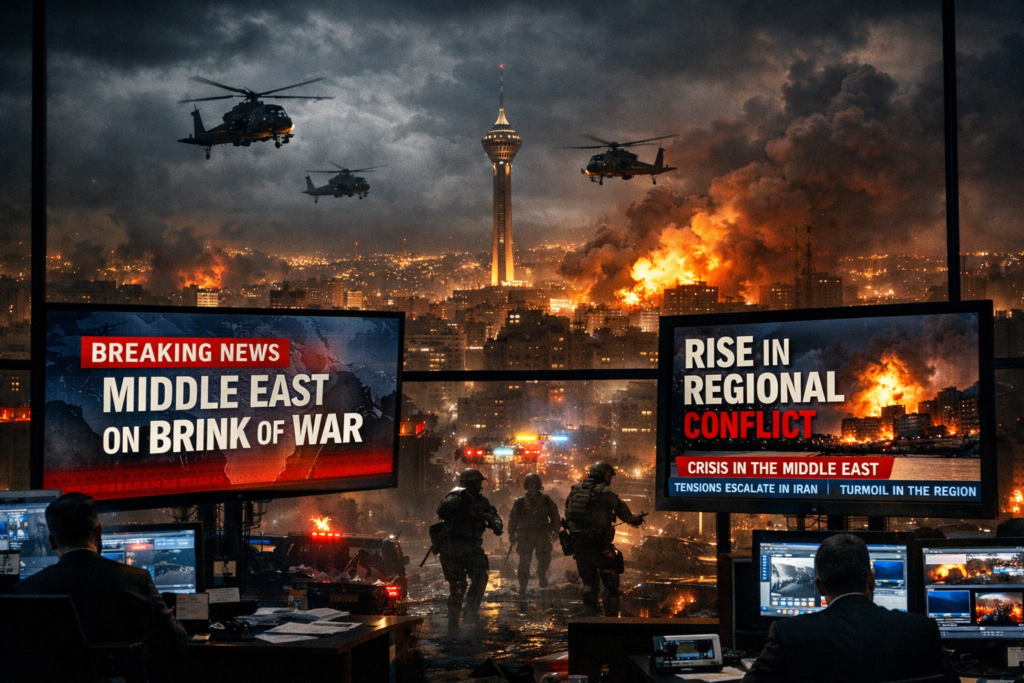
Tensions across the Middle East are rising sharply after a series of powerful strikes hit targets connected to Iran, triggering a wave of political pressure on the country’s leadership to respond.
In the hours following the attacks, government officials and political factions within Iran demanded decisive action from President Masoud Pezeshkian, arguing that the strikes represent a direct challenge to the country’s security and regional influence.
The situation is unfolding at a delicate moment for Iran, which has been navigating complex geopolitical tensions involving Israel, United States, and several regional allies. While details about the attacks remain limited, the incidents have intensified fears of a wider conflict that could destabilize the already fragile Middle East.
A Sudden Escalation
Reports from Iranian authorities indicate that multiple explosions struck strategic locations linked to Iranian security infrastructure and regional operations.
The attacks appear to have targeted facilities associated with groups aligned with Iran’s broader regional network. Officials described the strikes as deliberate and coordinated, though responsibility has not been officially confirmed.
Inside Iran, the strikes have sparked outrage among political leaders and the public alike.
Many lawmakers and military figures argue that failing to respond forcefully could undermine Iran’s deterrence strategy and embolden its adversaries.
At the same time, others warn that a rapid escalation could lead to a broader confrontation involving several powerful nations.
Pressure on Iran’s President
For President Pezeshkian, the moment represents one of the most serious tests of leadership since taking office.
The president, who campaigned on promises of economic reform and diplomatic engagement, now faces intense pressure from hardline political factions that favor a more aggressive response.
Members of the Iranian parliament and senior figures within the country’s powerful security institutions have publicly called for retaliation, arguing that national sovereignty must be defended.
Some have urged the government to expand military operations or strengthen alliances with regional partners who share Iran’s strategic goals.
Yet others inside the government appear to favor a more cautious approach.
Diplomatic advisers have warned that escalating tensions could lead to direct confrontation with Israel or even involve the United States, potentially triggering a far larger regional conflict.
Regional Stakes Continue to Rise
The Middle East has experienced repeated cycles of tension between Iran and its rivals, particularly Israel.
For years, both countries have accused each other of conducting covert operations, cyberattacks, and targeted strikes designed to weaken the other’s influence.
Iran supports several armed groups across the region, including factions operating in Lebanon, Syria, and Iraq.
Israel, meanwhile, has long argued that Iranian military expansion threatens regional security and has conducted numerous operations aimed at limiting Tehran’s capabilities.
The latest strikes appear to fit into that broader pattern of shadow conflict — one that rarely erupts into full-scale war but continues to fuel instability.
International Reactions
Governments around the world are closely monitoring the situation as it develops.
Diplomats fear that even a small miscalculation could quickly spiral into a larger confrontation involving multiple countries.
Officials in Washington have urged restraint while emphasizing the importance of regional stability.
Meanwhile, European governments have called for diplomatic engagement to prevent further escalation.
The Middle East remains one of the most strategically sensitive regions in global politics, with energy markets, shipping routes, and international security alliances all deeply connected to events there.
A significant escalation between Iran and its adversaries could have ripple effects far beyond the region.
Domestic Pressure Inside Iran
Within Iran itself, the attacks have sparked heated debate about how the government should respond.
Hardline political groups argue that failing to retaliate decisively could weaken Iran’s standing in the region.
They believe a strong military response would reinforce Iran’s image as a regional power capable of defending its allies and interests.
But others warn that such an approach could trigger a dangerous cycle of retaliation.
Iran’s economy has already faced years of pressure from international sanctions, inflation, and political isolation.
Some analysts believe the government may try to balance public demands for action with the need to avoid an all-out confrontation.
A Region on Edge
For ordinary citizens across the Middle East, the situation adds to a growing sense of uncertainty.
Many countries in the region have experienced years of instability fueled by proxy conflicts, economic challenges, and political upheaval.
Each new escalation raises fears that tensions could suddenly erupt into broader warfare.
Security analysts say the coming days will be critical in determining whether the latest strikes lead to retaliation or whether diplomatic efforts manage to contain the crisis.
For now, Iran’s leadership faces a difficult decision: respond forcefully and risk escalation, or pursue restraint while absorbing domestic criticism.
What Comes Next
The unfolding situation highlights the fragile balance that defines Middle Eastern geopolitics.
Iran’s response — or lack of one — will likely shape the next phase of regional tensions.
Military analysts are closely watching movements across the region, including troop deployments and potential security alerts issued by neighboring countries.
Meanwhile, diplomats are quietly working behind the scenes in hopes of preventing further escalation.
For President Pezeshkian, the challenge is immense.
He must navigate internal political pressure, international scrutiny, and the risk of a broader regional conflict.
As the world watches closely, the decisions made in the coming days could determine whether the latest confrontation fades into the long-running shadow war of the region — or becomes something far more dangerous.