Hungary Detains Ukrainian Bank Convoy Carrying $82 Million in Cash and Gold, Igniting Diplomatic Firestorm with Kyiv
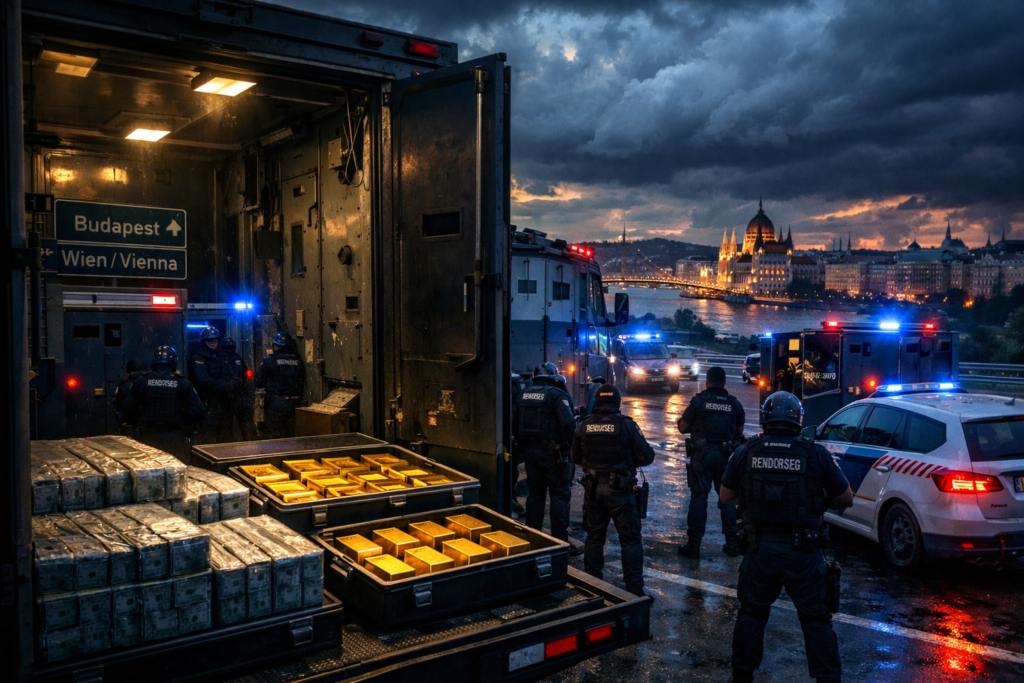
A dramatic international dispute erupted this week after Hungarian authorities detained a convoy of Ukrainian bank employees transporting millions in cash and gold across the country — a move that Kyiv is now calling an act of “hostage-taking” and financial seizure.
The incident has quickly escalated tensions between Hungary and Ukraine, two European neighbors already locked in political disagreements during the ongoing war in Eastern Europe.
At the center of the controversy are seven Ukrainian citizens, employees of Ukraine’s state-owned savings bank, who were traveling through Hungary in armored vehicles while transporting massive amounts of currency and precious metals. According to Ukrainian officials, the convoy was carrying $40 million in U.S. currency, €35 million in euros, and approximately 9 kilograms of gold, totaling more than $80 million in value.
A High-Value Transfer Interrupted
The employees were reportedly conducting a routine financial transfer between European banking institutions.
The shipment was moving from Austria toward Ukraine as part of a formal arrangement between Oschadbank, Ukraine’s state savings bank, and an Austrian financial institution. Officials say the cargo had been properly documented and complied with international transportation and customs regulations.
But the convoy never reached its destination.
Instead, Hungarian authorities intercepted the armored vehicles while they were passing through the country. The seven Ukrainian staff members traveling with the convoy were detained, and the shipment containing the cash and gold was seized.
Ukrainian officials say contact with the detained workers was lost soon after the interception.
Using GPS data from the armored vehicles, bank representatives later determined that the convoy appeared to be located in central Budapest, near a Hungarian security or law-enforcement facility.
The whereabouts and well-being of the employees remained unclear in the immediate aftermath of the incident.
Kyiv Accuses Hungary of “Hostage-Taking”
Ukraine’s foreign ministry reacted sharply.
Ukrainian Foreign Minister Andrii Sybiha accused Hungarian authorities of unlawfully detaining the bank workers and seizing state property. He described the action as equivalent to taking hostages and demanded the immediate release of the employees and the funds.
In a public statement, Sybiha argued that the convoy was operating under legitimate banking agreements and that Hungary had no legal justification to detain the personnel or confiscate the money.
“This is essentially hostage-taking and robbery,” the minister said while criticizing the Hungarian government’s actions.
Ukraine’s government has since issued a formal diplomatic protest and announced plans to raise the issue with the European Union, seeking clarification and possible intervention.
The Ukrainian state bank involved in the shipment also released a statement calling for the immediate return of both the employees and the valuables being transported.
Hungary Cites Possible Criminal Investigation
Hungarian authorities have offered a different explanation for the operation.
According to statements from officials, the detentions may be connected to a money-laundering investigation. Hungarian tax and customs authorities reportedly opened a criminal case after intercepting the convoy, citing concerns about the large volume of cash and precious metals being transported across borders.
The investigation is believed to involve multiple law-enforcement agencies, including units specializing in financial crimes.
Some reports also suggest that individuals connected to the transport operation may have had military or intelligence backgrounds, though these claims have not been fully verified.
Hungarian officials have not publicly disclosed detailed evidence supporting the allegations, and the investigation remains ongoing.
A Diplomatic Dispute Already Underway
The detention comes at a time of increasing political friction between Hungary and Ukraine.
Relations between the two countries have been strained throughout the ongoing war in Ukraine, particularly over energy policy and European Union funding.
Hungary, led by Prime Minister Viktor Orbán, has often taken positions that diverge from other EU nations regarding Ukraine. Budapest has maintained a more cautious stance on military assistance and sanctions against Russia, frequently calling for negotiations instead of escalation.
Meanwhile, Ukraine has repeatedly criticized Hungary for what it views as obstruction of European aid and policy initiatives.
A key point of contention involves the Druzhba oil pipeline, which carries Russian oil to several European countries, including Hungary.
Oil shipments through the pipeline were interrupted earlier this year after infrastructure was reportedly damaged during Russian military attacks. Ukrainian officials say the disruption was caused by the war and ongoing security risks, while Hungarian leaders have accused Kyiv of deliberately delaying repairs for political leverage.
The dispute over energy transit has contributed to a wider diplomatic rift between the two governments.
Political Pressure and Regional Tensions
The situation has become even more politically sensitive because Hungary is heading toward national parliamentary elections in the coming months.
Analysts say the incident involving the Ukrainian bank convoy may intensify domestic debates in Hungary about national security, economic policy, and relations with Ukraine.
Meanwhile, Ukrainian officials have warned that detaining bank employees and confiscating large financial shipments could undermine trust between European partners during wartime.
Ukraine relies heavily on international financial systems and cross-border transactions to maintain economic stability while much of its budget is directed toward defense.
Any disruption to those financial flows can have serious implications for the country’s war-time economy.
What Happens Next
For now, the fate of the detained Ukrainian employees remains uncertain.
Kyiv is pressing for immediate clarification from Hungary about the location and legal status of the workers, as well as the condition of the seized funds and gold.
Diplomatic channels between the two countries remain active, and Ukrainian officials say they are prepared to escalate the issue within European institutions if the situation is not resolved quickly.
The episode has already drawn international attention, highlighting how financial operations, geopolitical rivalries, and wartime tensions can collide in unexpected ways.
Whether the incident turns into a full diplomatic crisis or a temporary dispute may depend on how quickly the two governments can reach a resolution.
Until then, the case stands as another example of how fragile relations in Eastern Europe have become during one of the most turbulent periods in modern European politics.