U.S.-Israeli Strikes on Iran Could Drive Up Gas and Airline Ticket Costs at Home
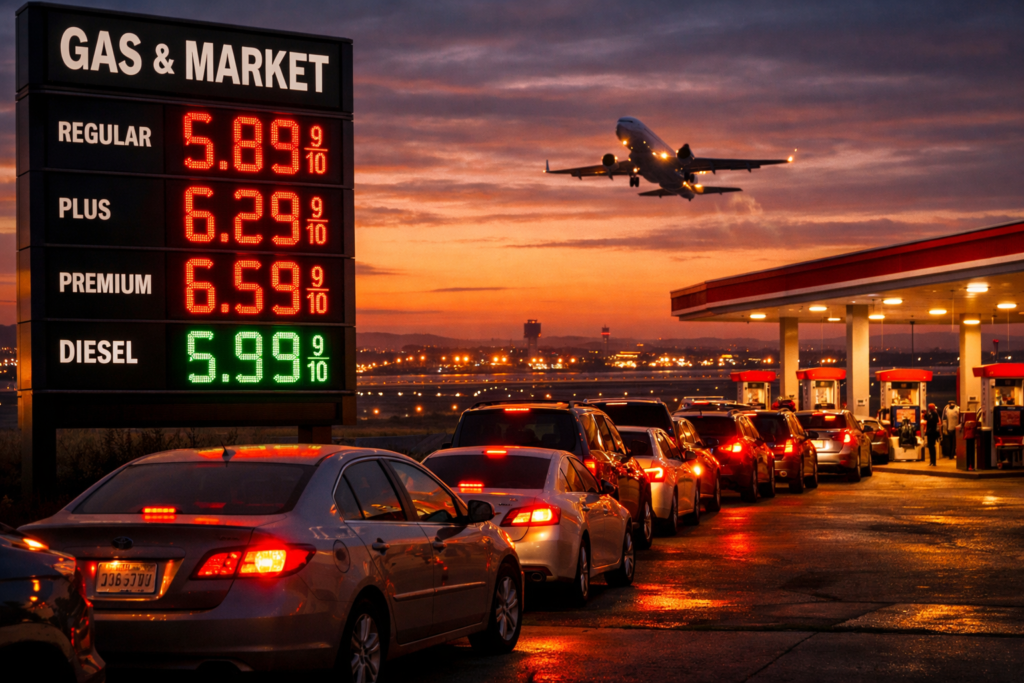
The ripple effects of the escalating conflict in the Middle East are extending far beyond geopolitics, with Americans increasingly feeling the impact in their wallets. In the wake of recent U.S.- and Israeli-led military strikes against Iran, economists, energy analysts and travel industry insiders are sounding the alarm that gas prices and airline ticket costs could climb in the coming weeks, touching everyday consumers at the pump and in airport terminals nationwide.
The connection between war in the Persian Gulf region and higher fuel costs isn’t a new one — history has shown how turmoil in oil-producing regions often tightens global supply and nudges prices up. But this latest confrontation — marked by strikes deep inside Iranian territory and Iran’s retaliatory missile and drone responses — has injected fresh worry into markets that were already nervous about future stability in one of the world’s most strategically important energy corridors.
From a consumer perspective, the concerns center on two key areas: fuel for cars and fuel for airplanes. Both rely on global oil and refined petroleum markets that are particularly sensitive to disruptions in supply routes and refinery output. As traders reacted to news of the strikes, U.S. benchmark oil prices rose sharply, reflecting heightened uncertainty and the possibility of supply bottlenecks. This increase in crude values typically flows through to retail prices, meaning drivers could soon see the familiar price per gallon move upward.
On Monday, the national average price for regular gasoline ticked up modestly, but some analysts warn this may be just the beginning of a broader upward trend. Regional markets, especially on the West Coast where fuel costs are traditionally higher, could experience more significant bumps. California, already shouldering some of the nation’s priciest pump prices due to local taxes and environmental regulations, may be especially vulnerable to a fresh surge if global crude prices continue to rise.
The mechanics behind the price jump are straightforward: when global oil futures climb, refiners pay more to obtain the base product that becomes gasoline, diesel and jet fuel. Those costs are then passed down through the supply chain. Gas stations, operating with slim profit margins, are usually among the first points where consumers feel the squeeze.
Airline ticket prices, meanwhile, have their own set of pressures. Jet fuel is one of the biggest operating expenses for commercial airlines, often accounting for up to 20% or more of total costs. When jet fuel prices rise, airlines have several options: absorb the cost and reduce profitability, cut costs elsewhere, or pass the fuel surcharge on to passengers in the form of higher fares. In many cases, airlines choose a mix of all three, meaning travelers often see incremental fare increases, higher fees, or reduced service offerings to offset rising fuel bills.
Travel industry analysts say the timing of this conflict couldn’t come at a more delicate point. Spring break season is already under way, and summer travel bookings were on the rise as Americans looked to hit the skies after pandemic-era cancellations and delays. If prices jump sharply, some travelers may delay trips, change destinations or opt for road travel over flights — choices that ripple not only through airline economics but also through hotel, car rental and tourism sectors across the country.
Globality adds another layer of complexity. International flights, especially those crossing the Atlantic or Pacific, require vast amounts of fuel. Airlines with limited capacity to hedge fuel costs or that operate long-haul routes may be forced to adjust pricing more aggressively, which could reshape demand patterns and affect travel habits for months.
To add to these pressures, Iranian missile strikes have caused temporary closures and disruptions in some Middle Eastern airspace corridors, forcing airlines to reroute flights — a costly logistical shift that further increases fuel consumption and operational expenses. These reroutes, while essential for safety, have already added minutes or even hours to some international flight paths, nudging costs higher for carriers and potentially for passengers.
On the supply side, U.S. energy policy also plays a role. The Biden administration, while supportive of national defense actions that involve military engagement overseas, has faced criticism from some quarters for not expanding domestic oil production more aggressively. In theory, boosting U.S. crude output could help moderate global price spikes by increasing supply. In practice, however, oil production decisions lie in large part with private firms responding to market signals rather than direct government command.
In recent months, several U.S. energy companies have announced plans to constrain new drilling or delay exploration projects — a shift that, in calmer times, might have seemed innocuous but now appears to be creating a broader vulnerability to supply shocks. Natural disasters, refinery maintenance outages and geopolitical instability — like the current conflict — can quickly tighten available supply and put pressure on prices even when demand is modest.
Consumer advocates have urged policymakers to explore mechanisms that could shield everyday drivers and travelers from sudden shocks. Suggestions include releasing strategic petroleum reserves, adjusting fuel tax rates, or offering targeted rebates to low- and middle-income households that are disproportionately affected by price increases. However, such measures often carry political and economic tradeoffs, and consensus on a path forward remains elusive.
Meanwhile, the Federal Reserve — which closely watches inflationary trends — may grapple with the consumer price impacts of rising energy costs. Higher fuel and airfare prices can contribute to broader inflation indicators, putting pressure on policymakers who are attempting to balance economic growth with price stability.
For everyday Americans, the immediate impact is likely to be felt first at the gas pump. A driver who fills up a 15-gallon tank could see their total price climb by $3–$6 or more over a two-week period if national averages rise significantly. For families budgeting monthly expenses, that’s real money that could otherwise go toward groceries, rent or savings.
Travelers already committed to upcoming trips may notice higher ticket prices or added fuel surcharges at checkout. For frequent flyers, even modest increases in ticket costs can add up quickly. And for budget-minded vacation planners, trends in airfare pricing will be something to watch closely as decisions about summer travel take shape.
Yet not all energy analysts expect long-term sustained increases. Some suggest that if the conflict remains relatively contained or if diplomatic channels reopen swiftly, price spikes might be short-lived. Market traders often react not only to the reality of supply disruptions but also to fears of potential disruptions — meaning that a diplomatic breakthrough could calm markets as quickly as military escalation drove prices up.
Ultimately, the intersection of foreign policy and domestic economics underscores a simple reality: what happens on distant battlefields can have immediate consequences here at home. For American drivers and travelers, the fallout from U.S.-Israeli strikes on Iran could translate into heavier gasoline bills, higher ticket prices and a renewed focus on the fragility of global energy markets — a reminder that international conflicts rarely stay distant for long.