Wintry Weather Comes Back as Rockies and Plains Feel the Chill, East Buries Under Snow While West Stays Mild
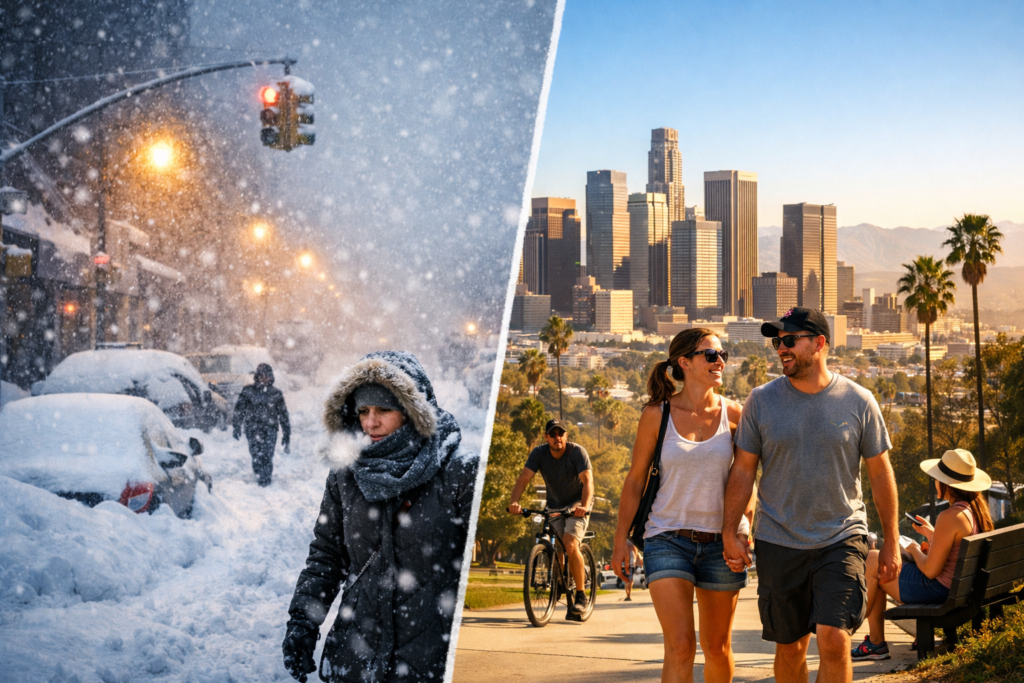
A dramatic weather roller coaster is unfolding across the United States this week — one that is literally leaving communities on the Plains, in the Midwest and up through the Northeast shivering under fresh snow and biting cold, even as parts of the West enjoy an unusually mild winter stretch. This fast-changing pattern highlights just how volatile winter weather patterns in the U.S. 2026 have become, with bitter cold waves returning for some regions while others see record-warm conditions for this time of year.
Across much of the Midwest and Great Lakes, long-standing winter chill has made a comeback after a brief reprieve that teased many with warmer days. Temperatures that dipped well below average have returned in states like Illinois, Wisconsin and Michigan, pushing residents back into heavy winter coats and behind snow shovels once again. The mounting snow accumulations and plunging mercury have reminded locals that even when spring feels near, winter’s reach can still grip wide swaths of the country. Meteorologists say this resurgence of cold is part of a larger U.S. winter storm and polar vortex return that’s sending blasts of frigid air south from Canada.
Farther east, the Northeast has already felt a powerful punch of winter. A historic snowstorm just recently dumped more than two feet of snow in some areas stretching from Maryland up through Maine, leading to widespread road closures, school cancellations and extensive travel disruptions. Major urban centers from Boston to New York City were forced to halt transportation and suspend flights as hefty snow piles paralyzed daily routines. Blizzard warnings and severe wind gusts accompanied that storm, turning highways into icy stretches and pushing emergency crews into round-the-clock cleanup efforts.
The Northeast’s cold snap didn’t arrive alone. Many towns and cities in the region saw historically high snowfall totals that rival those of past brutal winters, and in places like Rhode Island, snow depths rivaled some of the deepest accumulations in years. Residents struggled through school closures and power outages that affected hundreds of thousands of homes and businesses — the kind of weather chaos that brings back memories of harsh winters long thought to be waning.
But the weather story isn’t uniform across the entire country. Out West, the winter chill has been far less dominant, and in some locales, it’s been downright warm. California and parts of the Southwest have seen temperatures higher than typical for this late-winter period, allowing snowpacks in key mountain regions to stay stubbornly thin and not gaining as much winter precipitation as usual. That warm stretch has been a relief from what could otherwise be a very dry, snow-less winter — but it has also raised concerns among water managers, given how much the region relies on mountain snowmelt for water supply.
The contrast between regions underscores a broader trend in which winter weather across the U.S. is becoming more unpredictable. Some parts of the country that last year marked record-warm winter extremes — where December through February averaged far above typical temperatures — now find themselves back under snow and ice. Those dramatic swings reflect how U.S. climate and atmospheric jet stream patterns have grown increasingly erratic in recent years, with fluctuations that can swing from near-summer warmth to deep Arctic chills within relatively short periods.
As the Midwest shivers in temperatures that feel more like late December than late February, the powerful jet stream that controls much of North America’s weather has dipped southward, funneling cold air from the Arctic down into the central and eastern U.S. This dipping, known as a trough pattern, is what’s responsible for ushering in waves of wind chills and wintry precipitation that feel especially harsh when compared to the softer warmth that briefly flirted with much of the country just weeks ago.
Yet this dramatic contrast also reflects a winter that is physically shorter and more unpredictable. Climate data show that across the United States, the coldest part of the year — what meteorologists call “meteorological winter” — is shrinking, starting later and ending earlier in many major cities. Weather analysts link this to long-term warming trends: winters are overall less persistent and can collapse quickly into either surprising warmth or sudden cold snaps, often without much in-between.
From the Great Lakes to the Appalachian Mountains, mornings now bring snow-covered lawns and slushy roads for commuters, while evening wind chills make it feel well below freezing. Schools in several states were forced to close as crews battled heavy snow, and flight cancellations climbed into the thousands as travel routes grew unsafe. City officials urged residents to stay off the roads and take precautions to protect vulnerable neighbors from the frigid conditions.
Across the Plains, residents are digging out from fresh snowfall and preparing for yet another potential surge of wintry weather later in the week. Forecasters warn that additional systems could bring more snow and ice before the seasonal shift toward spring takes hold, keeping communities on edge as they brace for more cold air and icy conditions.
For those in regions feeling warmer than average, the respite from extreme cold has been a welcome break. Knee-deep snow that once blanketed mountain ranges is thinner than usual, and urban residents in Western states have enjoyed mild conditions that feel more typical of late fall than late winter. But that warmth comes with its own concerns, particularly for ski resorts, water supplies and ecosystems that depend on consistent winter precipitation.
As the U.S. moves toward March, meteorologists say to expect more of these sharp swings in weather. The transition into spring — often turbulent and unpredictable — could bring milder days interspersed with more episodes of cold and snow, especially across the northern tier of states. For now, though, Americans from the Plains to the Northeast are experiencing a powerful reminder that winter isn’t quite ready to let go