Why One Texas House Republican Is Locked in a Tough Primary Fight Without Trump’s Endorsement
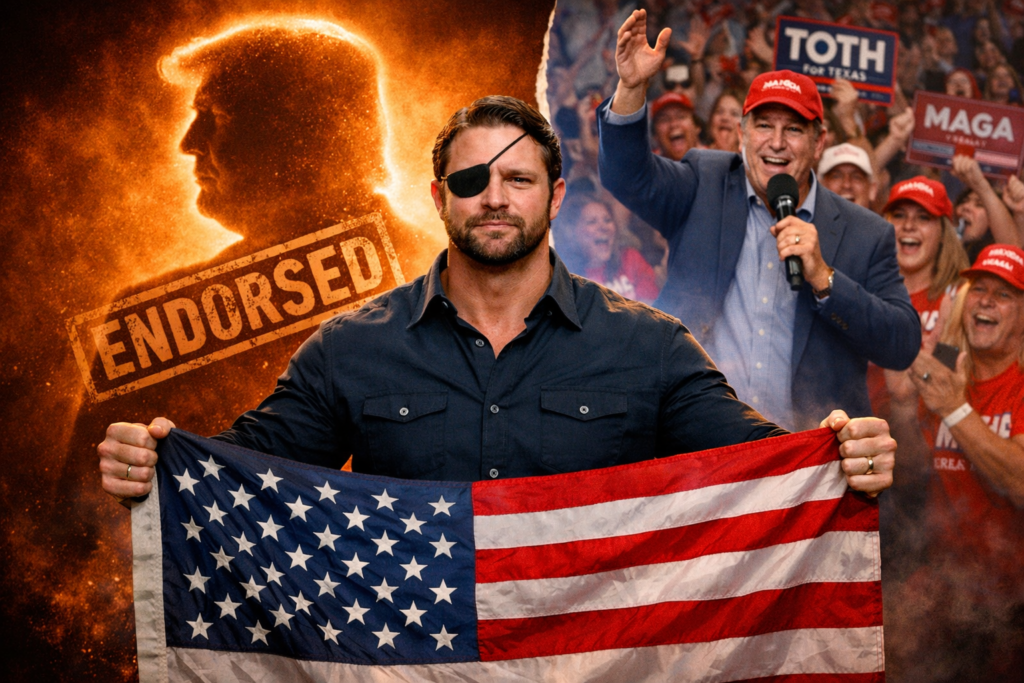
In the heart of Texas this year, most Republican House incumbents enjoy a powerful advantage: an endorsement or at least a friendly nod from Donald Trump — a political boost that has shaped dozens of GOP primaries across the nation. But one seasoned congressman stands out this cycle for not getting the former president’s backing — and it’s made his primary race unusually competitive and deeply personal.
Representative Dan Crenshaw, a four-term Republican from Texas, is facing an insurgent primary challenge from State Rep. Steve Toth — and unlike nearly every other GOP incumbent in the state’s March 3 primaries, Crenshaw didn’t receive Trump’s endorsement this year. That omission has turned what might normally have been a quiet re-election bid into a contentious contest that highlights fractures within the Republican Party over loyalty, policy, and identity.
A Lone Republican Without Trump’s Blessing
Trump’s voice still carries enormous weight in Republican primaries. Across the country, GOP hopefuls often tout his endorsement as a sign of conservative legitimacy and grassroots support — and Texas, as the nation’s most populous red state, has seen that dynamic play out loudly.
But when it came to Crenshaw’s primary, the endorsement didn’t come. Trump has backed every other House Republican running for re-election in the early 2026 primaries except Crenshaw — and that absence is telling.
“It’s almost like you need that stamp — that ‘I’m with Trump’ sticker — to survive a Republican primary here,” one local voter said at an early voting site, capturing the mood among GOP grassroots voters.
Crenshaw’s Record: Conservatives, But Not MAGA Enough?
Rep. Dan Crenshaw is no stranger to conservative policy or Republican campaigns. A combat veteran who served as a Navy SEAL, he first won his House seat in 2018 and became a familiar face in GOP circles for his tough rhetoric on immigration, national security and conservative social issues.
Yet this election cycle, Trump’s team did not formally endorse Crenshaw, and that decision has become central to his opponent’s campaign narrative. Critics say Crenshaw’s support for U.S. aid to Ukraine — in contrast with some GOP hardliners — and his public criticism of unfounded claims that the 2020 election was “stolen” have given his challengers room to question his conservative bona fides.
Crenshaw has responded by reminding voters that he’s still a loyal Republican who supports core Trump priorities. In campaign ads and speeches, he has repeatedly emphasized that “Crenshaw stands with Trump” — even as he’s denied the former president’s official endorsement this cycle.
Toth’s Challenge: Hardline MAGA Appeal
Crenshaw’s challenger, State Representative Steve Toth, has taken a more aggressive approach, arguing that Crenshaw’s positions aren’t sufficiently aligned with Trump’s America First movement. Toth and supporters argue that Trump’s political brand — particularly on border security, immigration, and conservative orthodoxy — should be the defining litmus test for Republican candidates.
That sentiment resonates with many GOP voters in Texas who see hardline adherence to Trump’s agenda as a prerequisite for political survival. Toth’s campaign rhetoric and endorsements from local conservative activists suggest that voters who put loyalty to Trump above other considerations are central to his strategy.
Voter Voices: Divided But Passionate
At early voting sites across Crenshaw’s district, GOP voters expressed a mix of loyalty, frustration and confusion.
One local supporter told reporters, “I backed Crenshaw even though Trump didn’t officially endorse him — because I think he’s done a good job.” Another voter, however, said, “If you’re not going to stand with Trump in every situation, you shouldn’t expect us to support you.” Those comments underscore the identity conflict among Republicans today: balancing loyalty to core conservative principles with allegiance to Trump’s leadership.
The Politics Behind the Silence
Political analysts see Trump’s absence as a strategic calculation rather than a personal snub. In many GOP primaries, Trump’s endorsements come only after consulting with key state leaders and longtime allies — and sometimes campaigns to keep Republicans united later in general elections can influence his decisions.
For Crenshaw, not having Trump’s backing means he must rely on his own fundraising, reputation and direct voter outreach to overcome this internal challenge — and he’s already responded by significantly outspending Toth on ads that reframe his record as conservative and pro-Trump even without the formal endorsement.
Broader Reflection: What This Race Says About the GOP
Crenshaw’s race is more than a single district contest — it’s a window into a broader identity struggle inside the Republican Party. In many parts of America, especially deep red states like Texas, loyalty to Trump’s agenda is no longer just an asset — it’s practically a qualification. Some voters want unqualified allegiance to Trump’s leadership, while others see room for independent conservative leadership.
The outcome of this primary — whether Crenshaw survives or is overtaken by Toth — could help signal whether Republican voters prioritize unwavering loyalty to Trump over individual records built through service, military experience and policy independence. This dynamic is shaping primaries from Texas to North Carolina and beyond.