Vatican Says No to Trump’s “Board of Peace” — A Clash Over Diplomacy, Global Crisis Management, and the Role of the United Nations
In a rare diplomatic move that has reverberated from the halls of St. Peter’s Basilica to global foreign policy circles in Washington and beyond, the Vatican announced it will not take part in U.S. President Donald Trump’s so-called “Board of Peace” initiative — a controversial new body designed to help manage the conflict in Gaza and other global crises.
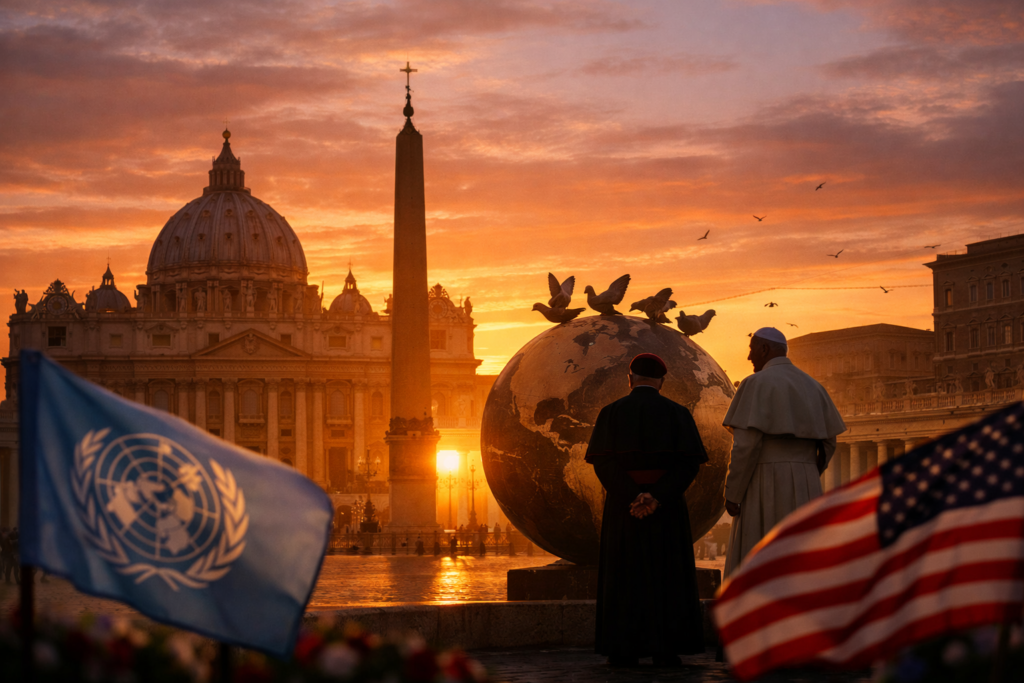
At the center of the Vatican’s decision is a profound philosophical and moral disagreement: the Holy See believes that peace and crisis response at the international level should be led by the United Nations and existing multilateral institutions, not a new group chaired by one nation’s president.
This diplomatic rebuff comes from one of the world’s oldest and most respected moral authorities — the Vatican — as it navigates its dual roles as a spiritual leader to over a billion Catholics and an active participant in global diplomacy.
What Is the “Board of Peace”?
First unveiled by President Trump in early 2026 after a fragile truce between Israel and Hamas in the Gaza Strip, the Board of Peace is a new international body meant to oversee temporary governance in Gaza and, according to Trump’s expanded vision, other conflicts around the world.
The initiative was formally launched at the World Economic Forum in Davos in January, where Trump announced dozens of invitations to world leaders to join the board as members, insiders, or donors.
But even as millions of dollars in aid pledges and reconstruction funds have been announced — including over $5 billion in donor commitments — many major Western democracies have chosen to sit on the sidelines or participate only as observers rather than full members.
That cautious response has set the stage for the Vatican’s own refusal — signaling deep unease about how peace is being pursued and who gets to lead it.
The Vatican’s Stand: Why It Said No
On Feb. 17, 2026, Cardinal Pietro Parolin, the Vatican’s secretary of state and one of the top diplomats in the Catholic Church, delivered a clear message: the Holy See “will not participate in the Board of Peace.”
In comments to journalists after a meeting in Rome with Italian government leaders, Parolin explained that the Vatican’s decision was rooted in principled concerns about the board’s nature, mission and structure.
He emphasized several key points:
- The Vatican is not a state like others and its diplomatic role differs significantly from worldly governments.
- There are unresolved “critical issues” and “points that leave us somewhat perplexed” with the initiative — particularly its scope and governance.
- Most importantly, Parolin said the Vatican believes global crises — from Gaza to regions enduring prolonged conflict — are best managed by the United Nations and multilateral consensus, not a board chaired by a single nation.
This statement reflects a worldview in which international cooperation and shared responsibility — rather than unilateral leadership — are essential to lasting peace.
Pope Leo XIV — Moral Voice in a Political World
The Vatican’s leadership is rooted in a tradition of moral diplomacy that often prioritizes universal values over political alignment. Pope Leo XIV — the first U.S.–born pontiff and a figure who has previously expressed concern over inflammatory political language — was extended a personal invitation to join the Board of Peace, but the Holy See declined the offer.
That decision comes against the backdrop of earlier messages from Pope Leo emphasizing the Church’s commitment to peace and justice, including calls for dignity in international affairs and a focus on compassion and dialogue.
This isn’t just a diplomatic rebuff — it’s a moral statement that reinforces the Vatican’s belief in an international community working together through established multilateral institutions, especially the U.N., rather than forming parallel structures that may lack broad legitimacy.
Global Response and Diplomatic Ripples
The Vatican’s decision is not an isolated example. Several other U.S. allies — including France, Germany, the United Kingdom and Canada — have either declined to join the board or have chosen limited engagement, often citing concerns about the initiative’s structure and its impact on existing global governance frameworks.
Even traditional U.S. allies that agreed to send representatives to the inaugural meeting in Washington — such as Italy and the European Union — have done so only as observers, not formal members.
This diplomatic tightrope underscores a broader challenge for global peace efforts:
- Nations want stability and reconstruction in conflict zones like Gaza, but
- Many fear that Trump’s board could undermine the authority of the United Nations, weaken international law, and create a parallel governance structure with uneven representation.
Critics have also point out issues like the absence of Palestinian representation and the perception that the initiative could centralize decision-making in ways that do not reflect the input of all affected communities.
The Vatican’s Vision of Peace
For the Vatican, peace isn’t just a diplomatic strategy — it’s a moral and spiritual calling. The Holy See has long championed multilateral cooperation, human dignity and conflict resolution through shared institutions that represent a wide array of voices and perspectives.
Cardinal Parolin and other Vatican diplomats have reiterated that real, lasting peace must come through inclusive processes — not by sidelining global institutions that have long played central roles in international crisis management.
This approach aligns with centuries of papal teaching — one that values dialogue, justice, and international cooperation as the bedrock of global harmony.
Why This Matters
The Vatican’s public refusal to take part in the Board of Peace has powerful symbolic and practical consequences:
- It highlights a deep philosophical divide over how the world should address crises like the conflict in Gaza.
- It amplifies concerns among Western nations about circumventing the United Nations’ central role.
- It reinforces the Vatican’s commitment to multilateralism, diplomacy, and principled engagement over political maneuvering.
And it offers an important reminder that global peace is not merely a slogan — it’s a shared responsibility that must respect law, representation, and human dignity.