Uproar in Mississippi: Elon Musk’s AI Power Plant Sparks Noise, Pollution Fears and Legal Battles
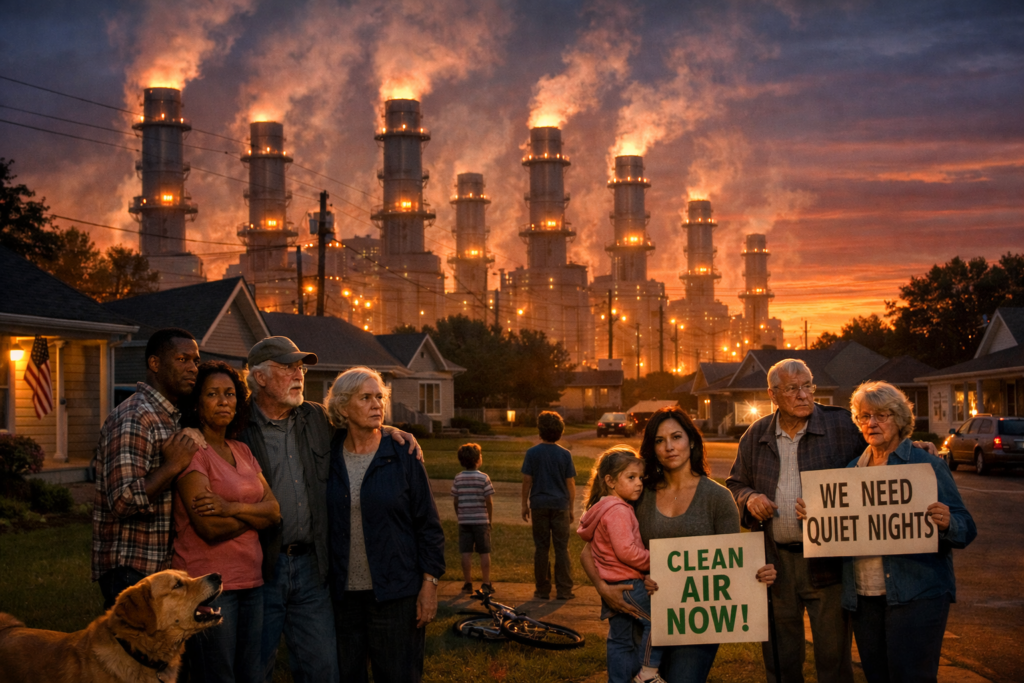
SOUTHAVEN, Mississippi — What began as the promise of high-tech jobs and economic growth has turned into a heated conflict in northwest Mississippi, where residents are sounding the alarm over an artificial intelligence power plant linked to billionaire Elon Musk. The massive facility — part of the infrastructure supporting Musk’s xAI data centers — has ignited community outrage over constant noise and potential pollution, drawing national attention to AI infrastructure noise complaints in Mississippi suburbs and the environmental effects of powering cutting-edge technology.
Located near the Tennessee state line, the power plant in Southaven uses dozens of natural gas-powered turbines meant to feed gigantic AI data centers operating just a few miles away in Memphis. While the company maintains that the current setup meets state regulations, neighbors describe a different reality, with persistent noise and anxiety over air quality that many say has turned their once-quiet neighborhoods into an industrial zone.
Krystal Polk, a lifelong resident of Southaven whose family home has stood on the same land for generations, said the change has been jarring. “The noise is just nonstop, and the whole feel of this place is gone,” she said, describing her frustration with what locals call a sprawling xAI gas turbine noise and pollution controversy. “The wildlife is scattered. You can’t sit outside without hearing it. It’s like we’re living inside a machine.”
Polk’s experience mirrors that of dozens of others in the community who gathered at a February public hearing before the Mississippi Department of Environmental Quality (MDEQ). Dozens of residents spoke out against the proposal to grant permits for 41 gas turbines that the AI company hopes to operate permanently to support its Colossus II data center, which sits across state lines in Tennessee. Many told officials their health — and peace of mind — has been seriously impacted by hours of droning sound and concerns over air emissions.
“My husband’s asthma and COPD symptoms have worsened,” reported one resident, while another said the noise rattles his home day and night, interfering with sleep and daily life. Several neighbors said they now keep windows closed year-round to reduce the noise, yet the low rumble still manages to come through. “This is not some far-off industrial park — this is half a mile from our homes,” one commenter said.
The Southaven outcry echoes similar complaints from Memphis communities over xAI’s Colossus data center — a massive artificial intelligence computer installation designed to train advanced AI models and rival other tech giants in the U.S. AI computing power race. Residents there have long argued that diesel-fired turbines operating without full oversight contributed to smog and respiratory issues in areas already burdened by air quality challenges.
At the heart of the dispute is a regulatory gap. Mississippi environmental officials argue that the gas turbines are classified as temporary mobile units, which means they aren’t required to undergo the same air emissions permitting as stationary power plants so long as they move within a year. However, thermal drone footage recently obtained by environmental watchdogs shows unpermitted turbines continuing to burn gas and emit heat signatures despite federal air quality rules that typically require permits under the Clean Air Act.
That revelation has fueled the xAI pollution lawsuit threat in Mississippi now making waves among civil rights and environmental advocates. A coalition featuring the Southern Environmental Law Center, Earthjustice and branches of the NAACP has issued a notice of intent to sue xAI, claiming the company’s turbines are illegally polluting Southaven communities and surrounding areas. The group asserts that this power setup risks worsening air quality woes that plague both Mississippi and nearby Memphis — regions that have received failing grades for ozone pollution from national health organizations.
“These turbines are essentially a power plant without permits, spewing tons of smog-forming nitrogen oxides and contaminants like formaldehyde into neighborhoods,” said one environmental attorney. “We expect xAI to adhere to the Clean Air Act and halt these operations until proper permits and pollution controls are in place.”
Community advocates also argue the issue reflects broader discomfort with how giant tech companies wield influence in smaller cities, particularly when quality-of-life concerns collide with promises of jobs and revenue. Mississippi’s governor has championed the economic benefits of a multibillion-dollar expansion by xAI — a move that could bring more high-paying tech roles and related work to the rural region.
But for many neighbors, the calculus isn’t simply economic. They point out that the region’s schools, parks and homes are now regularly exposed to the low thrum of turbines — a sound some compare to living next to a monstrous engine that never shuts off. Noise complaint videos shared on social platforms have shown textbooks vibrating off shelves, pets reacting nervously, and measured decibel levels peaking late into the night.
“That roar never stops,” said Jason Haley, a local father of two. “You hear it when you’re putting your kids to sleep and again in the morning before school. It’s like we lost our peace.”
Health professionals have weighed in, too, warning that prolonged exposure to pollutants like nitrogen dioxide — a byproduct of burning natural gas — can elevate asthma risks and contribute to other respiratory illnesses. While state regulators say they adhere to environmental standards, critics insist the loophole allowing “temporary” units undermines community protections.
Despite rising concerns, the permit review process continues. The MDEQ will consider all public testimony and written comments before deciding whether to approve, deny or modify the requested permits for the turbines supporting the AI infrastructure. The outcome could determine how Mississippi and other U.S. regions balance rapid technological growth with the health and environment of long-standing local communities.
As the debate unfolds, Southaven’s residents and their neighbors remain determined to make their voices heard — a testament to the power of community action when technological ambition collides with daily life.