Ukrainian Olympian’s Tribute Helmet Banned at Milan Cortina — A Moment That Breaks Hearts and Sparks Debate on Sport and War
MILAN — At the 2026 Winter Olympics in Milan-Cortina, one of the most talked-about moments hasn’t been a medal or a record-breaking run. It has been the simple act of a Ukrainian athlete trying to honor friends — only to be told he can’t do it on the world’s biggest winter sports stage.
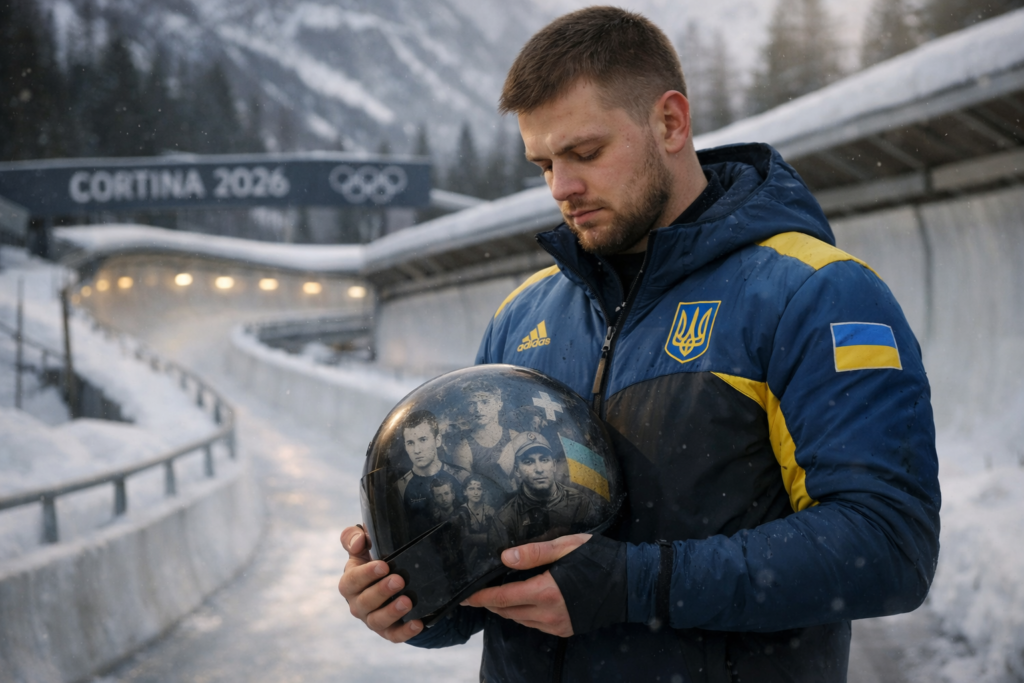
Vladyslav Heraskevych, Ukraine’s skeleton racer and flag bearer, brought a custom helmet covered with images of Ukrainian athletes who were killed as a result of Russia’s ongoing war. It was meant to be a quiet tribute to fallen colleagues and friends who once shared his dreams of Olympic glory. Instead, the helmet was declared off limits by the International Olympic Committee (IOC), which said it violated a rule against political statements at the Games.
The ruling has stirred worldwide reaction, mixing sadness with fierce debate about where sport ends and political expression begins — and whether honoring the dead can ever be separated from politics.
A Helmet with Faces, Names, and Stories
When Heraskevych arrived in Cortina d’Ampezzo for training, he was wearing a helmet unlike any other. It wasn’t full of flashy decals or sponsor logos — it displayed portrait images of Ukrainian athletes who lost their lives during the war with Russia. Among those depicted were friends from his sporting community: figure skater Dmytro Sharpar, boxer Pavlo Ishchenko, hockey player Oleksiy Loginov and others killed either on the front lines or while helping civilians.
In a sport like skeleton — where racers hurtle head-first down icy tracks at more than 80 miles per hour — helmets are more than just safety gear. For Heraskevych, this one was also a symbol of remembrance, love, and loss. Each image represented someone who once shared a dream of representing Ukraine on the world stage.
Rule 50: Neutrality or Heartless Restriction?
The IOC cited Rule 50.2 of the Olympic Charter when blocking the tribute helmet. That rule states, in essence, that no political, religious or racial demonstrations are allowed at Olympic venues or official events. The intention behind Rule 50 is to preserve the Games as a neutral space where athletes compete without political pressure or protest overshadowing the sports.
But Heraskevych and many others argue this isn’t politics. “It’s about honoring our own who paid the ultimate price,” he said, questioning how remembering friends is somehow a political statement. “These were athletes. They were part of the Olympic family. To me, this is human, not political.”
He and Ukraine’s Olympic Committee said they planned to submit an official appeal to the IOC, hoping the decision would be reversed.
The Ukrainian President Steps In
This moment drew attention far beyond the sporting world. Ukrainian President Volodymyr Zelenskyy took to social media to praise Heraskevych for raising awareness about the cost of his country’s fight for freedom. “This truth cannot be awkward, inappropriate or called ‘political action,’” Zelenskyy wrote, stressing that reminders of real sacrifice are not only appropriate but necessary.
For many Ukrainians — and people around the world who have watched the ongoing conflict’s toll — the reaction wasn’t just political commentary. It was a deeply emotional response to seeing names and faces remembered on the world’s biggest athletic stage, and then seemingly censored.
What the IOC Says and Why
Representatives of the IOC did not initially reply to some calls for comment, but according to public statements, the organization said it did not receive an official request in advance from Ukraine’s Olympic federation to use the helmet. That is part of why the helmet’s status was still being reviewed under Olympic rules.
Officials have long argued that the Olympics should be a space for global unity — a place where nations come together in competition, but not in political confrontation. That’s why Rule 50 exists. But this case has raised questions about whether remembering loved ones who died is truly a political act, or whether the rules may be too rigid when dealing with matters of the heart and humanity.
The Human Story Behind the Rules
It’s easy to get lost in the legal language of Olympic charters and policies, but behind this story are real people with powerful human experiences.
Heraskevych himself is a decorated skeleton racer — not just an athlete, but a young man whose life and sport were deeply connected to people now gone forever. At the 2022 Beijing Olympics, just days before Russia’s full-scale invasion of Ukraine, he held up a “No War in Ukraine” sign after a race, a gesture that caught global attention and was later accepted by the IOC as a general call for peace.
Now four years later, he hoped to honor fallen teammates once again. The emotional significance of the helmet was not lost on those who knew him. “Some of these athletes were my friends,” he said. “I knew them. We trained together. They deserved to be remembered here.”
A Broader Debate on Sport and Expression
This incident at the Winter Olympics has sparked a larger conversation about sport, expression and the blurry line between the two.
Many athletes and fans around the world are questioning whether sports organizations should allow more expression, especially when the intent is not political protest but a tribute to the human cost of war.
Others argue that allowing such things could open the door for a wide range of demonstrations that would move the Olympic focus from athletic achievement to ongoing conflicts, protests and division.
Both sides feel deeply — and in many ways this imperfect debate reflects the struggle of reconciling global unity with personal loss.
The Legacy of a Helmet
In the end, this is about more than an Olympic helmet. It’s about memory, grief, respect and the global community’s struggle to balance empathy with international rules.
For Heraskevych and many around the world, the conversation has already transcended sports. It’s become a reminder that behind every rule and every competition are human lives, stories cut short, and friends waiting to be remembered.
Whether or not the IOC ultimately changes course, the images on that helmet — and the emotions tied to it — have already made their mark on this Winter Games in ways that no finish line ever could.