Ukraine, U.S. and European Leaders Grapple With Security Guarantees as Peace Talks Continue
PARIS & KYIV — As international attention remains focused on ending the nearly four-year conflict between Ukraine and Russia, Ukrainian President Volodymyr Zelenskyy, U.S. officials and European allies are intensifying negotiations over security guarantees that could form a cornerstone of any future peace settlement, sources say.
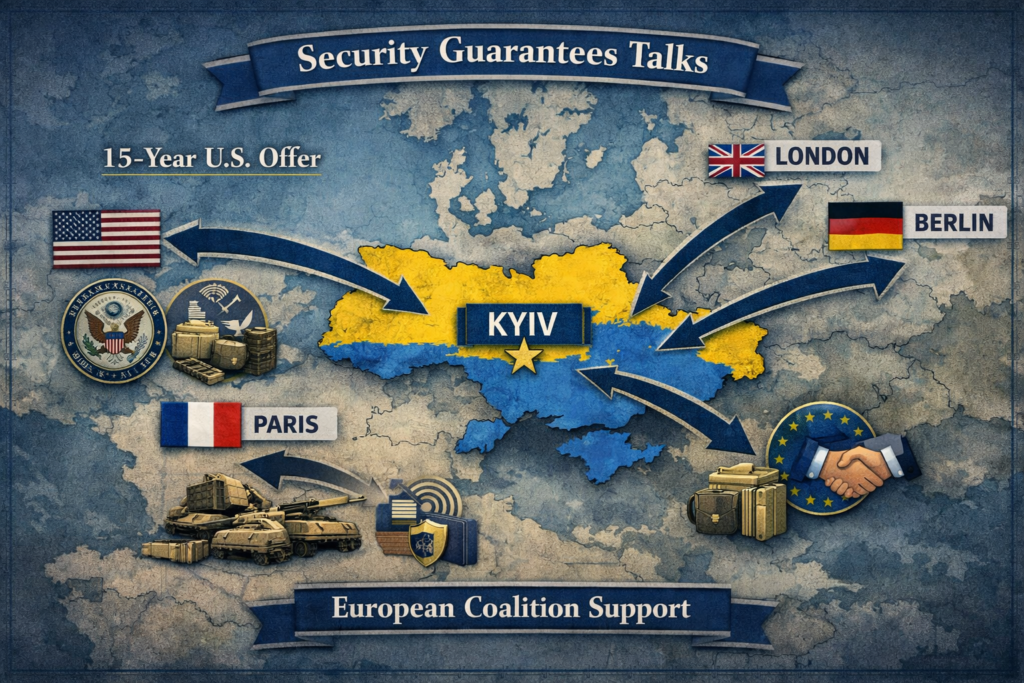
In recent diplomatic sessions, including talks involving Ukrainian, American and European representatives, leaders have been working to transform broader support pledges into concrete, binding security commitments for Kyiv that would help deter future Russian aggression. These guarantees — part of a evolving peace plan framework — could include military support, intelligence sharing, logistical aid and diplomatic coordination in the event of a renewed attack, a draft of a Paris summit statement shows.
U.S. President Donald Trump’s administration has signaled an offer of 15-year security guarantees to Ukraine, though Ukrainian officials have pushed for a longer commitment. Zelenskyy maintains that without long-term assurances, Ukraine cannot consider the conflict truly over, emphasizing that the risk of future aggression persists despite progress toward a peace deal.
These discussions build on recent Trump-Zelenskyy talks in Florida, where a 20-point peace plan was reportedly 90 % agreed upon and security guarantees were a central topic. Both sides acknowledged the need for Western involvement, with Zelenskyy calling for broader European engagement in these guarantees.
European leaders have also been involved in shaping the security framework. Around 30 nations, including many NATO members, have been engaged in discussions about post-war security arrangements for Ukraine — a collaborative effort aimed at helping Kyiv defend its sovereignty and territorial integrity long after active hostilities subside.
Despite forward movement on security and peace frameworks, territorial disputes, particularly over control of eastern Ukraine and Russian-occupied regions like the Zaporizhzhia nuclear plant, remain major sticking points. Both Ukraine and Russia have maintained firm positions, with ongoing debates over how to balance territorial rights with durable peace commitments.
As talks continue into early 2026, the world’s eyes remain on whether these evolving security guarantees — backed by the U.S., Europe and Ukraine — can finally help bring an end to Europe’s most devastating conflict since World War II.