U.S. Military Carries Out Airstrikes on ISIS in Nigeria After Targeted Violence, Trump Says
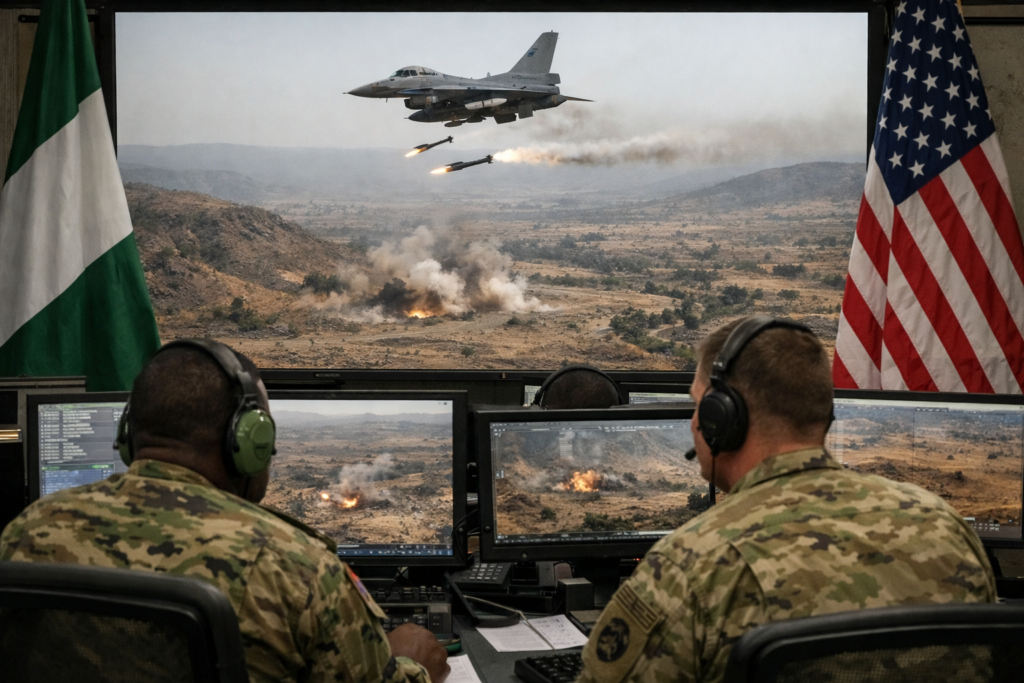
WASHINGTON, D.C. — On Christmas Day, the United States launched precision airstrikes against Islamic State militants in northwest Nigeria, marking a significant escalation in the U.S. counterterrorism campaign in West Africa. The operation — carried out in Sokoto State — was coordinated with the Nigerian government and resulted in the deaths of multiple ISIS fighters, U.S. officials said.
President Donald Trump announced the action on social media, saying he ordered “powerful and deadly strikes” after weeks of warnings about extremist groups allegedly targeting Christians in the region. “Tonight, at my direction as Commander in Chief, the United States launched strikes against ISIS Terrorist Scum in Northwest Nigeria,” he wrote, emphasizing that the offensive was intended to halt violence directed primarily at innocent civilians.
According to the U.S. Africa Command (AFRICOM), the strike was executed with support from Nigerian security forces and based on shared intelligence. While some U.S. officials framed the attack as a response to religious persecution, Nigerian authorities underscored that the broader fight against terrorism affects all communities, regardless of faith.
Nigerian Foreign Minister Yusuf Maitama Tuggar confirmed the collaboration in a statement, explaining that the country provided crucial intelligence and that the strikes reflected ongoing security cooperation. Tuggar also noted that President Bola Ahmed Tinubu had reviewed and approved the plans before execution.
Security experts say Sokoto State has increasingly become a hub for extremist cells affiliated with the Islamic State Sahel Province (ISSP) and other militant groups, exacerbating longstanding instability in northwest Nigeria. The presence of jihadist affiliates has contributed to cycles of violence that have displaced communities and undermined regional peace efforts.
The U.S. strikes come amid broader shifts in American foreign policy in Africa. While previous administrations scaled back military engagement on the continent, the Trump administration has signaled a willingness to respond forcefully when U.S. officials believe extremist threats are imminent. Critics, however, argue that airstrikes alone may not address underlying social and economic grievances fueling insurgencies.
Analysts also highlight that militant violence in Nigeria’s northwest is complex, involving not only ISIS-linked fighters but also bandit groups and local conflicts that predate recent U.S. involvement. Still, the latest operation underscores Washington’s commitment to disrupting terrorist networks and bolstering partner nation capabilities.
As details continue to emerge, both Nigerian and U.S. leaders have pledged to sustain cooperation aimed at improving security and preventing further extremist attacks — even as debates persist about the most effective long-term approach to fighting terrorism in the region.