U.S.–Israel Strikes Ignite Major Middle East War, Conflict Spreads Across Region
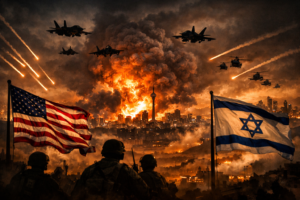
A fierce and rapidly expanding military conflict has erupted across the Middle East after a dramatic joint air campaign launched by the United States and Israel against Iran, plunging one of the most volatile regions in the world into open warfare. The confrontation, which began late last weekend with a pre-emptive military offensive, has quickly spiraled into a broad regional war, drawing in Hezbollah in Lebanon, triggering drone strikes on U.S. embassies, and creating a humanitarian crisis with heavy casualties on multiple fronts.
President Donald Trump described the operation, dubbed “Operation Epic Fury,” as necessary to dismantle Iran’s missile, nuclear and naval threat — framing it as a defensive move after what his administration said were months of stalled negotiations and escalating Iranian hostility. Trump also claimed that the campaign might last weeks, not years, and insisted that U.S. and allied forces were “well ahead of schedule” in achieving core objectives. Despite that optimism from the White House, American and allied casualties have already mounted.
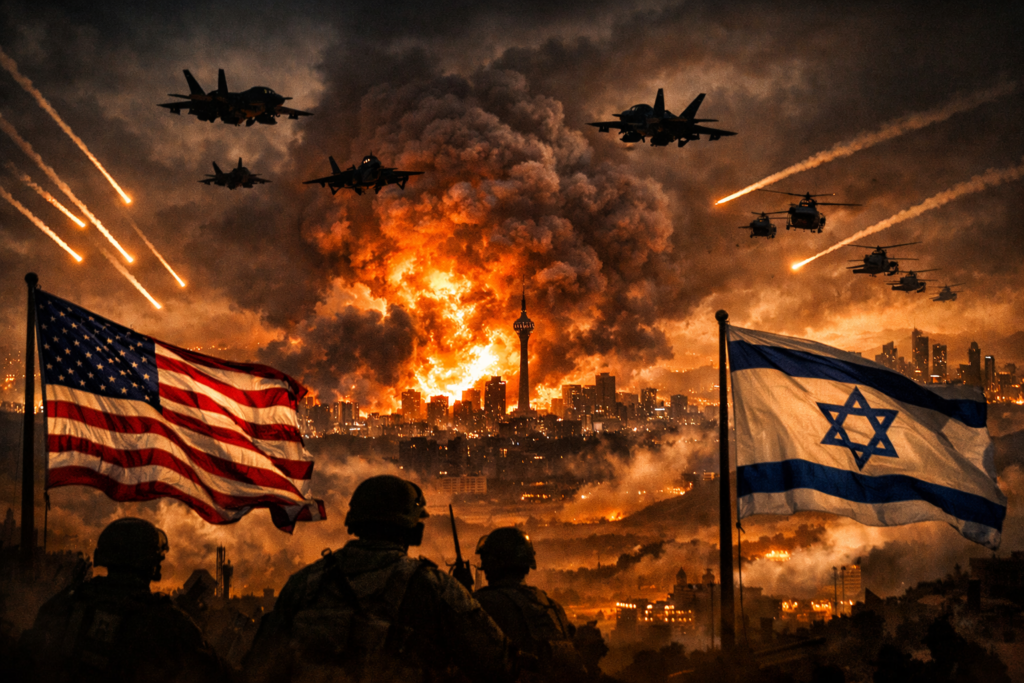
The offensive began with heavy bombardment on Iran’s strategic military infrastructure and key leadership targets, including ballistic missile bases and nuclear-related facilities, in a coordinated strike involving both U.S. and Israeli aircraft and missiles. Tehran acknowledged heavy damage across numerous cities and theater infrastructure, with state media reporting widespread destruction from the aerial campaign. In response, Iranian forces launched massive retaliations in the form of ballistic missiles, drones and long-range attacks across Israel, Gulf states and U.S. military bases in the region.
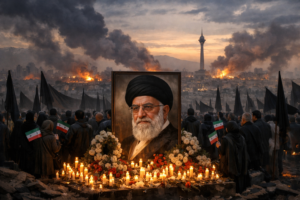
One of the most consequential developments came early in the campaign when airstrikes struck deep into Iranian territory, reportedly decimating senior leadership compounds and, according to U.S. and Israeli sources, killing Iran’s supreme leader. This moment marked a dramatic escalation, effectively eliminating one of Tehran’s most enduring figures and reshaping Iran’s political and military hierarchy. As a result, Iran declared an extended period of mourning and vowed fierce retaliation.
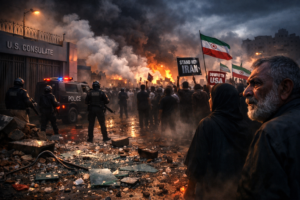
Within days, the conflict spilled into neighboring territories. In Lebanon, Israeli forces responded to rocket and drone attacks from Hezbollah, its long-standing Iranian-aligned ally, with their own strikes on militant positions. Meanwhile, Iran launched drone assaults against the U.S. Embassy in Riyadh, Saudi Arabia, and attacks on diplomatic facilities across the Gulf region, including Kuwait and Bahrain, resulting in injuries, fires and evacuation operations.
The widening war has also seen grievous losses among U.S. forces. American military officials confirmed multiple fatalities and injuries among service members during the expansion of hostilities. While U.S. defense leaders emphasize that the campaign is not intended to involve a prolonged ground invasion, they have not ruled out sending additional forces if deemed necessary, heightening concerns about the possibility of troop deployments beyond air and naval operations.
Today’s theaters of combat are not limited to Iran and Israel alone. Iranian attacks have extended to Israeli cities and civilian areas, including Tel Aviv and Haifa, and to commercial and strategic infrastructure in the United Arab Emirates, Kuwait and Bahrain. Missile and drone strikes have disrupted energy supplies by targeting oil installations and prompted near-shut-downs of vital trading routes like the Strait of Hormuz, creating global ripples in oil and shipping markets.
The humanitarian toll is mounting. Iranian health authorities and international observers report hundreds of civilians killed and thousands injured from sustained bombardment. In Lebanon, conflict-related deaths are reported amid separate militia and army strikes, and in Israel, missile fire has taken civilian lives and damaged residential areas. These clashes have displaced communities and placed immense strain on hospitals and emergency services across multiple countries.
Beyond the battlefield, the geopolitical fallout is stark. The U.S. State Department has issued urgent travel advisories for American citizens in the Middle East, urging evacuation from at least 16 countries due to rapidly deteriorating safety conditions. Commercial air travel has been severely disrupted, and repatriation efforts are underway as governments scramble to protect their nationals.
At the United Nations, tensions erupted into sharp rhetoric. U.S. representatives defended the strikes as a lawful effort to neutralize an imminent threat, while Iranian diplomats decried the attacks as unlawful aggression that violates international norms. UN officials warned of “uncontrollable escalation” and pleaded for restraint as diplomatic efforts lag behind missiles and counterstrikes.
The narrative from Tehran suggests that talks with Washington remain elusive, even as the war shows no signs of an immediate ceasefire. Iran’s top security officials have vowed not to negotiate under fire, and interim leadership figures continue to rally Iranian forces and their regional allies against what they cast as foreign aggression.
In Washington, political response is sharply divided. Supporters of the strikes argue they were necessary to pre-empt a growing threat posed by Iran’s nuclear ambitions and regional military proxies. Critics, including members of Congress from both parties, have pushed back, calling for more oversight, accountability and clear objectives to avoid another prolonged Middle East war with uncertain outcomes.
US officials have insisted that the operation’s goals are limited and achievable, stressing that they are focused on destroying Iran’s missile capabilities and nuclear potential rather than nation-building or long-term occupation. Still, with allies and adversaries now involved, and with civilian populations bearing the brunt of violence, the conflict’s eventual arc remains deeply uncertain.
As the crisis stretches into another week, global markets, diplomatic channels and humanitarian agencies alike are bracing for ripple effects that could define Middle East geopolitics for years. With mounting casualties and no clear end in sight, analysts warn that this is one of the most unpredictable and consequential conflicts in recent memory — one with far-reaching consequences for American security, regional stability, and international diplomacy.