Trump’s Gun Rights Record Under Scrutiny as Administration Defends Restrictions in Supreme Court Case
WASHINGTON — President Donald Trump began his time in office last year with bold declarations about defending the Second Amendment, positioning himself as a staunch supporter of gun rights for law-abiding Americans. But as his administration faces a high-profile legal battle before the U.S. Supreme Court on gun policy decisions, critics and advocates alike are questioning whether his actions behind the courtroom doors align with the rhetoric he has championed on the campaign trail and in statements to voters.
Trump’s early executive orders and public statements made clear his intention to promote what many see as traditional Second Amendment protections for responsible citizens — rights that allow individuals to keep and bear arms for self-defense and recreation. “Because it is foundational to maintaining all other rights held by Americans, the right to keep and bear arms must not be infringed,” one executive order read, reflecting the administration’s early commitment to broad gun ownership rights.
Yet, nearly a year into his presidency, the picture has become more complicated. While parts of the administration have challenged certain firearms restrictions in lower courts and backed legal fights against state gun laws, officials have also been defending long-standing federal gun restrictions before the Supreme Court that frustrate some gun rights advocates. These moves have sparked intense debate among conservatives and civil liberties groups about Trump’s record on national gun rights issues.
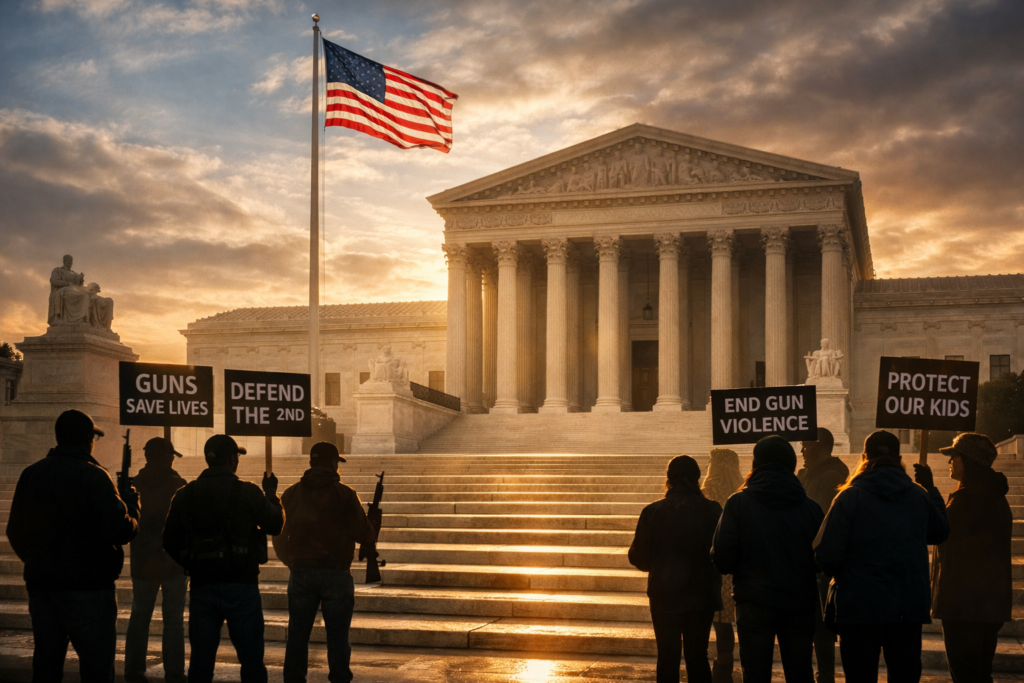
At the center of this controversy is a federal statute that bans gun possession by people who are illegal drug users. In a case currently before the Supreme Court, the federal government — representing Trump’s administration — is defending this restriction, arguing that barring illegal drug users from possessing firearms is consistent with the Constitution’s protection of gun rights, particularly when public safety is at stake. This unusual stance has put the administration on the same side as gun safety groups in the courtroom, a position that has baffled some committed Second Amendment advocates and conservative activists.
Critics say this defense of gun restrictions stands in contrast to other actions taken by the administration that appear to support gun owners. For example, earlier efforts aimed at reviewing federal firearm regulations have been touted by the White House as steps toward rolling back rules perceived to infringe on constitutional gun rights. In response to a 2025 presidential order, the Justice Department formed a dedicated unit tasked with overseeing gun rights litigation, an action interpreted by some as a reflection of Trump’s pro-gun agenda.
Gun rights groups including the Firearms Policy Coalition and Gun Owners of America have voiced frustration. “The administration’s record is mixed at best,” one advocacy leader told reporters, explaining that trust has been eroded when federal lawyers defend restrictions that many gun owners don’t believe should withstand constitutional scrutiny.
A key point of contention has been the inconsistency between rhetoric and policy. While Trump himself, along with top White House officials, has repeatedly affirmed support for the rights of “law-abiding Americans,” the Justice Department’s choices in litigation have not always reflected an absolutist interpretation of the Second Amendment’s historic individual right to bear arms. Legal scholars note that while the Constitution does protect the individual right to own firearms, it also permits “well-regulated” restrictions in certain circumstances — a nuance that the Supreme Court’s own precedent has acknowledged.
Some conservative legal commentators argue that the administration’s strategy could be shaped by judicial prudence rather than political calculation, suggesting that willingness to defend select laws is rooted in legal strategy rather than ideological retreat. Federal attorneys have at times opted to defend restrictions that have deep roots in American legal history — particularly those involving public safety, like barring access to guns for individuals engaged in illegal drug use — a choice that may reflect long-established interpretations of the constitutional framework.
Still, frustration persists among some constituents who see the administration’s approach as a missed opportunity to reinforce broader gun rights established in recent Supreme Court rulings. Since a landmark 2022 decision expanded the constitutional right to carry firearms outside the home, there has been a surge in legal challenges against a variety of gun regulations, including state age restrictions and local bans. Yet the administration’s decision to support certain limitations has left key advocates feeling betrayed by what they call an inconsistent federal stance on firearm freedoms.
Adding fuel to the debate are broader political currents. Last year, the Trump-appointed Attorney General announced plans to review all federal gun rules for potential infringement on gun rights, signaling early intent to roll back what many conservative voters view as federal overreach. Yet defending laws like the restriction on gun possession by drug users underscores a widening gap between policy choices and the ideological expectations of core supporters.
Some critics have pointed to recent incidents unrelated to the Supreme Court case as further evidence of this tension. After a federal agent fatally shot a legally armed protester in Minneapolis, Trump’s comments about the incident — cautioning against carrying a firearm in that situation — sparked backlash from gun-rights defenders who felt the remarks undercut the president’s assertive messaging on the Second Amendment.
Despite the internal debates and public criticism, White House officials remain firm in their messaging. A senior press aide recently reaffirmed the president’s unwavering support for constitutional gun rights, emphasizing that the administration “will always defend and protect Americans’ constitutional right to bear arms.” But the unfolding legal drama before the Supreme Court shows just how complex that principle becomes when constitutional guarantees intersect with public safety concerns and the evolving landscape of federal law.
As Supreme Court justices prepare to weigh these arguments, American gun policy — and the Trump administration’s legacy on the issue — hangs in the balance. The outcome of this high-stakes case could not only shape federal gun laws for years but also redefine how future presidents navigate the enduring tensions between gun rights advocacy and regulatory responsibilities.