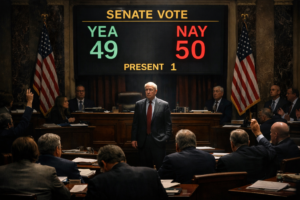
Trump Threatens Federal Funding Cuts to Sanctuary Cities and States
WASHINGTON, D.C. — President Donald Trump has reignited a long-standing battle with Democratic-led cities and states over “sanctuary” policies, announcing this week that the federal government will cut off federal funding to jurisdictions that limit cooperation with federal immigration enforcement agencies — beginning on February 1, 2026. The move marks one of the most aggressive challenges yet by a presidential administration against local jurisdictions that refuse to fully cooperate with U.S. Immigration and Customs Enforcement (ICE) and other federal immigration authorities.
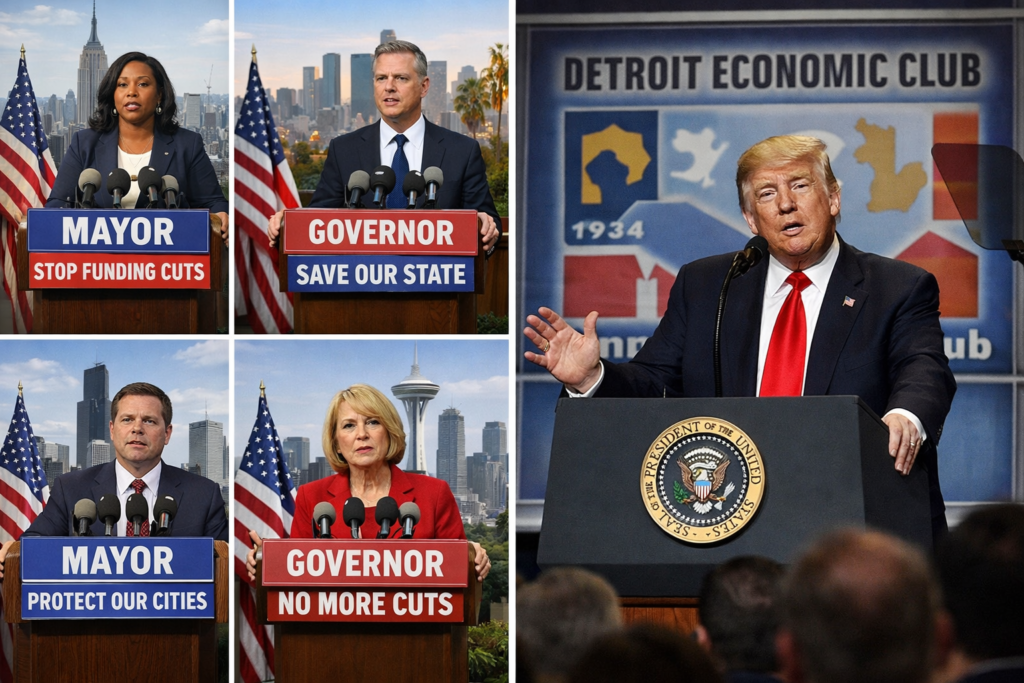
Trump made the announcement during a speech to the Detroit Economic Club and reinforced it in statements on social media, saying the federal government will halt “any payments to sanctuary cities or states having sanctuary cities” because, in his words, such jurisdictions “breed crime and violence” by refusing to enforce federal immigration laws.
What Are Sanctuary Cities?
Sanctuary cities and states are local jurisdictions that adopt policies limiting their cooperation with federal immigration authorities. These policies can include refusing local law enforcement assistance to ICE unless there is a criminal conviction, restricting detention based solely on immigration status, or declining to share detailed personal data. Advocates say these policies improve community trust and public safety by encouraging cooperation between immigrant communities and police. Critics, including Trump, argue they obstruct law enforcement and protect criminals.
Trump Expands Funding Threat
What makes the latest announcement especially significant — and controversial — is that Trump isn’t just targeting the cities themselves. He is threatening to cut federal money to entire states that contain sanctuary cities. This broad amplification comes after nearly a decade of legal and political skirmishes over the use of federal funds as leverage against local immigration policy.
For example, Trump said, “Starting February 1, we’re not making any payments to sanctuary cities or states having sanctuary cities because they do everything possible to protect criminals at the expense of American citizens.”
The precise funding streams that could be affected have not been fully delineated by the White House, but analysts warn that withholding federal dollars could impact billions of dollars earmarked for infrastructure, education, disaster relief, public safety grants, and other essential services — especially in large metropolitan areas.
Cities and States Push Back
Local leaders from coast to coast have responded with alarm and defiance.
In Chicago, where federal grants contribute billions of dollars annually to schools, public transit, law enforcement and community programs, Mayor Brandon Johnson sharply criticized the president’s threat, likening it to holding tax dollars “hostage” and accusing the administration of punishing cities for upholding local laws.
“Trying to force your will by threatening to strip our funding isn’t negotiation — it’s intimidation,” Johnson said at a press conference, adding that Chicago would fight any attempt to “break the spirit of working families and taxpaying Americans.”
Across the nation, other mayors and governors from sanctuary jurisdictions — including San Francisco, New York City, Seattle, Portland, and Minneapolis — have vowed legal challenges, pointing out that federal courts have previously blocked funding cuts tied to sanctuary policies and that such actions raise constitutional and statutory concerns.
Legal Battles Already Underway
The legal history of federal-state funding challenges over immigration policies dates back to Trump’s first term. In 2017, Trump signed an executive order aimed at disqualifying sanctuary jurisdictions from receiving certain federal grants, but courts blocked that effort as unconstitutional.
More recently, a federal judge in California reaffirmed this principle by blocking attempts to withhold federal funds from cities and counties that limit cooperation with federal immigration enforcement officials. The judge’s injunction protected jurisdictions across several regions, including San Francisco and Portland, setting a precedent that could complicate Trump’s latest threat.
Legal experts warn that even if the administration narrows the definition of funding streams it wants to cut, the courts are likely to continue blocking efforts that appear to coerce local governments into changing their policies. Critics argue that the Constitution’s Spending Clause prevents the federal government from using funding power to dictate local law enforcement policies.
Impact on Communities
If funding cuts do take effect, they could have real, tangible effects on everyday Americans. Metropolitan areas widely viewed as sanctuary cities — such as Los Angeles, New York, Chicago, and Seattle — receive billions in federal aid each year for transportation projects, police and fire departments, schools, and health programs. Local officials say losing that funding could force cuts to essential services, raise taxes, or delay infrastructure projects.
Residents in several affected cities are already expressing concern. Social service agencies, nonprofits focused on immigration support, and educators warn that reduced federal dollars could hinder efforts to support vulnerable populations, including youth, the elderly, and low-income families.
National Political Divisions Deepen
The sanctuary funding fight highlights the widening rift between federal and local authorities over immigration enforcement, particularly between the Trump administration and Democratic leaders. While Trump frames his stance as a law and order issue, emphasizing public safety and accountability, critics frame it as an overreach that punishes communities for democratic governance and local decision-making.
Democrats in Congress have called the funding threat unconstitutional and politically motivated, promising legislative measures to protect sanctuary jurisdictions and prevent punitive funding cuts. In turn, Trump allies argue that sanctuary policies undermine federal laws and make America less safe.
What’s Next
As February 1 approaches, both sides are preparing for high-stakes legal and political battles. Court injunctions, legislative maneuvers, public protests, and interstate alliances could shape the ultimate outcome.
The coming weeks will be a litmus test for federal powers, local autonomy, and the future of funding partnerships between Washington and America’s largest cities. For millions of residents in sanctuary jurisdictions, the fallout could determine the availability of critical public services, community safety programs, and long-term economic stability.
One thing is certain: the controversy over sanctuary cities and federal funding is far from settled — and its effects are likely to be felt across the nation’s political and civic landscape.