Trump Endorses Transitional Palestinian Panel to Govern Gaza in Phase Two of Peace Plan
WASHINGTON, D.C. / GAZA CITY — In a major diplomatic announcement that could reshape the future of the Gaza Strip amid a fragile ceasefire and ongoing political uncertainty, U.S. President Donald Trump confirmed his support for a newly established Palestinian technocratic governing body to manage the territory through a transitional phase. The announcement comes as the United States and its international partners launch Phase Two of a U.S.-backed peace initiative aimed at consolidating ceasefire gains, promoting governance reform and laying the groundwork for long-term reconstruction and stability in the region.
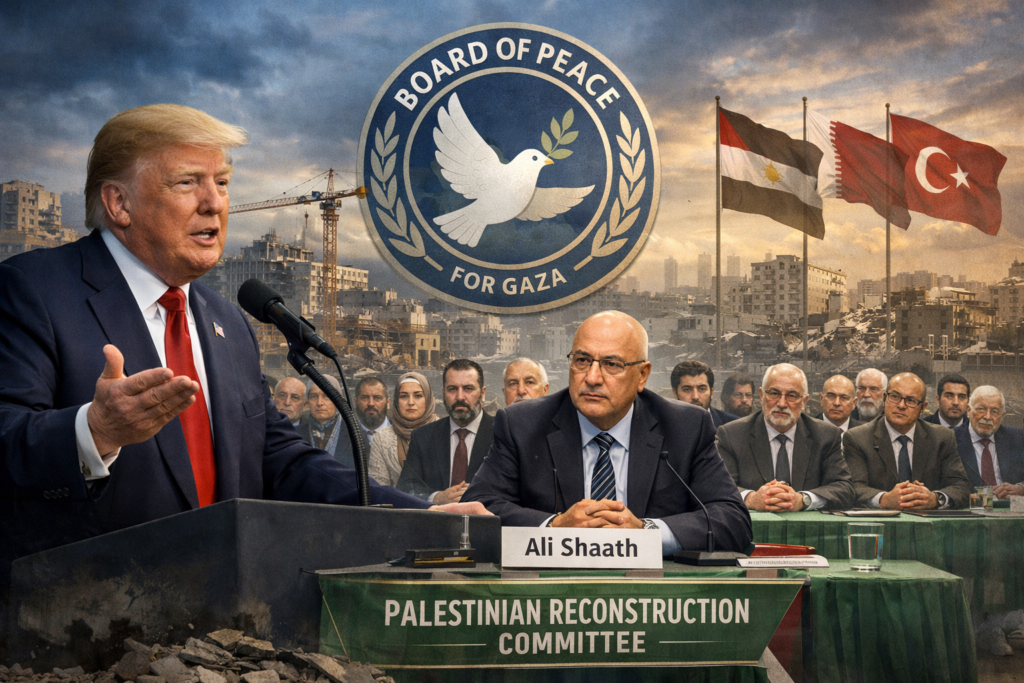
Trump hailed the decision in a social media post Thursday, saying he supports the National Committee for the Administration of Gaza — a 15-member, technocratic committee tasked with overseeing Gaza’s civil affairs during the transition. The panel is part of a broader ceasefire framework agreed upon by Israel and Hamas in October 2025, even as the truce continues to experience strains and challenges.
A New Transitional Authority in Gaza
Under Trump’s peace plan — which has now entered its second phase — the National Committee for the Administration of Gaza (NCAG) is envisioned as an interim governing body to run the day-to-day affairs of Gaza during its transition away from active conflict. The committee is composed of 15 technocrats and is led by Ali Shaath, a Palestinian civil engineer and former deputy planning minister with experience in industrial development.
In announcing his backing, Trump described the appointees as “unwaveringly committed to a peaceful future” for Gaza and emphasized that the committee’s work is a central pillar of the U.S. peace agenda. He said the panel will operate under the oversight of an international “Board of Peace,” which he himself chairs, further cementing the United States’ role in the transitional governance process.
The Board of Peace, formally established in mid-January 2026 under a U.N. Security Council resolution, is intended to supervise reconstruction, economic recovery, and administrative reform, positioning Trump at the center of diplomatic leadership in Gaza’s transition.
Phase Two: Demilitarization and Reconstruction Focus
The launch of Phase Two marks a shift in strategy from maintaining a ceasefire to addressing demilitarization, reconstruction, and technocratic governance. Special U.S. envoy Steve Witkoff said the initiative now aims to move beyond mere truce enforcement toward reconstructing Gaza’s infrastructure and empowering civilian administration.
A core component of this phase calls for a comprehensive demilitarization agreement with Hamas, including the dismantling of unauthorized armed groups and weapons supplies across Gaza. Trump has stressed that full compliance — including the return of the remains of the last Israeli hostage — is necessary for lasting peace, warning that failure to comply could have “serious consequences.”
Egypt, Qatar and Turkey have been highlighted as key mediators supporting the committee’s formation and the wider peace process, reflecting the multilateral dimension of the plan.
International Reactions and Regional Context
International reaction to the news has been mixed. The Arab Parliament welcomed the formation of the committee, saying it represented “an important development” toward restoring stability and improving humanitarian conditions in Palestine. The parliament’s leadership praised the committee’s creation as a step toward rebuilding Gaza after years of conflict.
Hamas officials, for their part, have described the establishment of the panel as positive and a potential reinforcement of the fragile ceasefire agreement. Senior Hamas representative Bassem Naim said the move reflected a shared interest in consolidating calm and preventing a return to large-scale hostilities.
However, critics — including some regional analysts and human rights advocates — have voiced skepticism about the board’s legitimacy and structure. Some see Trump’s dual role as both architect and chairman of the Board of Peace as reminiscent of a neo-colonial governance model, raising concerns about the true autonomy of Palestinian leadership.
The ongoing humanitarian crisis in Gaza, resulting from prolonged conflict and continued restrictions on critical supplies, complicates the political landscape and highlights the urgency of sustainable governance and reconstruction strategies. Rights groups and U.N. officials have urged all parties to ensure that any transitional authority prioritizes civilian protection and equitable service delivery.
Challenges Ahead: Hamas, Demilitarization and Reconstruction
While the establishment of the technocratic committee and the Board of Peace represent symbolic milestones, the road ahead remains fraught with challenges. Hamas, which continues to hold significant influence within Gaza, has not yet fully disarmed — a central requirement outlined for Phase Two of the peace plan. The militant group’s reluctance adds complexity to efforts aimed at dismantling armed structures and building a civilian security framework capable of maintaining order without militant involvement.
Another major hurdle is the reconstruction of Gaza’s devastated landscape, which U.N. agencies estimate will require billions of dollars and years of sustained investment and planning. The transitional governance panel’s technocratic composition is intended to bring expertise and neutral administration to the territory’s recovery, but without clear timelines or secure funding mechanisms, skepticism remains about the plan’s viability.
Additionally, questions persist over internal Palestinian politics — particularly the relationship between the Gaza panel and the Palestinian Authority in the West Bank. Bridging political divisions between Gaza and the West Bank is seen as essential for any long-lasting governance solution that affirms Palestinian unity and paves the way toward broader statehood aspirations.
Trump’s Broader Vision and Peace Plan Legacy
Trump’s peace plan for Gaza, rooted in his 20-point proposal, has been evolving since its initial announcement in 2025. Despite resistance and setbacks — including episodes of renewed violence and delays in border openings — the plan’s second phase reflects a continued American investment in reshaping the conflict’s aftermath and moving toward political normalization.
Trump has framed his involvement as a commitment to peace and rebuilding, often highlighting the importance of demilitarization and long-term stability. Nevertheless, political analysts note that balancing competing interests — including Palestinian autonomy, Israeli security concerns, and regional power dynamics — is a complex diplomatic tightrope.
Conclusion: A Fragile Step Toward Peaceful Governance
By throwing U.S. support behind the transitional Palestinian panel and formally launching Phase Two of his Gaza peace plan, Trump has set the stage for a new chapter in the long-standing and deeply divisive Middle East conflict. Whether this initiative will yield meaningful stability, foster genuine Palestinian self-governance, and secure lasting peace hinges on cooperation from Hamas, Israel, and regional actors, as well as the panel’s ability to address the immediate humanitarian needs of Gaza’s civilian population.