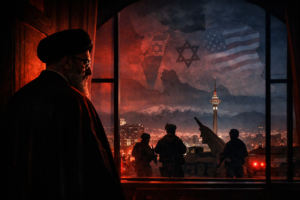
Trump Downplays Iran Conflict as “Short-Term Excursion” While Georgia Special Election Signals Political Test
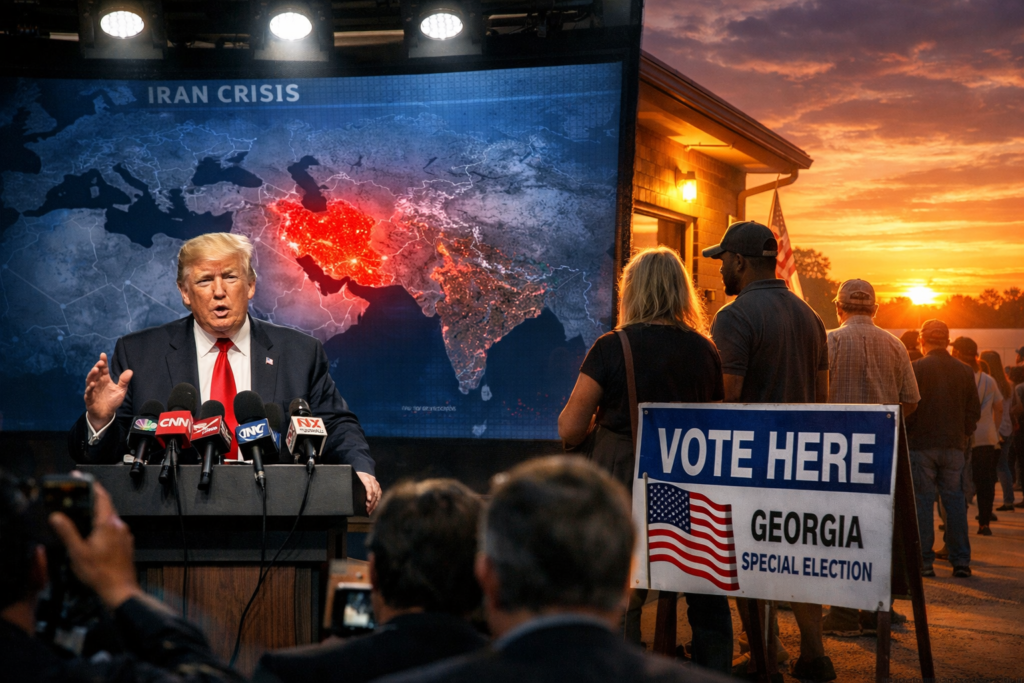
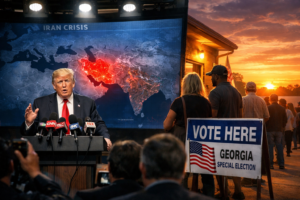
President Donald Trump is once again at the center of national debate after describing the escalating confrontation with Iran as a “short-term excursion,” a remark that has drawn both support and criticism as tensions in the Middle East continue to ripple through American politics.
The comment comes at a politically sensitive moment in the United States, as voters in Georgia prepare for a closely watched special election that analysts say could offer an early glimpse into the country’s shifting political landscape.
Together, the international conflict and the domestic election battle are shaping a powerful narrative about leadership, foreign policy, and voter priorities ahead of the next major election cycle.
Trump’s Remarks on the Iran Conflict
Speaking publicly about the growing confrontation with Iran, Trump characterized the situation as limited and temporary.
He suggested that any military involvement would likely remain short in duration and manageable for the United States. Supporters of the former president say his comments reflect confidence that the conflict can be contained without turning into a prolonged war.
However, critics argue that describing a potential conflict with Iran as a brief operation may underestimate the risks of escalation in a region already marked by decades of instability.
Iran, one of the most powerful countries in the Middle East, maintains significant military capabilities and influence through allied groups across the region.
A direct confrontation between the United States and Iran could have far-reaching consequences, potentially affecting global energy markets, regional security, and diplomatic relations.
The situation has already heightened tensions with Israel, a key U.S. ally that has long viewed Iran’s military ambitions as a serious threat.
Rising Geopolitical Tensions
The Middle East has experienced repeated cycles of confrontation involving Iran, Israel, and Western powers.
Disputes over Iran’s nuclear program, regional influence, and support for allied militias have fueled years of diplomatic standoffs and military incidents.
Any new conflict involving the United States could quickly expand beyond a limited engagement.
Military analysts warn that Iranian forces and affiliated groups across the region could respond in multiple ways, including attacks on U.S. interests or allies.
Such scenarios are part of the reason why many policymakers remain cautious about military escalation.
Trump’s supporters, however, argue that strong American leadership can deter prolonged conflict and protect national interests.
Domestic Politics Enter the Picture
At the same time the international situation is unfolding, American voters are focused on a critical political contest in Georgia.
The state’s special election has become a major battleground between Republicans and Democrats, with both parties investing significant resources in the race.
Georgia has emerged as one of the most competitive political states in the country in recent years.
Once considered a reliably Republican stronghold, the state has evolved into a key swing state where election outcomes can hinge on small margins.
Political strategists believe the special election could provide insight into how voters are responding to national issues, including economic concerns, immigration policy, and foreign conflicts.
A Test of Voter Sentiment
For many Americans, economic pressures remain the most pressing issue.
Rising living costs, housing affordability, and concerns about long-term financial stability continue to dominate voter conversations across the country.
But foreign policy decisions can also influence political sentiment, particularly when they involve potential military action.
The debate surrounding the Iran conflict has added another layer of complexity to an already intense political environment.
Some voters view strong military posture as a sign of leadership and national strength.
Others worry about the human and economic costs of overseas conflicts, especially after decades of military involvement in the Middle East.
Trump’s Influence on the Political Narrative
Even though the Georgia election is a state-level race, Trump’s presence in the national political conversation continues to shape the narrative.
His statements on foreign policy, immigration, and economic issues frequently influence the broader debate among voters and political leaders.
For Republican candidates, alignment with Trump can energize loyal supporters.
For Democrats, criticism of Trump’s approach remains a central campaign message.
The political dynamic highlights how deeply polarized the country remains.
Voters across the ideological spectrum interpret the same events—whether foreign policy developments or election outcomes—through very different perspectives.
The Stakes for U.S. Foreign Policy
Beyond domestic politics, the Iran conflict raises significant questions about the future direction of U.S. foreign policy.
For decades, American leaders have grappled with the challenge of balancing military power with diplomatic engagement in the Middle East.
Any escalation with Iran would likely require careful coordination with international allies and regional partners.
It could also reshape global conversations about security, energy supply, and nuclear proliferation.
The United States continues to maintain a strong military presence in the region, reflecting the strategic importance of stability in Middle Eastern geopolitics.
What Comes Next
As the situation develops, both the international conflict and the Georgia special election are likely to remain in the national spotlight.
Political analysts say the election results could offer clues about how voters are reacting to broader global events.
At the same time, developments in the Middle East may influence public opinion and shape future policy debates in Washington.
For many Americans watching these events unfold, the intersection of foreign policy and domestic politics underscores a larger reality.
Decisions made thousands of miles away can quickly become central issues in the American political conversation.
And as tensions with Iran continue to evolve, the balance between diplomacy, security, and political strategy may define the next chapter in U.S. leadership on the global stage.