Trump Announces Hospital Ship for Greenland — Allies Push Back, Questions Swirl Over Intent and Need
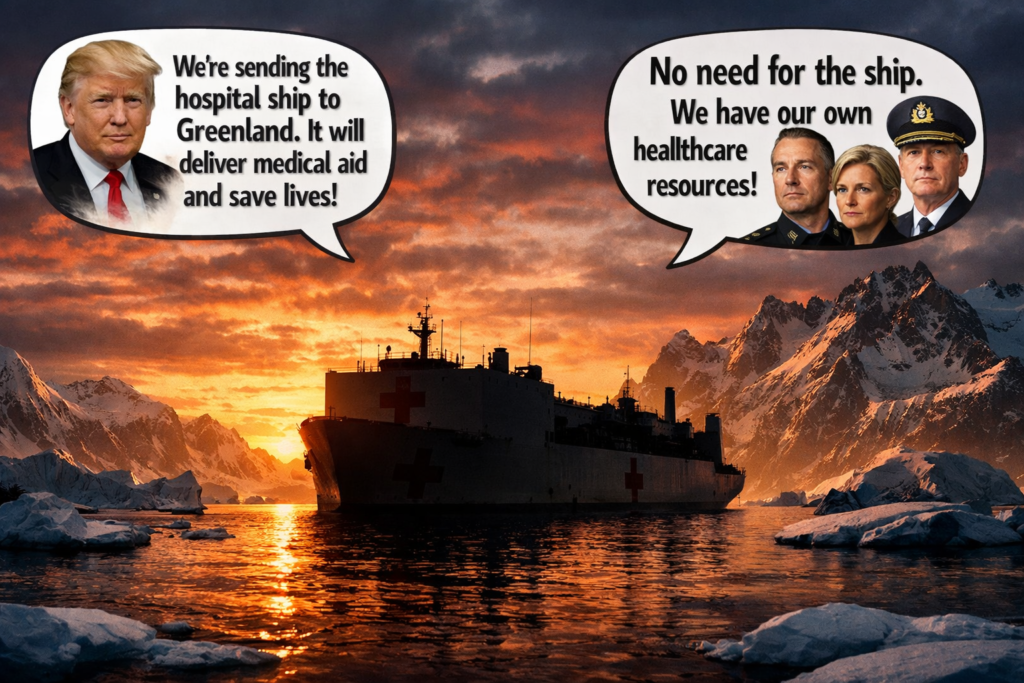
In a surprising and controversial announcement Sunday night, former U.S. President Donald Trump said he is sending a hospital ship to Greenland, a vast Arctic island and semi-autonomous territory of the Kingdom of Denmark. The declaration — made on social media without details about the operation or official coordination — has reignited regional tensions and raised questions about both humanitarian intent and geopolitical strategy in the Arctic.
Trump claimed the vessel would provide medical care for “many people who are sick and not being taken care of” in Greenland, but Denmark and Greenlandic officials quickly pushed back, saying such outside assistance is unnecessary and that the island already offers free and robust healthcare services for its people.
This sudden announcement comes amid broader diplomatic strain between the United States, Greenland and its Danish government over Trump’s longstanding interest in the island, a territory rich in minerals, strategically positioned near the Arctic, and widely regarded as critical in global security and climate discussions.
Trump’s Message: “Great Hospital Boat” Headed North
On Feb. 21, 2026, from his social media platform, Trump posted a statement declaring that he was sending a “great hospital boat” to Greenland in partnership with Louisiana Governor Jeff Landry, whom he previously appointed as U.S. special envoy to the Arctic region. Trump’s message included an image of the U.S. Navy hospital ship USNS Mercy and claimed the ship was already “on the way.”
“We are going to send a great hospital boat to Greenland to take care of the many people who are sick, and not being taken care of there,” he wrote, adding: “It’s on the way!!!”
Despite the imagery and declaration, Trump did not specify which vessel was actually being deployed, when it might arrive, how long it would stay, or who requested the aid — leaving diplomats, Arctic residents and defense experts puzzled.
Stark Diplomatic Pushback from Denmark
Denmark — the sovereign kingdom that oversees Greenland — was quick to counter Trump’s claim.
Defense Minister Troels Lund Poulsen said there was no indication that Greenland needed medical assistance from abroad, noting that the island has universal healthcare and well-established hospital systems, including a major regional hospital in the capital Nuuk. Poulsen stressed that Greenlanders receive care either within the territory or, if they need specialized treatment, in Denmark.
“The Greenlandic population receives the healthcare it needs,” the minister said, adding that he was unaware of any hospital ship arrival and that Trump’s post was “an expression of the new normal that has taken hold in international politics.”
Denmark’s Prime Minister Mette Frederiksen also defended the region’s healthcare system, saying Greenland, like Denmark, offers free and equal access to medical care for all residents.
Greenland’s government signed an agreement with Denmark earlier in February to improve treatment for Greenlandic patients in Danish hospitals — a move that further underlines the cooperation between the two, not an external medical deployment.
Confusion Over Motives and Details
Beyond the bold claim, major unanswered questions remain about Trump’s announcement:
- Which hospital ship is being sent — if any?
- When and how will it arrive in Greenland?
- Was the request initiated by Greenland or Denmark?
- What medical needs is Trump referring to?
Currently, the U.S. Navy operates two large hospital ships — the USNS Mercy and the USNS Comfort — both typically based on the U.S. Gulf and Pacific coasts. There is no public indication that either vessel is actually en route to Greenland.
Officials from the White House, the Pentagon and the Danish Embassy have so far declined to provide clear details, leaving observers to wonder whether the announcement is more political symbolism than an imminent mission.
Broader Context: Arctic Tensions and Strategy
Trump’s hospital ship declaration cannot be separated from his ongoing interest in Greenland — a territory the U.S. once infamously considered buying under his first presidency. While his administration later backed off those proposals, Trump has repeatedly argued that Greenland is strategically vital, citing its location in the Arctic, mineral wealth and proximity to Russia and China.
His assertions have caused diplomatic friction with Denmark and Greenland, resulting in tense negotiations and discussions within NATO about security, sovereignty and influence in the region.
Just hours before Trump’s hospital ship post, Denmark’s Joint Arctic Command evacuated a U.S. submariner for urgent medical care near Nuuk, a development that underscored the active presence of international forces and cooperation in the region.
Reactions from Greenland and Arctic Residents
Many Greenlanders have already voiced frustration with outside interference and rhetoric that downplays their autonomy. Protests in Nuuk — waving flags and chanting “Greenland is not for sale” — have become a common sight as residents defend their status and their right to self-determination.
Local leaders insist that while cooperation with allies is welcome, Greenland’s decisions about healthcare, territory and foreign partnerships should be made by Greenland and Denmark, not dictated from abroad.
A Human Story: Healthcare, Identity and Sovereignty
For many people in Greenland, the hospital ship announcement isn’t just a political headline — it’s a reminder of how big-power politics can overshadow local realities. Greenlanders take pride in their universal healthcare system and cultural resilience in one of the world’s harshest climates.
Residents describe long winter nights, tight-knit communities and a deep connection to their land and traditions. The idea that an outside leader might cast doubt on their healthcare needs touches a nerve. It’s not that they resist humanitarian help — but they want that help to be grounded in respect and genuine invitation, not political theater.