Trump Administration Faces Crucial Supreme Court Battles and Policy Clashes Amid Immigration, Transgender Rights, Iran, and Powell Controversies
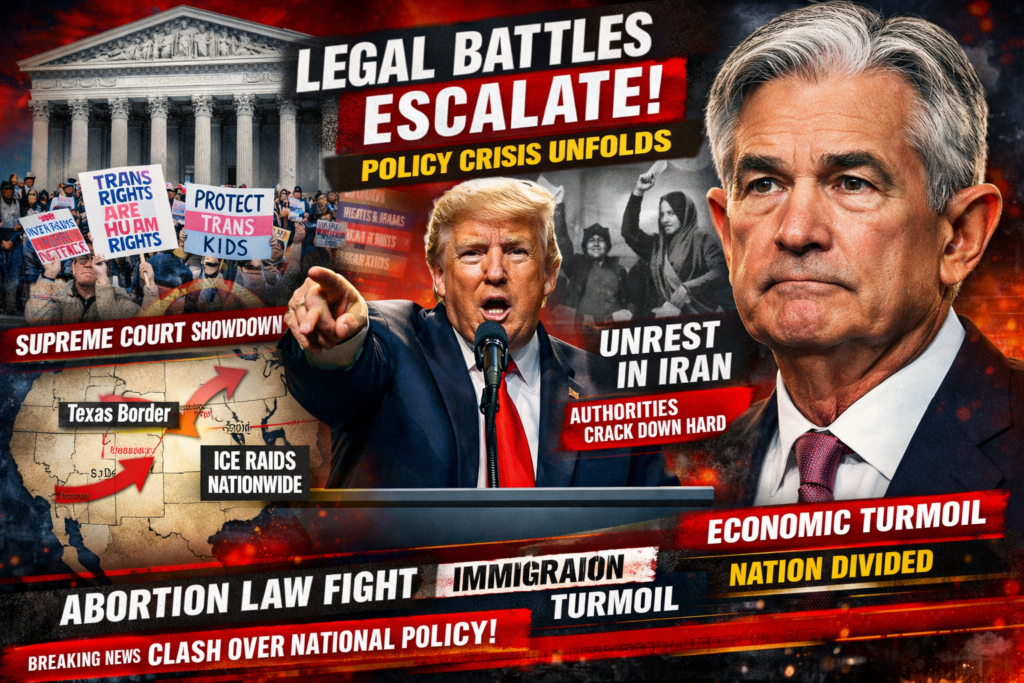
WASHINGTON, D.C. — As the nation’s political landscape shifts under President Donald Trump’s second administration, the United States finds itself at a crossroads of legal battles, immigration enforcement clashes, escalating international tensions, and high-stakes Supreme Court decisions that could reshape civil rights, federal power, and American foreign and domestic priorities in 2026. From transformative rulings on transgender rights and immigration enforcement to Trump’s comments on Iran negotiations and an unprecedented Justice Department probe into Federal Reserve Chair Jerome Powell, legal and political waters remain deeply unsettled. In recent days, the U.S. Supreme Court has taken center stage in several culture-war battles — most prominently hearing arguments on transgender sports bans that could have lasting implications for civil rights protections, education policy, and federal anti-discrimination jurisprudence.
Supreme Court Takes Up Transgender Athlete Case in Culture War Legal Fight
On January 13, 2026, the Supreme Court heard arguments challenging state laws in Idaho and West Virginia that bar transgender girls and women from participating in female school sports teams. In cases titled Little v. Hecox and West Virginia v. B.P.J., the justices weighed whether bans defining athletic participation based on “biological sex” violate the Constitution’s Equal Protection Clause and Title IX, a key federal anti-discrimination statute. The Trump administration has backed the state laws, marking yet another intervention into disputes over transgender rights and federal constitutional protections — reflecting its broader agenda of limiting or reversing certain rights for transgender Americans. The outcome could set a legal precedent affecting definitions of sex and gender under U.S. law, with implications for education, sports eligibility policies, and civil rights enforcement. This case arrives amid broader debate about LGBTQ rights under the current administration, which has pursued executive orders and policies significantly restricting protections for transgender individuals in areas such as military service, passport identification rules, and gender-affirming care. Many civil-rights advocates argue that the policies and court decisions reflect a systematic rollback of transgender rights, while supporters contend that they reinforce traditional interpretations of sex-based law. Regardless of outcome, the Supreme Court’s actions this term will reverberate across legal precedent and public life.
Immigration, ICE Enforcement, and State Pushback Intensify
Meanwhile, inside the U.S., the Trump administration’s aggressive immigration enforcement initiatives have sparked legal confrontations and community unrest. Several states — including Minnesota and Illinois — filed lawsuits seeking to halt expanded ICE enforcement operations and deployment of federal agents, claiming unconstitutional overreach and harmful racial profiling in their communities. These lawsuits follow national outrage over controversial enforcement actions that culminated in protests after a Minnesota ICE officer’s deadly encounter with a civilian — thrusting immigration policy and federal law enforcement tactics into the national spotlight.
Critics of the administration’s enforcement strategy argue such actions strain local-federal relationships and risk civil liberties, while supporters insist they’re crucial to national security and lawful governance. The courts will play a crucial role in determining the legality and limits of federal immigration interventions.
Trump Says “Iran Called” for Negotiations Amid Regional Unrest
On the international front, President Trump confirmed that Iranian officials have reached out to U.S. representatives to explore negotiations, even as protests against Tehran’s government continue and casualties rise inside Iran. Trump said a meeting was in early planning stages but also emphasized that military options remain on the table if conditions worsen. Tensions with Tehran have escalated amid the Iranian government’s violent crackdown on nationwide protests, drawing widespread global attention and diplomatic concern. Trump’s mixed approach — diplomacy paired with warnings of force — reflects the fraught balance between engagement and pressure in U.S.–Iran relations.
Powell Investigation Raises Concerns Over Federal Reserve Independence
In a rare escalation involving the Federal Reserve, the Department of Justice has opened a criminal investigation into Federal Reserve Chair Jerome Powell — drawing condemnation from financial experts and central bankers worldwide who view the probe as politically motivated. Eleven global central bank leaders, including the heads of the Bank of England and European Central Bank, jointly voiced “full solidarity” with Powell and underscored the importance of central bank independence in maintaining economic stability. Their unprecedented statement warned that politicizing monetary policy could have damaging consequences reminiscent of crises in emerging markets. Trump’s pressure on Powell centers on disagreements over interest rate policy, with the president publicly criticizing the Fed for perceived inaction against inflation and urging rate cuts that Powell has resisted in the name of sound monetary governance. The investigation’s fallout could affect Powell’s renomination and cast a long shadow over the Fed’s operational autonomy.
Supreme Court and Gender Identity Policy Battles Continue
Beyond the transgender athlete cases, other Trump-era policies on transgender rights — such as passport gender marker restrictions and bans on military service by transgender individuals — have already seen Supreme Court engagement or enforcement decisions. These policies have drawn criticism from civil liberties advocates and LGBTQ advocacy groups, who argue they undermine long-standing protections and harm vulnerable communities. Earlier rulings permitted enforcement of gender-assignment limitations on official documentation, further cementing the current administration’s approach to gender identity policy. Vice President JD Vance and other senior officials have defended these measures as necessary for legal clarity and national coherence.
Political and Social Ramifications Ahead
As legal challenges, congressional scrutiny, and public debate continue, many observers say the Trump administration’s actions illustrate a broader struggle over federal authority, civil liberties, and the direction of American governance in the 2020s. Court decisions — particularly those of the Supreme Court — will crucially shape the legal framework for rights, discrimination law, and executive power in the years ahead.
From immigration enforcement and federal investigations to transgender rights and international diplomacy, the political battleground in the United States is poised for confrontations that could reshape national policy, public perception, and constitutional interpretation for decades to come.