Tri-State Leaders Respond to U.S.–Israel Strikes on Iran, Highlighting Deep Political Divides
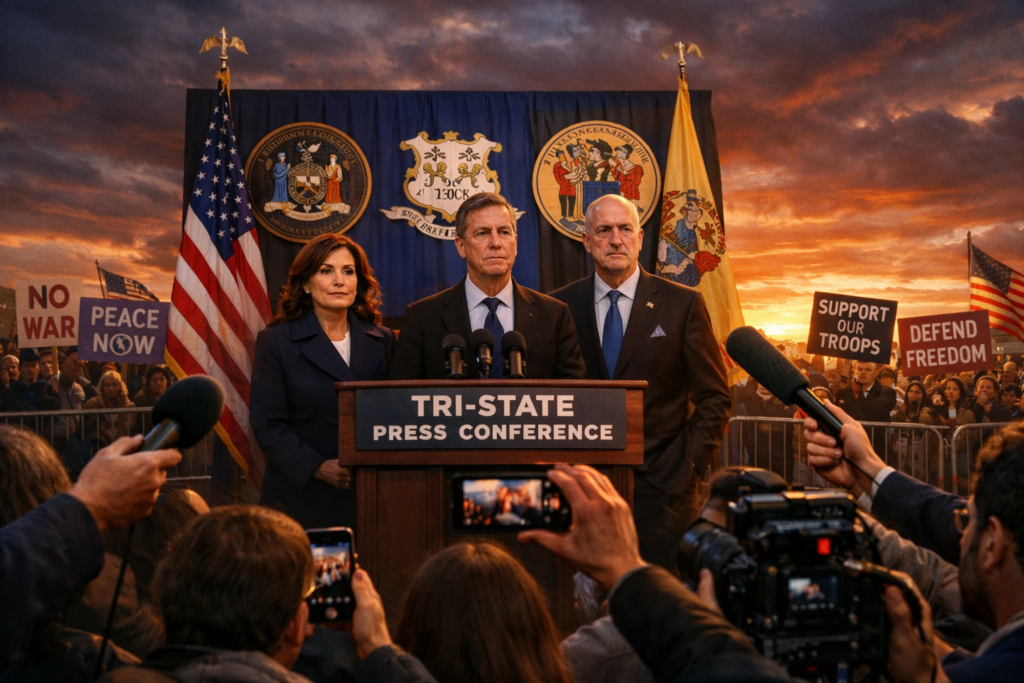
In the wake of coordinated U.S. and Israeli military strikes on Iran over the weekend, political leaders across New York, Connecticut and New Jersey — the core of the American Tri-State Area — have fired back with a range of reactions, revealing sharp contrasts in how elected officials and community voices view America’s expanding role in the Middle East.
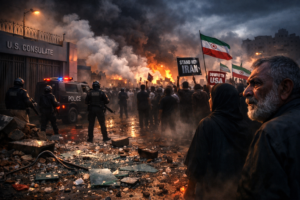
The military offensive, which included devastating air attacks on Iranian leadership sites and infrastructure, came as U.S. and Israeli officials sought to neutralize perceived threats from Tehran’s nuclear and missile programs. The operations unfolded rapidly, drawing global attention and immediate responses from state and federal representatives in the Northeast.
In Connecticut, Democratic lawmakers were swift and vocal in criticizing the strikes. U.S. Sen. Richard Blumenthal and Rep. Rosa DeLauro both expressed deep reservations about President Donald Trump’s decision to proceed without explicit approval from Congress, calling the military action reckless, potentially unconstitutional, and dangerously open-ended. Blumenthal said that “war should always be a last resort,” and accused the Trump administration of bypassing constitutional safeguards while escalating tensions in a volatile region. DeLauro echoed those concerns, arguing that such a significant action demanded clear consultation with the legislative branch and public transparency.
Also in Connecticut, Sen. Chris Murphy described the U.S. strikes as a “war of vanity,” warning that without a clear exit strategy, the nation’s involvement could easily turn into another long and costly conflict similar to past American military engagements abroad. Murphy has advocated for a War Powers resolution that would require formal congressional authorization for continued military activity, asserting that unchecked executive action sets a dangerous precedent for future presidents.
At the local level in New York, reactions have been equally contentious. New York City Mayor Zohran Mamdani sparked controversy with a statement calling the military operation “an illegal war of aggression,” asserting that it lacks moral and legal grounding and risks imperiling ordinary Americans while doing little to enhance global peace. His comment drew sharp rebukes from political rivals, including former NYC Mayor Eric Adams and Republican gubernatorial candidate Bruce Blakeman, who accuse Mamdani of undermining American foreign policy and sentiment, particularly among diaspora communities who see the strikes as long-overdue action against a brutal regime.
The divide within New York reflects broader national fault lines: some political figures and community activists emphasize the need for restraint, cautioning that military escalation without a clear diplomatic path could embroil the United States in a protracted conflict. Others argue that decisive action was required to dismantle part of Iran’s capacity to wage hostility, especially after years of nuclear standoffs and support for militant proxies in the region.
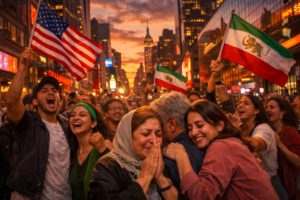
Public sentiment in the Tri-State area has also been shaped by the humanitarian lens many residents bring to the issue. Large communities of Iranian Americans, particularly in New York and New Jersey, say the strikes have stirred complex emotions. Some see the targeted action against Tehran’s leadership as a potential catalyst for long-sought change in a country long ruled by repression, while others fear that the move may generate further instability, risking civilian lives and deepening division in a region already fraught with conflict.
In cities like New Haven, Connecticut, grassroots protests have also taken shape. Dozens of demonstrators gathered at city halls and public squares to demand an immediate end to the violence, chanting calls for peace and shrugging off partisan labels in favor of a clearer message: “No War with Iran.” Protest organizers say they represent a coalition of peace groups, students and everyday Americans who believe that escalation will only make the world less safe for ordinary people caught in geopolitical crossfire.
Others in the New York metropolitan area have expressed deep personal concern for family and friends in Iran, describing a sense of fear and uncertainty as images of war and explosions flooded international media. Residents with loved ones abroad have told local outlets that each news cycle brings anxiety — not just about geopolitics but about the safety of relatives and the prospect of further civilian suffering.
Meanwhile, security agencies in the Tri-State region are taking precautionary steps. In New York City, the NYPD has increased patrols and stepped up monitoring around symbolic locations, including diplomatic missions, houses of worship, cultural centers and other sites deemed at higher risk during periods of international tension. Officials emphasize that at present there are no specific threats, but enhanced vigilance is part of standard protocol during global escalations that could resonate locally.
New Jersey’s congressional delegation has also weighed in with a mix of support and opposition. Some lawmakers applauded the strikes, framing them as necessary to protect U.S. national security and global interests, while others criticized the lack of clear objectives and questioned the long-term cost in human life and diplomatic stability. Pennsylvania’s leaders — often grouped with the Tri-State reactions given their proximity and political ties — showed similar splits, with Gov. Josh Shapiro expressing concern about escalating conflict and other members of Congress characterizing the action as either overdue or poorly justified, depending on their perspective.
These divisions underscore a broader national debate about American military involvement abroad, executive authority without congressional approval, and the long-term consequences of prioritizing force over diplomacy. In communities across the Tri-State area — from affluent suburbs to diverse urban neighborhoods — residents are grappling not just with opinions from political elites but with personal convictions about war, peace, national interest, human rights and the future of U.S. foreign policy.
As this international conflict continues to evolve, local leaders say they expect public debate and civic engagement around this issue to grow, rather than dissipate. Town halls, protests, faith-based vigils and other community forums are already being planned, offering resident voices a platform to shape how this chapter in U.S. foreign policy is remembered and interpreted in the region.