Trans Bathroom Dispute at North Carolina Pinball Event Sparks Outrage, Community Division
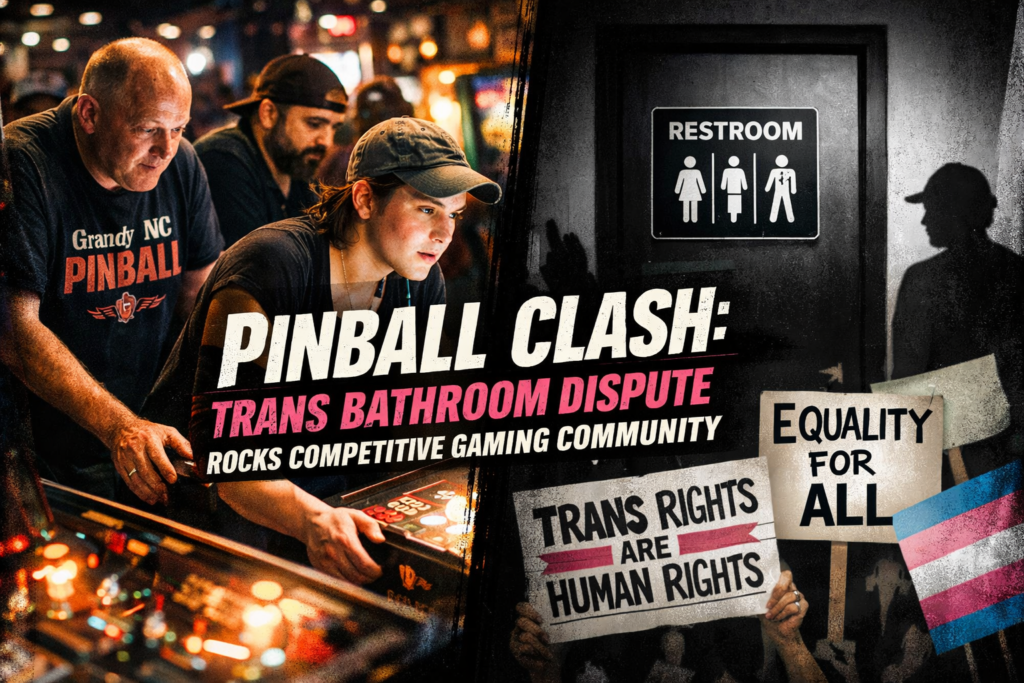
GRANDY, N.C. — What should have been a weekend of friendly competitive pinball turned into a national flashpoint in November 2025 when a highly anticipated IFPA (International Federation of Pinball Associations)-sanctioned event in eastern North Carolina became the site of a controversy over transgender bathroom access that has ignited heated debate across the U.S. gaming and LGBTQ+ communities.
The event, OBX Fall Flippers Arcade Pinball Bash, drew dozens of players and spectators from around the country. But instead of focusing on flippers and high scores, the spotlight shifted to an incident involving a transgender competitor who was reportedly confronted by a venue employee while attempting to use the women’s restroom, then subsequently removed from the bathroom and made to feel unsafe inside the venue.
According to multiple community accounts, the transgender player tried to enter the women’s bathroom as part of her participation in the tournament. Instead of being supported, she encountered verbal hostility from staff and was told she was not allowed to use the facility — an interaction that quickly escalated into a broader dispute over gender identity and public accommodation rights.
This response — and the failure by event leaders to intervene decisively — caused a ripple effect: several players withdrew from competition, and many others expressed voiced concern that the inclusive policies of the pinball organization were not upheld.
What Happened at the OBX Fall Flippers Tournament?
The incident reportedly began on the morning of November 7, 2025, when players began arriving at Flippers Arcade in Grandy, a small coastal town known for hosting social and gaming events.
The transgender player, identifying as a woman, registered for the event and later attempted to use the venue’s women’s restroom. Accounts shared with local pinball community groups and verified through organizational statements say that a venue staffer confronted her, displayed unfamiliar state law documents, and asserted that she wasn’t permitted entry.
After the confrontation, the player promptly left the venue and alerted event organizers, who were then informed of the dispute. Rather than pausing or rescheduling the tournament to address safety concerns, the tournament proceeded as planned, leaving several participants dismayed and uncomfortable.
Within hours, community members began circulating accounts of what happened, prompting sharp criticism from LGBTQ+ advocates and a call for pinball leadership — IFPA — to take stronger action in enforcing policies meant to protect inclusion and safe spaces.
Pinball Community Reaction & Organizational Response
The governing body of sanctioned competitive pinball, the IFPA, responded publicly with a statement acknowledging the incident and accepting responsibility for the organization’s lack of proactive enforcement. The IFPA expressed “deep regret that conditions did not meet expectations for safety, respect, and inclusion for all players, including transgender community members.”
IFPA officials also announced several steps they planned to take immediately:
- A dedicated reporting system to alert staff quickly if similar controversies arise,
- A central contact channel for safety concerns,
- A temporary suspension of IFPA-sanctioned events at the host venue for at least one year,
- A future review before any rescheduling to ensure inclusive conditions are met.
Despite these measures, the community remains divided. Some argued that IFPA’s actions were too slow and insufficient. Critics called the organization’s response “performative” and urged stricter enforcement of gender inclusion policies at every tournament.
Meanwhile, others see the dispute as a painful but necessary moment in pinball and broader cultural spaces, where gender, identity, and public accommodation clash with tradition and private enforcement.
Why This Matters Beyond Pinball
Although competitive pinball might seem like a niche hobby, this conflict has tapped into a much larger conversation playing out nationwide around transgender rights, discrimination, and access to public facilities. Over the past decade, North Carolina has been at the center of bathroom access debates — from controversial legislation like the Public Facilities Privacy & Security Act (HB2), known as the “bathroom bill,” to subsequent legal challenges and policy changes aimed at protecting transgender people’s rights to use facilities that align with their gender identity.
The broader legal landscape shows how sensitive this issue has become. Bathroom bills generally refer to laws or proposals that determine who can use sex-segregated public spaces based on biological sex or gender identity — a legal and cultural battleground that has impacted schools, businesses, and now even recreational events like pinball tournaments.
And while many legal restrictions have been rolled back or clarified to protect transgender access — such as a federal settlement affirming rights to use gender-aligned facilities in many public buildings — disputes continue in various settings where rules are either unclear or poorly enforced.
For advocates, the pinball incident underscores that inclusion is not just about written policy, but about action and enforcement, especially in organizations that claim to champion equality and belonging.
Looking Ahead: Policy, Safety, and Inclusion
The OBX Fall Flippers controversy may now serve as a catalyst for local and national discussions about how small community spaces handle gender identity issues, particularly in states like North Carolina with complex recent histories on transgender rights.
Experts say that beyond legal codes, the real test will be how organizations train staff, create clear internal policies, and actively safeguard all participants regardless of gender identity. Pinball leaders have pledged to review inclusion training, clearer restroom access guidelines, and risk management for future events.
What remains clear is this event has sparked broader debate — from recreational communities to civil rights advocates — about fairness, respect, and the evolving meaning of public spaces in American life.