Tension at Sea: Kristi Noem’s Use of Coast Guard Resources Strains Military Ties and Sparks Internal Concerns
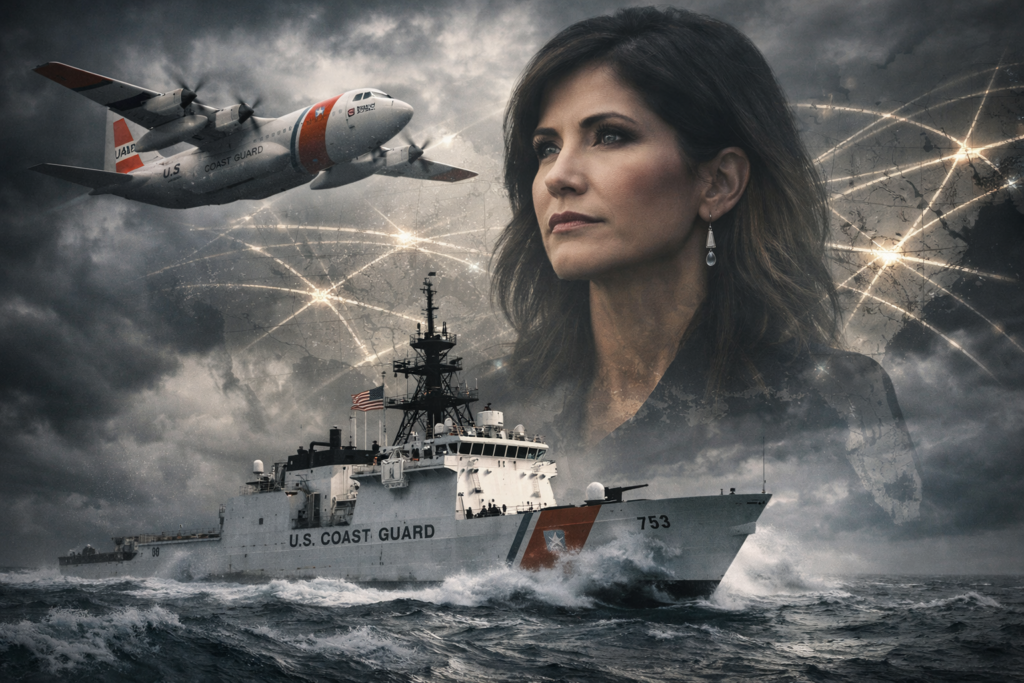
WASHINGTON, D.C. — When Americans think of the U.S. Coast Guard, they often picture brave rescuers guiding boats through stormy seas, saving stranded families, and keeping a watchful eye on America’s vast waterways. But in the last year, amidst one of the nation’s most aggressive immigration enforcement campaigns, tension has quietly risen between the Coast Guard leadership and the Department of Homeland Security (DHS) — particularly under **Homeland Security Secretary Kristi Noem’s leadership.
At the heart of this dispute is how Coast Guard resources — pilots, aircraft, missions and manpower — have been used under Noem’s watch. For many current and former Coast Guard officials, what began as occasional assistance has grown into a pattern they view as politicized and distractive, turning their trained forces away from traditional missions of safety, search and rescue to tasks tied to immigration operations that were never their core mission.
Coast Guard’s Traditional Role — and Growing Strain
The United States Coast Guard is one of the six U.S. Armed Forces, distinguished by its dual role as both a military branch and a federal law enforcement agency focused on maritime safety, disaster response, border security, anti-smuggling operations, and environmental protection. Under the Department of Homeland Security, the Coast Guard is expected to balance these missions at all times — often responding to storms, pulling injured fishermen from icy waters and enforcing laws at sea.
But tensions have grown since Noem took office as Secretary of Homeland Security in early 2025. With a mandate from President Trump to pursue an aggressive immigration enforcement agenda that includes expanded raids, broader deportation strategies and ever-greater federal resource involvement, some Coast Guard officials have grown uneasy over requests that they believe pull them away from their core work.
Internal and former Coast Guard voices — speaking candidly on background — contend that at times senior DHS officials have communicated priorities that seemed to favor use of Coast Guard aircraft and personnel to support immigration transport logistics and other domestic operations over traditional duties like maritime search and rescue. One former Coast Guard official told reporters that the atmosphere had become one where service members were advised to “keep your heads down” rather than raise concerns.
A Controversial Blanket Incident and Resource Use
A flashpoint in the discussion came with a widely reported incident in which a Coast Guard pilot was dismissed after Paradise was left behind during a plane switch involving Secretary Noem, according to a recent Wall Street Journal report. The Coast Guard flight crew reportedly lost track of Noem’s blanket — a detail that many service members found symbolic of wider frustrations about how DHS is managing its resources.
The pilot was reinstated only because there was no qualified backup available to complete the mission. To critics, the episode wasn’t just about a forgotten blanket — it underlined a perception within the Coast Guard that their people are being asked to serve missions far from the service’s core responsibility of safeguarding life at sea and that orders were being influenced by political pressures rather than operational need.
While DHS has denied that any formal priority was given to immigration transport missions over standard Coast Guard operations and called such claims “politicized,” former service members and insiders say the strain has already taken a toll on morale.
Budget Battles and Mission Priorities
The growing tension between Noem’s DHS leadership and the Coast Guard isn’t limited to aircraft and pilot assignments. Earlier in 2025, Noem’s department proposed steep cuts — reducing the Coast Guard’s shore infrastructure funding by roughly 90%, according to some lawmakers — a move that alarmed many service members and veterans. Reduced funding for facilities, piers and housing raised concerns that the Coast Guard’s ability to serve Americans effectively could be compromised.
Rep. Salud Carbajal (D-California), among others, denounced the proposed cuts as a threat to the safety and readiness of the service — highlighting the stark divide between the Coast Guard’s mission needs and the department’s resource allocation decisions.
Some within the Coast Guard have framed this fight as about preserving a century-old institution grounded in life-saving tradition, not political direction. They argue that the Coast Guard’s mandates — disaster response, maritime safety, drug interdiction, environmental protection — serve all Americans, regardless of political persuasion.
Coast Guard’s Growing Fleet — But Fighting Internal Battles
Despite the strain, recruitment and modernization efforts remain strong: the Coast Guard reported its highest recruitment numbers in decades and unveiled ambitious plans as part of its “Force Design 2028,” aimed at expanding the service by some 15,000 personnel and updating capabilities for tomorrow’s challenges.
That growth underscores the importance of the service and the respect it holds across America. But even as new members join, many worry that the Coast Guard’s identity and primary mission — saving lives at sea and protecting U.S. waters — risk being overshadowed by domestic political imperatives tied to immigration enforcement.
Current and former Coast Guard members have declined to speak on the record about internal policies, but the strain is reflected in more private conversations about command priorities and resource usage. These aren’t simply disagreements about policy; they’re divisions over how America’s oldest continuous seagoing service should be employed in the 21st century — and who gets to decide.
Americans, Coasties, and the Heart of the Matter
For families whose lives have been touched by the Coast Guard’s rescue missions — whether pulling loved ones from storm-tossed water or responding to a hurricane’s aftermath — this dispute might seem distant or technical. But the heart of the debate strikes at a deeper American belief: that our service members deserve clarity, purpose, and the freedom to carry out their missions without being pulled between conflicting orders.
Whether it’s flying a search and rescue squad or safeguarding maritime borders, Coast Guard personnel view their service as a calling. What many worry about now is whether political directives and demands on their resources will leave less room for that calling — and whether future missions will continue to prioritize the safety of American lives above all else.