Supreme Leader Ayatollah Ali Khamenei Killed in U.S.–Israel Strikes, Iran Enters National Mourning
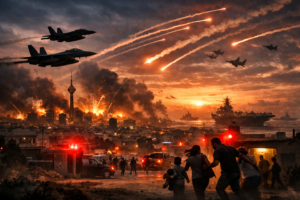
In a stunning and historic moment for the Middle East, Ayatollah Ali Khamenei, the long-time supreme leader of Iran, has been killed, Iranian state media confirmed Sunday, marking a seismic shift in regional geopolitics. The announcement capped days of competing claims and uncertainty after a wave of U.S.–Israel military strikes on Iranian territory targeted senior leaders and strategic sites across the country.
Khamenei, who led Iran from 1989 until his death at age 86, was the spiritual and political figurehead of the Islamic Republic for more than three decades. Known for his unwavering opposition to Washington and Jerusalem, he remained at the helm of Iran’s powerful theocracy through revolutions, wars, protests and decades of diplomatic tension. His death — confirmed by both Tehran broadcasters and Western officials — is expected to send shockwaves through the region and beyond.
The joint operation, described by top U.S. and Israeli officials as a necessary move to eliminate what they called “imminent threats,” unfolded over the weekend. In a statement late Saturday night, former U.S. President Donald Trump announced that Khamenei had been killed during the offensive — a military campaign that involved precision strikes on leadership compounds and critical infrastructure in Tehran.
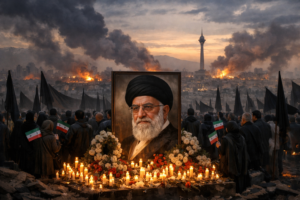
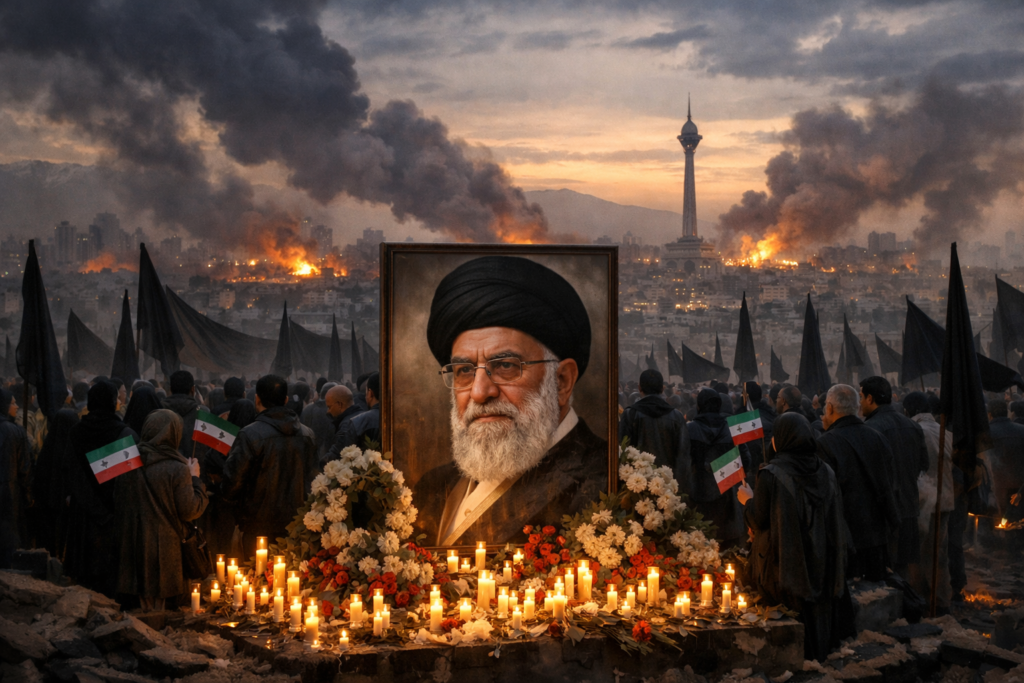
Iran’s state television confirmed the supreme leader’s death in the early hours of Sunday, declaring a 40-day period of national mourning and seven days of public holiday. The announcement came with somber images of state ceremonies and statements from officials calling Khamenei a martyr and a guiding pillar of the Islamic Republic.
Khamenei’s passing immediately raised concerns about a leadership vacuum in Tehran. Under Iran’s constitution, the position of supreme leader — a role that holds ultimate authority over the military, judiciary, and foreign policy — is to be filled by the Assembly of Experts, an 88-member body of clerics. Analysts say this transition could be fraught with internal power struggles, especially amid ongoing regional tension and retaliatory attacks.
Iran did not confirm the precise circumstances of Khamenei’s death in its initial broadcast, but international reporting and statements from Israeli media say the strike hit the compound where he was believed to be located. Israeli officials have reportedly shown images of Khamenei’s recovered body to global partners, underscoring their assertion that the operation successfully eliminated the supreme leader.
The attack also claimed the lives of several senior commanders within Iran’s military establishment, further weakening the regime’s top echelons. Accounts from Tehran indicate that his daughter, son-in-law, and grandchild may have been among the casualties in the attack, deepening the personal tragedy for the clerical dynasty that has led Iran for decades.
News of Khamenei’s death immediately ignited strong reactions across Iran. State media showed crowds mourning in Tehran and other cities as families gathered in public squares, echoing national grief and shock. In provinces beyond the capital, mourners recited prayers and held candles aloft in ceremonies that reflected both deep sorrow and rising uncertainty about Iran’s future.
Even before state confirmation, Iranian President Masoud Pezeshkian bitterly condemned the strikes and promised that vengeance would be Iran’s “legitimate duty and right,” foreshadowing the potential for fierce military reprisal. Officials in Tehran have vowed to respond “with the heaviest possible force,” raising fears of wider conflict stretching across the Middle East.
Indeed, throughout Saturday and into Sunday, Iranian forces reportedly launched missile and drone attacks targeting Israeli military sites, U.S. bases across the Gulf, and neighboring countries hosting American troops. Intercepts by allied defense systems were widely reported, and several nations issued heightened security alerts as tensions soared.
Global reactions have poured in. Many world leaders called for calm and restraint, urging a halt to further escalation and warning that this moment carries the risk of igniting broader regional warfare. United Nations officials stressed the urgent need for diplomacy even as front-line governments brace for potential retaliation and renewed warfare.
From a geopolitical perspective, Khamenei’s death is likely to have far-reaching consequences. He was a pivotal architect of Iran’s foreign policy and wielded unmatched influence over its strategic direction — particularly in its support for militant proxy groups like Hezbollah, its nuclear ambitions, and its confrontational posture toward the United States and its allies.
Domestically, Khamenei’s rule was marked by periodic waves of protest and dissent. In recent years, Iranians have taken to the streets to demand economic reforms and civil liberties, movements that were met with brutal crackdowns by security forces loyal to the supreme leader. The regime’s handling of these protests contributed to widespread discontent, even among segments of the population that once viewed clerical authority with reverence.
Now, with his death confirmed, Iranian society stands at a fragile crossroads. Hard-liners, moderates and reformists all face a moment of reckoning, with the next leadership choice potentially reshaping not just Tehran’s domestic politics but its foreign alliances and engagement with the world. The nascent interim leadership council, led by senior clerics such as Ayatollah Alireza Arafi, has assumed temporary control, but the question of long-term succession remains unresolved.
The economic implications are also considerable. Markets reacted sharply to the news, with oil prices spiking amid fears of supply disruptions tied to heightened regional conflict. Financial volatility and uncertainty have rippled through global energy and security sectors as investors reassess risks tied to instability in one of the world’s most strategically vital regions.
For the United States and Israel, this event represents the most direct confrontation with Iranian leadership in decades. Officials in Washington and Jerusalem have framed the operation as a necessary defensive measure intended to thwart imminent threats and degrade Tehran’s ability to pursue nuclear and missile capabilities. Critics, however, warn that removing a entrenched leader could unleash unpredictable consequences and further destabilize an already volatile Middle East.
As Iran begins a prolonged period of national mourning, the world watches closely. The death of Ayatollah Ali Khamenei — a figure who shaped his nation for more than three decades — marks a historic turning point with reverberations that could define global diplomacy, security and conflict well into the future.